

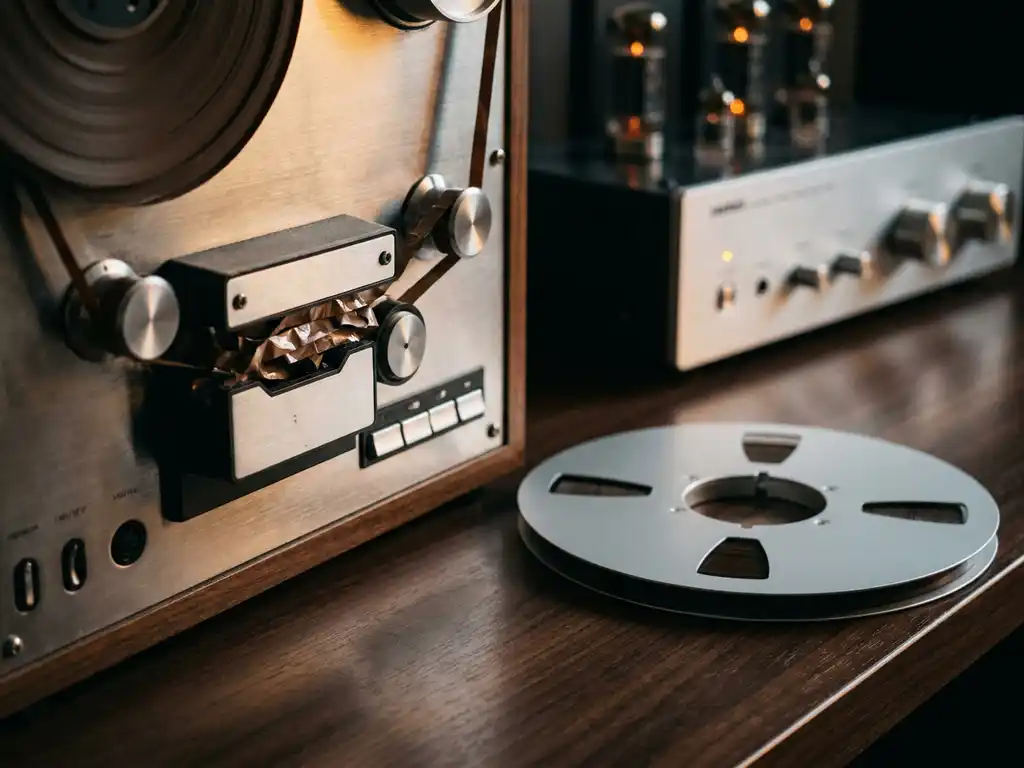
Every audiophile knows the feeling: you sit down with a beautifully engineered amplifier and a pair of speakers that cost more than most people’s televisions, press play, and something still feels off. The recording itself is often the culprit. No matter how resolving your system becomes, it can only reproduce what is encoded in the source material. Understanding how recording quality affects sound is one of the most important steps any serious listener can take toward building a system that genuinely moves them.
Why does recording quality matter for audio playback?
Recording quality matters for audio playback because every flaw, limitation, or compromise made during the recording process is permanently embedded in the file or disc. A high-end audio system does not hide those flaws — it reveals them with greater clarity. The better your equipment, the more faithfully it reproduces exactly what was captured in the studio.
Think of a recording as the original blueprint and your playback system as the construction crew. Even the most skilled builders cannot create a beautiful structure from a poorly drawn plan. When microphones, preamps, room acoustics, and signal chains are carefully chosen during recording, the resulting file carries genuine musical information: the breath of a vocalist, the resonance of a piano body, the spatial decay of a concert hall. When those elements are compromised, no amount of downstream engineering can restore what was never captured in the first place.
This is why serious audiophiles pay close attention to labels, engineers, and recording venues when selecting music. A well-recorded album from a modest pressing can outperform a poorly recorded release on premium vinyl or high-resolution digital. Audio fidelity begins at the microphone, not at the speaker.
How does the mastering process affect what you hear at home?
Mastering is the final stage of audio production before a recording reaches listeners, and it directly shapes the tonal balance, dynamic range, and overall loudness of everything you hear. A skilled mastering engineer can bring clarity, cohesion, and appropriate loudness to a mix without sacrificing detail. A poor mastering job can permanently damage a recording’s sonic character.
During mastering, engineers apply equalization, compression, limiting, and stereo enhancement to prepare music for different playback formats. The decisions made at this stage are irreversible once the master is distributed. This is where the so-called “loudness wars” have done the most damage to recorded music: aggressive limiting pushes average loudness higher but crushes transients and removes the natural rise and fall of musical dynamics.
For high-end audio listeners, mastering quality is especially consequential. A resolving system will expose every artifact introduced by over-compression, including distortion on peaks, a flattened soundstage, and listener fatigue that sets in far sooner than it should. Conversely, a well-mastered recording played through a transparent system creates the sense that musicians are genuinely present in the room.
What is the difference between lossy and lossless audio formats?
Lossy audio formats reduce file size by permanently discarding audio data the algorithm considers inaudible, while lossless formats preserve every bit of the original recording without any permanent data loss. For everyday listening through earbuds, lossy formats like MP3 or AAC are often adequate. For high-end audio playback, lossless formats are strongly preferred.
Common lossy formats include:
- MP3 — the most widely recognized compressed format, using perceptual coding to remove audio deemed redundant.
- AAC — used by streaming services and Apple devices, generally more efficient than MP3 at similar bit rates.
- OGG Vorbis — an open-source alternative commonly used in gaming and some streaming platforms.
Common lossless formats include:
- FLAC (Free Lossless Audio Codec) — the most popular lossless format among audiophiles, widely supported and open-source.
- ALAC (Apple Lossless Audio Codec) — Apple’s equivalent, fully compatible with their ecosystem.
- WAV and AIFF — uncompressed formats that preserve the full audio signal without any encoding overhead.
Beyond standard lossless, high-resolution audio formats such as 24-bit/96kHz or 24-bit/192kHz FLAC capture more information than a standard CD (16-bit/44.1kHz). Whether the human ear can reliably distinguish these formats in controlled listening is debated, but many audiophiles report a perceptible improvement in spatial detail and naturalness when source recordings were originally captured at high resolution. The key word is “originally” — upsampling a lossy file to high resolution does not recover lost data.
What is dynamic range and why does it matter for high-end audio?
Dynamic range is the difference between the quietest and loudest passages in a recording. A wide dynamic range preserves the natural contrast and emotional tension in music, while a compressed dynamic range makes everything sound uniformly loud, removing the drama that gives music its power. For high-end audio systems, dynamic range is one of the most critical indicators of recording quality.
In acoustic music, the difference between a whispered vocal and a full orchestral climax can span an enormous range of volume levels. When that contrast is preserved in a recording, a capable system can reproduce it with breathtaking realism. When a mastering engineer applies heavy limiting to maximize streaming loudness scores, those peaks are flattened and the quiet passages are lifted, erasing the contrast entirely.
The Dynamic Range Database (DR Database) is a community-maintained resource that assigns DR scores to albums based on measured peak-to-average ratios. A DR score above 12 is generally considered excellent for modern recordings, while many commercially mastered pop albums fall below DR6. Seeking out high-DR releases or audiophile pressings is one of the most effective ways to improve playback performance without changing a single piece of equipment.
Wide dynamic range also places greater demands on your amplifier and speakers. This is actually a good thing: it means your system is working as intended, tracking the full emotional arc of a performance rather than delivering a compressed, homogenized signal.
How can you tell if a recording is high quality before you buy it?
You can assess recording quality before purchasing by researching the mastering engineer and studio, checking community DR scores, reading reviews in specialist audiophile publications, and looking for releases from labels known for sonic excellence. Several reliable signals point toward a well-made recording.
Here are the most practical steps to evaluate a recording before committing:
- Check the DR score — Search the Dynamic Range Database for the specific pressing or edition you are considering. Different pressings of the same album can vary significantly in dynamic range.
- Research the mastering engineer — Engineers such as Bernie Grundman, Bob Ludwig, and Gus Skinas have long reputations for transparent, musical mastering. Their involvement is a strong positive signal.
- Look for audiophile label releases — Labels like ECM, Reference Recordings, Analogue Productions, and Mobile Fidelity Sound Lab consistently prioritize sonic quality over commercial loudness.
- Read specialist reviews — Publications focused on sound reproduction and high-end audio regularly evaluate recordings on sonic grounds, not just musical merit.
- Listen to samples — Many high-resolution download stores offer sample clips. Even through headphones, you can often sense whether a recording breathes naturally or sounds squashed and fatiguing.
- Check the bit depth and sample rate — For digital purchases, 24-bit files recorded and mastered natively at high resolution offer more headroom than 16-bit CD-quality rips, though format alone does not guarantee quality.
Investing time in source selection pays dividends that no equipment upgrade can replicate. A revealing system rewards great recordings and exposes mediocre ones. Building a library of well-recorded music is as important as building a well-matched system.
How Accustic Arts Elevates Your Experience of Every Recording
Understanding how recording quality affects playback is only half the equation. The other half is ensuring your system is resolving enough to reveal everything a great recording has to offer — and forgiving enough to remain musical even when the source is imperfect. That is precisely where we come in.
At Accustic Arts, we design our components to be transparent partners to the music, not colorations that flatter poor recordings or mask the beauty of exceptional ones. Here is what sets our approach apart:
- Uncompromising component selection — Every circuit uses precisely graded, high-grade parts chosen for their contribution to accurate signal reproduction, not cost reduction.
- Up to two weeks of individual product testing — Each unit is evaluated extensively before leaving our facility, ensuring it performs exactly as designed from the first day of use.
- Experience rooted in professional environments — Our engineering philosophy is informed by real-world work in recording studios and live venues, giving us an intimate understanding of what authentic sound actually sounds like.
- A full ecosystem of components — From D/A converters and CD players to preamplifiers, integrated amplifiers, and monoblock power amplifiers, our complete product range is designed to work cohesively, preserving audio fidelity at every stage of the signal chain.
- Emotionally engaging midrange reproduction — Our signature sound characteristic ensures that the emotional core of any well-recorded performance comes through with naturalness and depth.
If you are ready to hear what your favorite recordings truly sound like, we would love to help you find the right components for your listening room. Get in touch with us and let us guide you toward a system that honors every great recording in your collection.
—
Disclaimer: This article was created with the assistance of Artificial Intelligence and has been reviewed by our editorial team.