

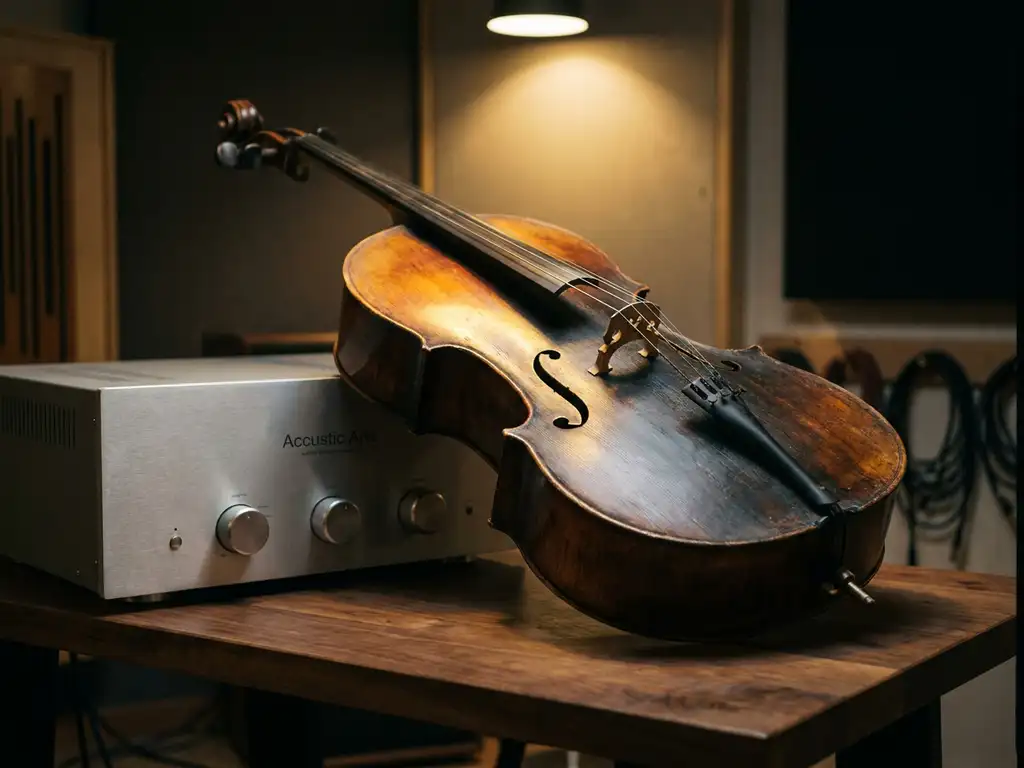
For audiophiles, the pursuit of perfect sound is never just about technical specifications. It is about the emotional connection that music creates — the feeling of being present at a live performance, of hearing every nuance a musician intended. At the heart of that experience sits one critical element: midrange reproduction. Understanding why it matters so much, and what separates great midrange from mediocre, is essential knowledge for anyone serious about hi-fi audio.
What frequencies make up the midrange in audio?
The midrange in audio refers to the frequency band spanning roughly 250 Hz to 5,000 Hz (5 kHz). This range sits between the bass frequencies below it and the upper treble above it, and it is where the vast majority of musical content and human vocal expression lives. Most instruments and voices produce their fundamental tones and primary harmonics within this window.
To understand why this matters, consider what falls inside those boundaries. The human voice, whether spoken or sung, operates almost entirely within the midrange. Guitars, pianos, violins, brass instruments, and woodwinds all produce their core tonal character here. When audio engineers talk about the “body” of a sound, they are almost always referring to midrange frequencies. The lower midrange (roughly 250 Hz to 800 Hz) gives instruments their warmth and weight, while the upper midrange (around 1 kHz to 5 kHz) carries presence, articulation, and the fine detail that allows you to distinguish one instrument from another in a complex mix.
How does midrange quality affect the emotional impact of music?
Midrange quality directly determines how emotionally engaging music feels to the listener. Because the human ear is most sensitive to midrange frequencies, and because voices and primary instruments live in this band, any coloration, distortion, or loss of detail in this range immediately affects how natural and involving the music sounds. A clean, accurate midrange is what makes a recording feel alive.
When midrange reproduction is accurate, a vocalist sounds like a real person standing in the room. You hear the breath between phrases, the texture of a bowed string, the resonance of a piano body. These are not audiophile abstractions — they are the cues that trigger emotional responses in listeners. When those cues are blurred, compressed, or artificially colored, the brain registers the sound as synthetic, and the emotional connection weakens.
This is precisely why seasoned audiophiles often describe the best high-end audio components not in terms of frequency extension or power output, but in terms of how naturally they reproduce the midrange. The ability to convey emotion through sound reproduction is, for many listeners, the single most important measure of a component’s quality.
What causes poor midrange reproduction in audio components?
Poor midrange reproduction is caused by a combination of factors, including circuit-level distortion, inadequate power supply design, component tolerances, and resonance within enclosures or chassis. Any of these can introduce coloration, smearing, or dynamic compression into the frequency range where the ear is most sensitive and most discerning.
Common culprits in lower-quality components include:
- Harmonic distortion — even small amounts of distortion in the midrange are audible as harshness or a synthetic quality to voices and instruments
- Phase errors — misalignment between frequencies causes the soundstage to collapse and instruments to lose their natural placement
- Power supply noise — inadequate filtering allows electrical noise to modulate the signal, softening transient detail and reducing clarity
- Component quality — capacitors, resistors, and transformers of insufficient grade introduce their own colorations into the signal path
- Mechanical resonance — vibrations from transformers or external sources can couple into sensitive circuit boards and subtly degrade the signal
The challenge is that these problems are often cumulative. A component might measure acceptably on standard benchmarks but still sound congested or lifeless in the midrange because multiple small compromises have added up. This is why experienced audiophiles trust their ears as much as they trust measurements.
How do high-end amplifiers improve midrange performance?
High-end amplifiers improve midrange performance by minimizing the sources of degradation described above through the use of precision components, optimized circuit topologies, and rigorous engineering standards. The result is a signal path that adds as little as possible to the original recording, allowing the midrange to emerge with full detail and natural character.
Key design approaches that make a measurable difference in real-world listening include:
- Precision component selection — using high-grade capacitors, resistors, and transformers that introduce minimal coloration
- Robust power supply design — oversized, well-regulated supplies that maintain stable voltage under dynamic musical demands
- Short, direct signal paths — reducing the number of stages the signal passes through limits opportunities for degradation
- Mechanical isolation — chassis designs that isolate sensitive circuits from vibration preserve fine midrange detail
- Thermal stability — components that maintain consistent operating characteristics across temperature ranges ensure the midrange sounds the same during extended listening sessions
Tube hybrid designs can also offer particular advantages in midrange reproduction. The natural harmonic structure of tube amplification tends to align well with how the human ear perceives midrange frequencies, often producing a sense of warmth and dimensionality that purely solid-state designs can struggle to match. The best high-end audio components combine the strengths of both technologies to achieve midrange performance that is both technically accurate and emotionally compelling.
What should audiophiles listen for when evaluating midrange?
When evaluating midrange reproduction, audiophiles should listen for the naturalness of voice and instrument timbre, the ability to separate individual sounds within a complex mix, the sense of three-dimensional space around instruments, and the absence of harshness or artificial coloration. The midrange should sound effortless, not strained.
A practical listening test might include the following reference points:
- Vocal clarity — Does a singer sound like a real person? Can you hear the texture of the voice without any added hardness or glare?
- Instrument body — Does an acoustic guitar have natural resonance and weight, or does it sound thin and two-dimensional?
- Separation and layering — In a dense musical passage, can you follow individual instruments without them blurring together?
- Dynamic nuance — Do soft passages retain their detail, or does the midrange compress and lose texture at lower volumes?
- Tonal neutrality — Does the component add a character of its own, or does it simply let the recording speak for itself?
It is worth spending time with recordings you know intimately. Familiar material reveals colorations and compromises far more reliably than unfamiliar music, because you already have a reference for how it should sound. Live recordings are especially useful, since they provide a natural benchmark for how voices and acoustic instruments behave in real spaces.
How ACCUSTIC ARTS approaches midrange reproduction
At ACCUSTIC ARTS, midrange reproduction is not a secondary consideration — it is the foundation of everything we build. Our signature achievement, recognized by audiophiles and music industry professionals around the world, is an emotionally engaging midrange that allows music to connect with listeners the way it was meant to. This is not accidental. It is the result of deliberate engineering choices made at every stage of product development.
Here is what sets our approach apart:
- Precision component selection — we use only high-grade parts that meet our exact specifications for minimal coloration in the critical midrange band
- Rigorous testing — every component undergoes an individual product test that can last up to two weeks before it leaves our facility in Lauffen am Neckar, Germany
- Studio and live venue experience — our product development is informed by real-world work in recording studios and professional PA systems, giving us a genuine reference for what accurate sound reproduction means
- Tube hybrid technology — our hybrid designs combine the warmth and dimensionality of tube amplification with the precision and control of solid-state engineering, producing a midrange that is both accurate and emotionally involving
- Philosophy-driven engineering — our guiding principle, Absolute Sound Fidelity Through Reproduction, means we never compromise on the frequencies that matter most
If you are ready to experience what genuine audiophile sound feels like, we invite you to explore our full range of amplifiers, preamplifiers, and DACs, or get in touch with us directly to discuss which components are the right fit for your listening environment.
—
Disclaimer: This article was created with the assistance of Artificial Intelligence and has been reviewed by our editorial team.