

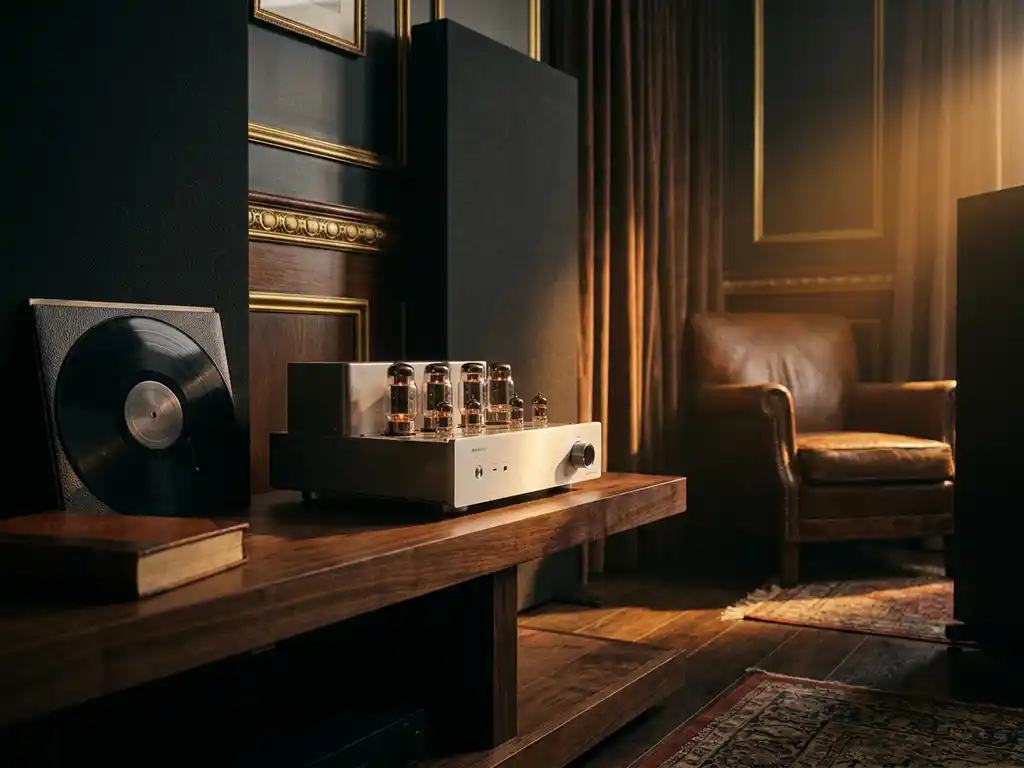
There is something irreplaceable about standing in a concert hall, feeling the warmth of a grand piano fill the room, or sensing the physical presence of a drum kit just meters away. For passionate music lovers, the pursuit of recreating a live performance at home is not just a hobby — it is a deeply personal mission. With the right knowledge, the right components, and a thoughtful approach to your listening space, a genuinely emotionally engaging high-end audio experience is well within reach.
What does it actually mean to recreate a live performance at home?
Recreating a live performance at home means building a hi-fi system and listening environment capable of reproducing music with enough accuracy, dynamics, and spatial realism that your emotional response mirrors what you would feel at a live concert. It is not about volume or spectacle — it is about truthfulness to the original event.
At its core, this pursuit involves three interconnected elements: source fidelity, signal integrity, and acoustic environment. A recording carries the DNA of a live performance — the breath of a vocalist, the decay of a cymbal, the resonance of a cello body. Your system’s job is to retrieve that information and present it without adding coloration or stripping away nuance. When all three elements align, music stops feeling like a reproduction and starts feeling like a presence in the room.
This is why audiophiles often describe the goal not as “loud and impressive” but as “natural and real.” The benchmark is not whether the system sounds exciting — it is whether it sounds honest.
Why is emotional engagement the hardest part of home listening?
Emotional engagement is the hardest part of audiophile home listening because it depends on the midrange — the frequency range where the human voice, most instruments, and the harmonic richness of music live. When midrange reproduction is accurate and unforced, music connects on a visceral level. When it is compressed, veiled, or artificially brightened, the emotional thread breaks.
Live performances engage us emotionally because they are three-dimensional, dynamic, and immediate. A home audio system must work hard to recreate that sense of presence. Timing matters enormously — when instruments lock together with the right rhythmic coherence, your body responds instinctively. Dynamics matter too: the contrast between a whispered vocal and a full orchestral swell is what creates tension and release, the very architecture of emotional music.
Many systems succeed technically but fail emotionally because they prioritize measurement-friendly flatness over musical truth. The most satisfying home audio setups are those built around the listening experience rather than the specification sheet.
What components matter most in a high-end audio system?
In a high-end audio system, the components that matter most are the source, preamplifier, power amplifier, and loudspeakers — in that order of signal flow. Each stage must preserve and faithfully pass the musical signal, because any weakness compounds through the chain and reaches your ears as a loss of realism or emotional impact. Discovering the right combination starts with exploring high-end audio products designed with precisely this signal integrity in mind.
- Source components (CD players, D/A converters, streaming transports) determine how much musical information enters the system in the first place. A high-quality DAC or CD transport recovers fine detail that budget alternatives simply discard.
- Preamplifiers control gain and signal routing without adding noise or altering tonal balance. A transparent preamplifier is invisible to the music — you hear the recording, not the electronics.
- Power amplifiers and monoblocks drive the loudspeakers with authority and control. Headroom, current delivery, and low distortion are the qualities that separate reference-grade amplification from the ordinary.
- Loudspeakers are the final transducers — they convert electrical signals into acoustic energy. Their design, placement, and compatibility with your amplifier define the character of everything you hear.
Cables, power conditioning, and isolation platforms also play meaningful supporting roles, but no accessory can compensate for weakness in the core components. Build the foundation first, then refine.
How does room acoustics affect the live sound experience?
Room acoustics affect the live sound experience at home more than almost any single component upgrade. Your listening room is itself an instrument — its dimensions, surfaces, and furnishings all interact with sound waves, adding reflections, resonances, and absorption that shape what you actually hear at the listening position.
Hard, parallel walls create standing waves and flutter echo that smear imaging and blur bass definition. Soft furnishings, bookshelves filled with irregularly shaped objects, rugs, and acoustic panels absorb and diffuse these reflections without making the room feel acoustically dead. The goal is a balanced decay time — enough liveliness to feel natural, enough control to preserve clarity.
Where should you position your loudspeakers?
Speaker placement is the single most cost-effective acoustic improvement available. As a starting point, pull speakers well away from rear and side walls, angle them to form an equilateral triangle with your listening seat, and experiment with small adjustments in toe-in. Even modest changes in position can transform soundstage width, depth, and bass evenness without spending a single additional amount on equipment.
What’s the difference between tube and solid-state amplification for live sound?
The key difference between tube and solid-state amplification is in how each technology handles harmonic distortion and dynamic transients. Tube amplifiers tend to produce even-order harmonics that the human ear perceives as warm and musically natural, while solid-state amplifiers typically offer lower measured distortion, greater damping factor, and higher current delivery — qualities that translate to tight bass control and dynamic authority.
For recreating the feeling of a live performance, neither technology is universally superior. Tube amplifiers often excel at rendering the organic texture of acoustic instruments — the rosin on a bow, the air around a voice — in ways that feel emotionally immediate. Solid-state designs, particularly well-engineered class A or class AB designs, can deliver the scale and power of a large ensemble with impressive realism.
Hybrid designs that combine a tube input stage with a solid-state output stage represent a compelling middle path, blending the harmonic richness of valves with the control and reliability of transistors. The right choice depends on your loudspeakers, your music preferences, and ultimately what moves you most as a listener. Exploring high-end amplifier options across both technologies is the most reliable way to find your answer.
How do you know when your system truly sounds like a live performance?
You know your system truly sounds like a live performance when you stop listening to the equipment and start listening to the music. The technical markers are a wide, stable soundstage with precise instrument placement, effortless dynamics from the softest pianissimo to the loudest fortissimo, and a midrange so natural that voices and acoustic instruments feel physically present in the room.
The emotional markers are equally telling. You find yourself forgetting to analyze the sound. You feel a physical response to rhythm. You hear details in familiar recordings that surprise you. Time passes faster than expected. These are not audiophile clichés — they are genuine indicators that your system has crossed the threshold from impressive to convincing.
Reference recordings are invaluable for this evaluation. Well-recorded jazz trios, intimate classical chamber music, and solo vocal performances reveal the truth of a system quickly. If the piano sounds like a piano — with its characteristic attack, sustain, and resonance intact — and if the singer’s breath and room ambience feel real, your sound fidelity is approaching the live experience.
How Accustic Arts helps you recreate the live music experience at home
We at Accustic Arts have spent nearly three decades pursuing exactly the goal described throughout this article: building electronics that bring the emotional truth of live music into the home listening environment. Our approach is grounded in a philosophy of Absolute Sound Fidelity Through Reproduction, and every product we make reflects that commitment in concrete, measurable ways.
- Uncompromising component selection: We use only precise, high-grade components across every product line, from our CD players and D/A converters to our preamplifiers, integrated amplifiers, power amplifiers, and monoblock designs.
- Rigorous testing: Every component undergoes extensive testing, and an individual product test can last up to two weeks before we consider it ready to leave our facility in Lauffen am Neckar, Germany.
- Real-world musical insight: Our development draws on direct experience from recording studios and professional live venues, ensuring our products are calibrated against the real sound of music, not just laboratory benchmarks.
- Emotionally engaging midrange: Our signature achievement is a midrange reproduction that audiophiles and music professionals describe as uniquely natural and involving — the quality that makes the difference between impressive and moving.
- Tube hybrid options: For listeners drawn to the warmth and organic texture of valve amplification without sacrificing control, our tube hybrid components offer a compelling and refined solution.
If you are ready to take your home listening to the level of a live performance, we would love to help you find the right system. Get in touch with us to discuss your listening goals, your room, and your music — and discover how Accustic Arts can bring the concert hall home.
—
Disclaimer: This article was created with the assistance of Artificial Intelligence and has been reviewed by our editorial team.
Related Articles
- How do you pair an amplifier with a DAC and CD player for a coherent system?
- How long should an amplifier warm up before critical listening?
- How much should you budget for a high-end amplifier?
- How does component quality inside an amplifier affect its lifespan and sound?
- Can you use any amplifier with any pair of speakers?