

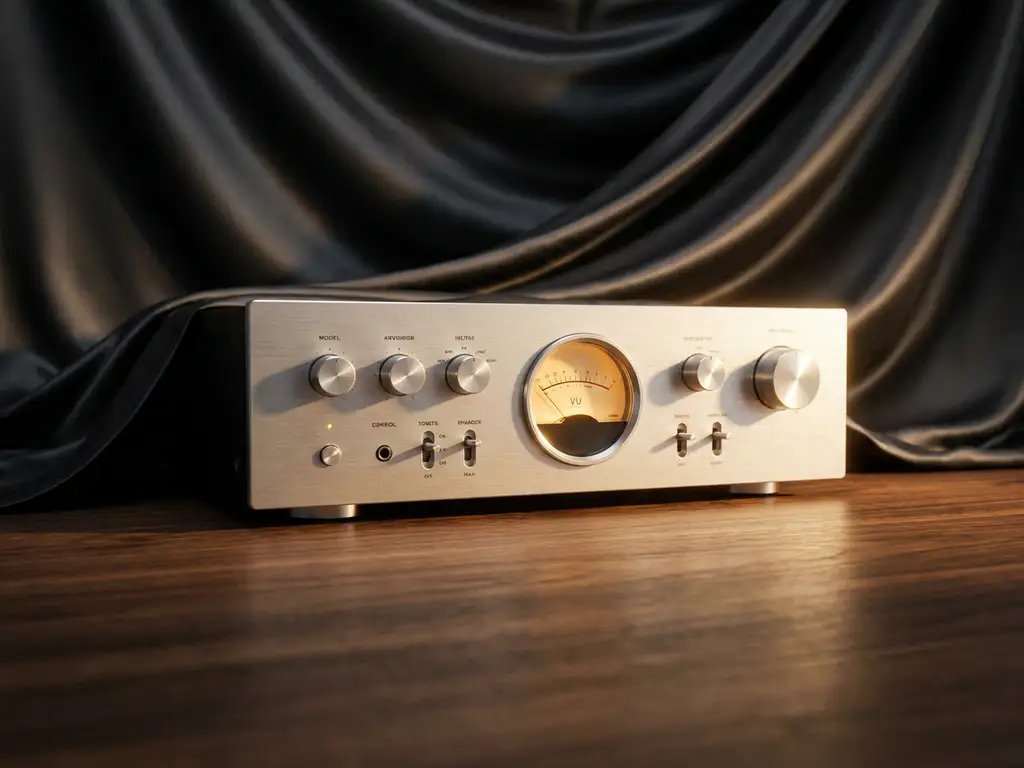
A power amplifier sits at the heart of any serious hi-fi system, yet it is often the component that receives the least attention from listeners who are new to high-end audio. That is a mistake worth correcting. The amplifier does not merely make sound louder — it shapes every quality you hear, from the weight of a bass note to the shimmer of a cymbal. Understanding what a high-quality power amplifier actually contributes to your listening experience is the first step toward building a system that genuinely moves you.
What does a power amplifier actually do in a hi-fi system?
A power amplifier takes the low-level audio signal from a preamplifier or source component and increases it to a level capable of driving loudspeakers. It is the component responsible for converting electrical energy into the acoustic energy you hear in the room. Without sufficient, clean amplification, even the finest speakers and sources cannot perform as intended.
Think of the signal chain as a pipeline. Your source — whether a CD player, DAC, or streaming device — generates a delicate signal that carries all the musical information. Your preamplifier controls the volume and selects the source. The power amplifier then takes that signal and provides the current and voltage needed to physically move a speaker’s drivers. Every nuance encoded in that original signal depends on the amplifier to be faithfully reproduced. If the amplifier introduces noise, distortion, or compression at any point in this process, that information is lost and cannot be recovered downstream.
How does amplifier quality affect the sound you hear?
Amplifier quality directly affects sound fidelity, dynamic range, noise floor, and the ability to control loudspeakers accurately under real-world listening conditions. A higher-quality amplifier preserves the integrity of the audio signal from input to output, delivering greater transparency, tighter bass control, and a more natural, three-dimensional soundstage.
The quality of internal components plays a decisive role here. Precision resistors, high-grade capacitors, and carefully designed circuit topologies all reduce the colorations and distortions that accumulate in lesser designs. Power supply quality is equally important — a robust, well-regulated supply ensures that the amplifier delivers consistent performance whether it is reproducing a quiet passage or a full orchestral climax. Thermal management, grounding schemes, and the physical layout of the circuit board also influence how cleanly the signal travels from input to output.
Listeners often describe the difference a quality amplifier makes as a shift from hearing music to feeling it. Instruments gain body and presence. Voices become more natural and expressive. The sense of space within a recording opens up in a way that is immediately recognizable, even to listeners who cannot articulate precisely what has changed.
What are the audible differences between budget and high-end power amplifiers?
The audible differences between budget and high-end power amplifiers are most apparent in dynamic contrast, bass definition, midrange clarity, and the ability to resolve fine detail at both high and low volume levels. Budget amplifiers often compress dynamics, blur transients, and introduce a layer of grain or hardness that becomes fatiguing over extended listening sessions.
Specifically, listeners moving from entry-level to high-end amplification typically notice:
- Improved bass control: Low frequencies become tighter, more articulate, and better defined rather than bloated or one-dimensional.
- Greater dynamic range: The difference between soft and loud passages is preserved, giving music its natural sense of drama and scale.
- Reduced listening fatigue: High-end designs minimize distortion products that accumulate in cheaper circuits, making long listening sessions genuinely enjoyable rather than tiring.
- Better imaging and soundstage: Instruments are more precisely located within the stereo field, and the sense of depth and space becomes more convincing.
- Finer micro-detail: Subtle performance nuances — the breath of a vocalist, the decay of a piano note, the texture of a bow on strings — become audible rather than being buried in the noise floor.
These differences are not subtle in a well-matched system. They are the reason experienced audiophiles regard the power amplifier as one of the most consequential investments in their listening room.
Why does midrange reproduction matter so much in amplifier performance?
The midrange frequency range — roughly 200 Hz to 5 kHz — is where the human voice, most instruments, and the emotional core of virtually all music reside. An amplifier that reproduces the midrange accurately and naturally allows music to communicate its full emotional content. Coloration, compression, or hardness in this region is immediately perceived as unnatural and distancing.
Human hearing is exceptionally sensitive to midrange anomalies because we evolved to recognize voices and acoustic instruments in this frequency band. Any amplifier that introduces even small amounts of distortion or tonal imbalance here will make music feel artificial, regardless of how impressive its bass extension or high-frequency detail may be. This is why experienced listeners often prioritize midrange quality above all other performance criteria when evaluating amplifiers.
A great midrange also acts as the connective tissue between bass and treble. When it is reproduced with accuracy and weight, the entire frequency spectrum feels coherent and integrated. When it is lacking, the sound becomes disjointed — impressive at the frequency extremes but emotionally hollow at its center. This is the quality that separates amplifiers that measure well on paper from those that genuinely engage listeners over years of use.
How can you tell if a power amplifier is performing at its best?
A power amplifier is performing at its best when the music it reproduces sounds natural, effortless, and emotionally engaging across a wide range of material and volume levels. Specific indicators include tight, controlled bass, a transparent and detailed midrange, a quiet background between notes, and the ability to handle dynamic peaks without strain or compression.
Practically, there are several things to listen for during evaluation:
- Dynamic headroom: Does the amplifier handle sudden loud passages cleanly, or does the sound become congested and strained?
- Low-level resolution: At quiet listening volumes, can you still hear fine detail and musical texture, or does the music flatten out?
- Bass articulation: Are bass notes clearly defined with a distinct attack and decay, or do they blur together?
- Background silence: Is the space between notes genuinely quiet, or is there a persistent hiss or hum that draws attention to itself?
- Long-session comfort: After an hour of listening, do you feel energized and engaged, or fatigued and ready to stop?
The last point is particularly telling. Amplifiers that introduce distortion — even at levels below conscious perception — tend to produce listener fatigue over time. An amplifier performing at its best simply disappears from the equation, leaving only the music.
How ACCUSTIC ARTS Elevates Power Amplifier Performance
At ACCUSTIC ARTS, we have spent decades engineering power amplifiers that answer every question raised in this article with uncompromising precision. Our approach to power amplifier audio performance is rooted in a single guiding principle: Absolute Sound Fidelity Through Reproduction. That is not a marketing phrase — it is the standard every component must meet before it leaves our facility in Lauffen am Neckar, Germany.
Here is what sets our amplifiers apart:
- Uncompromising component selection: We use only precision, high-grade components chosen for their contribution to sonic accuracy, not their cost savings.
- Rigorous testing: Every amplifier undergoes an individual product test that can last up to two weeks before it is deemed ready to ship — because we know that reliable performance over time matters as much as first impressions.
- Emotionally engaging midrange reproduction: Our signature achievement, recognized by audiophiles and music industry professionals worldwide, is a midrange that communicates the full emotional weight of a performance.
- Real-world development insight: Our design philosophy is informed by direct experience in recording studios and professional live sound environments, ensuring our amplifiers perform with music as it is actually made.
- Award-winning recognition: Our products have earned recognition from leading publications including The Absolute Sound, reflecting the consistent quality our listeners experience every day.
If you are ready to hear what a truly high-quality power amplifier can do in your system, we invite you to explore our full range of high-end audio components or get in touch with us directly to discuss which amplifier is the right match for your listening room and musical priorities.
—
Disclaimer: This article was created with the assistance of Artificial Intelligence and has been reviewed by our editorial team.
Related Articles
- What is jitter in digital audio and how does it degrade sound?
- What is soundstage and how is it created in a hi-fi system?
- What is the role of grounding in a high-end audio system?
- How do audiophiles evaluate a component before buying in 2026?
- What is the difference between warmth and accuracy in sound?