

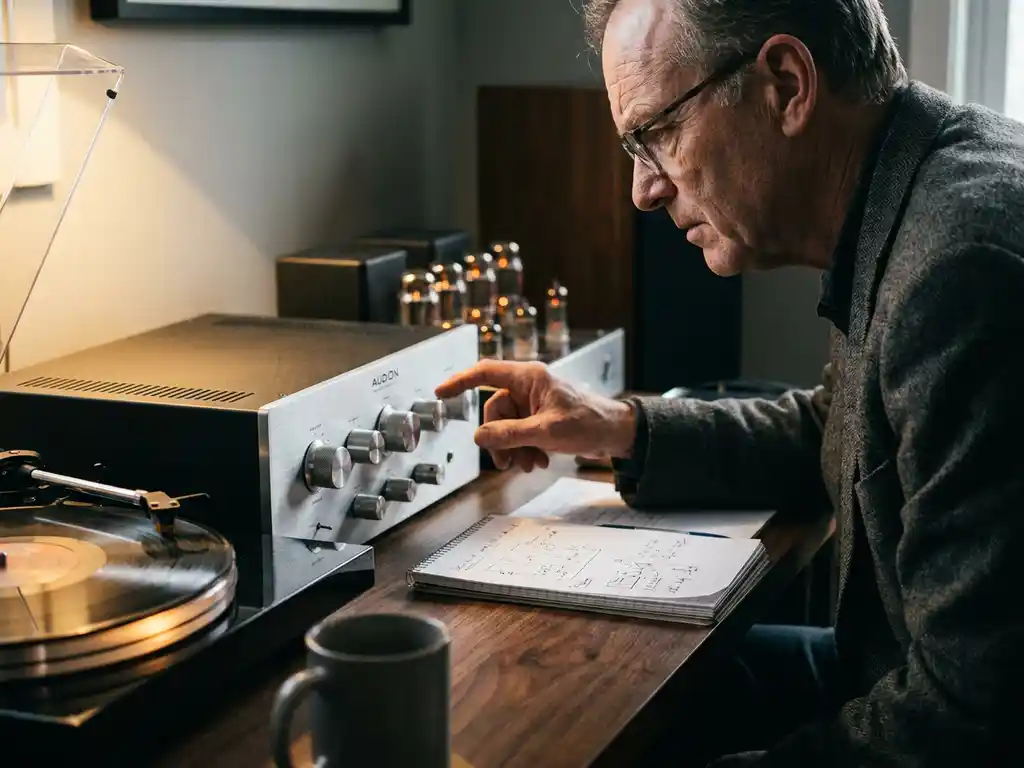
Buying high-end audio equipment is rarely an impulse decision. For serious audiophiles, evaluating a new component is a deliberate, methodical process that blends technical knowledge with deeply personal listening experience. Whether you are considering a new preamplifier, a D/A converter, or an integrated amplifier, the way you approach that evaluation will determine whether you end up with a component you love for decades or one that leaves you with buyer’s remorse. This guide walks through the key questions every audiophile should ask before making a purchase in 2026.
What does it mean to evaluate a component like an audiophile?
Evaluating a component like an audiophile means assessing it holistically across technical performance, system synergy, and emotional musical engagement. It goes far beyond reading a spec sheet. A true audiophile evaluation involves extended listening sessions with familiar recordings, critical comparisons against reference components, and an honest assessment of how the component makes music feel, not just how it measures.
This approach treats the listening experience as the ultimate benchmark. Audiophiles understand that two components with nearly identical specifications can sound dramatically different in practice. The goal is to determine whether a component disappears into the music, allowing the performance to breathe naturally, or whether it imposes its own character in ways that detract from the emotional truth of a recording. That distinction is what separates audiophile component evaluation from ordinary consumer product testing.
What are the key criteria audiophiles use to judge sound quality?
Audiophiles judge sound quality across several interconnected criteria: tonal balance, midrange presence, soundstage depth and width, dynamic contrast, resolution of fine detail, and bass control. No single criterion dominates. The best components score well across all of them simultaneously, without trading strength in one area for weakness in another.
Here is how each criterion functions in practice:
- Tonal balance: Does the component reproduce the full frequency range without artificial warmth, brightness, or thinness?
- Midrange presence: The midrange carries the emotional core of most music. Voices, strings, and woodwinds must sound natural and present.
- Soundstage: A well-engineered component creates a convincing three-dimensional image of the performance, with instruments placed precisely in space.
- Dynamic contrast: The ability to move convincingly from a whisper to a crescendo without compression or distortion.
- Resolution: Fine detail retrieval, such as the subtle decay of a piano note or the breath of a vocalist, separates reference-grade components from good ones.
- Bass control: Tight, articulate bass that underpins the music rather than overwhelming it.
Experienced audiophiles weight these criteria according to the music they love most. A jazz listener may prioritize midrange naturalness above all else, while a classical music enthusiast may focus on dynamic range and soundstage accuracy.
How do audiophiles compare components during a listening session?
Audiophiles compare components during a listening session by using a consistent set of reference recordings, matching playback levels carefully, and switching between components as quickly as the setup allows. Level matching is critical because even a small volume difference can make one component sound more impressive than it actually is.
A structured listening session typically follows this pattern:
- Select three to five well-known recordings that cover a range of musical genres and sonic demands.
- Match playback levels between components using a sound level meter or by ear with a steady test tone.
- Listen to the same passage on each component before forming an opinion.
- Take brief notes on specific observations rather than overall impressions, which can be misleading early in a session.
- Return to the components after a short break to confirm initial impressions with fresh ears.
The most valuable listening sessions happen in familiar environments. Evaluating a component in your own listening room, with your own speakers and source equipment, will always tell you more than a dealer demonstration in an unfamiliar space. If you are considering a significant investment in high-end audio electronics, insisting on a home audition is a perfectly reasonable request.
What sources do audiophiles trust when researching a component?
Audiophiles trust a combination of long-form reviews from respected publications, community discussion on dedicated forums, and direct listening experience above all other sources. Publications such as The Absolute Sound and Stereophile carry significant weight because their reviewers use consistent reference systems and write with technical depth over extended listening periods.
Beyond formal reviews, audiophile forums and community groups provide candid owner feedback that complements professional criticism. These communities often surface real-world observations about long-term reliability, system matching, and build quality that formal reviews rarely cover in depth.
Manufacturer communication also matters. Brands that explain their engineering philosophy clearly and transparently, and that are willing to discuss their design choices, tend to earn more trust than those that rely on marketing language alone. In 2026, video content from credible audio reviewers has also become an increasingly useful research tool, though it works best as a supplement to written reviews rather than a replacement.
Should audiophiles buy based on specs or listening impressions?
Audiophiles should prioritize listening impressions over specifications, while using specs as a preliminary filter. Specifications can rule out components that are clearly unsuitable for a given system, but they cannot predict how a component will actually sound in your room with your equipment. Listening impressions are the only reliable final arbiter of audio component quality.
This does not mean specifications are meaningless. Signal-to-noise ratio, output impedance, frequency response, and power output are all relevant data points that help narrow the field. A power amplifier with an output impedance poorly matched to your speakers will likely disappoint regardless of how well it measures in isolation. Use specs to shortlist candidates, then let your ears make the final decision.
The audiophile community has learned through decades of collective experience that the correlation between measured performance and perceived musical satisfaction is real but imperfect. Some of the most emotionally engaging components ever made have measured modestly by strict technical standards, while some technically flawless designs have left listeners cold.
What mistakes do audiophiles make when evaluating a new component?
The most common mistakes audiophiles make when evaluating a new component include inadequate break-in time, unfamiliar listening environments, level mismatching during comparisons, and confirmation bias toward a component they already want to like. Each of these errors can lead to a purchasing decision that does not reflect the component’s true long-term performance.
Specific mistakes to avoid:
- Skipping break-in: Many components, particularly those with capacitors and mechanical drivers, benefit from hours of use before reaching their optimal performance. Judging a component in its first hours of operation is often premature.
- Evaluating in isolation: A component does not exist in a vacuum. Always evaluate it within a complete system and consider how it interacts with your existing equipment.
- Relying on short listening sessions: First impressions in audio can be misleading. What sounds impressive in the first five minutes may become fatiguing over an hour, and vice versa.
- Ignoring system synergy: A component that sounds extraordinary in one system may sound merely good in another. Pay attention to how the new piece interacts with your amplification, speakers, and source components.
- Letting price anchor expectations: A higher price does not guarantee a better match for your system or your taste. Evaluate what you hear, not what you paid.
How Accustic Arts Supports Your Component Evaluation Journey
We at Accustic Arts understand that choosing a reference-grade component is one of the most considered decisions an audiophile makes. Our entire product philosophy is built around making that decision easier, not by simplifying our engineering, but by ensuring that every component we release has already passed the most rigorous evaluation process we know: our own.
Here is what we bring to your evaluation process:
- Two-week individual testing: Every Accustic Arts component undergoes up to two weeks of individual testing before it leaves our facility in Lauffen am Neckar. You are not evaluating a component fresh off a production line.
- Real-world reference points: Our engineering is informed by decades of work in recording studios and professional live sound environments, so our products are calibrated against the sound of real music, not laboratory abstractions.
- Transparent design philosophy: We are happy to discuss our engineering choices, our component selection, and our construction principles because we believe an informed audiophile is the best kind of customer.
- A full ecosystem of components: From preamplifiers and CD players to monoblock amplifiers, D/A converters, and tube hybrid components, we offer a complete signal chain built around a unified sonic philosophy, making system matching straightforward.
- Award-winning recognition: Our products have earned recognition from publications including The Absolute Sound, giving you independent validation alongside your own listening impressions.
If you are ready to experience what genuine audiophile component evaluation feels like when the component in question is built without compromise, we invite you to get in touch with us or explore our full product range to find the component that belongs in your listening room.
—
Disclaimer: This article was created with the assistance of Artificial Intelligence and has been reviewed by our editorial team.