

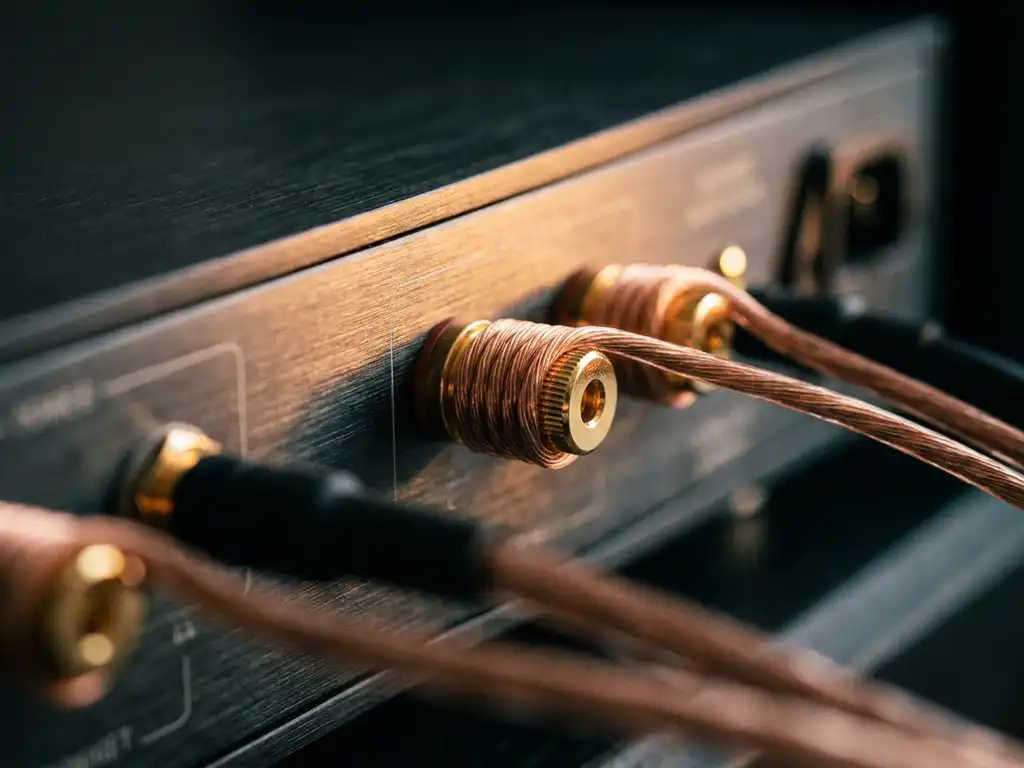
For anyone serious about high-fidelity listening, grounding in audio systems is one of those topics that sits quietly in the background until something goes wrong. A faint hum, a subtle buzz, or an inexplicable loss of clarity can all be traced back to grounding issues. Understanding how electrical grounding works in a hi-fi context is not just a technical exercise. It is a practical step toward getting the most out of every component in your system.
What is grounding in a high-end audio system?
Grounding in an audio system is the process of creating a common, stable electrical reference point that all components share. This reference point allows electrical current to flow safely and predictably, reducing the potential for voltage differences between components that can introduce noise into the signal path. In a high-end audio context, grounding encompasses both safety grounding and signal grounding.
Safety grounding connects the metal chassis of each component to the earth via the power supply, protecting users from electrical shock. Signal grounding, by contrast, is about ensuring that the audio signal travels through a clean, interference-free circuit. In practice, these two types of grounding interact constantly, which is why audiophiles pay such close attention to how their systems are wired. A well-grounded system creates a quiet electrical foundation. A poorly grounded one introduces noise that no amount of expensive cabling or component upgrades can fully fix.
Why does proper grounding affect sound quality?
Proper audio grounding affects sound quality because any voltage difference or noise on the ground path is treated by the audio circuit as part of the signal. When the ground reference is unstable or contaminated with electrical interference, that contamination is amplified alongside the music, degrading clarity, imaging, and dynamic range.
The ground path in an audio system carries tiny reference voltages that define the zero point for every signal. If that zero point fluctuates due to poor connections, impedance mismatches, or interference from nearby electrical equipment, the result is audible degradation. Low-level details, the subtle decay of a piano note or the breath before a vocal phrase, are the first casualties. As grounding problems worsen, the degradation becomes more obvious: reduced soundstage width, compressed dynamics, and eventually audible hum or buzz. This is why high-end audio grounding is not a cosmetic concern. It is fundamental to whether a system performs at its potential or falls short of it.
What causes ground loops in audio systems?
A ground loop occurs when two or more components in a system are connected to ground through different paths, creating a loop through which electrical current can circulate. This circulating current generates a voltage that the audio circuit interprets as signal, producing the characteristic 50 Hz or 60 Hz hum associated with ground loop noise.
The most common causes include:
- Multiple power outlets on different circuits: When components plug into different wall outlets fed by different circuit runs, small voltage differences between those circuits drive current through the interconnecting cables.
- Cable television or satellite connections: The coaxial cable entering a system from an external antenna or cable box often carries its own ground reference, which conflicts with the mains ground of the audio components.
- Mixing balanced and unbalanced connections: Connecting equipment with different grounding topologies without appropriate adapters can create unintended ground paths.
- Long interconnect runs: Longer cables have higher impedance and are more susceptible to picking up induced currents from nearby mains wiring or transformers.
Ground loop hum in a hi-fi system is frustratingly common precisely because modern listening rooms are filled with electrically diverse equipment. Televisions, streaming devices, and gaming consoles all introduce additional ground paths into what might otherwise be a carefully arranged audio setup.
How do you eliminate ground loop hum in a hi-fi system?
Eliminating ground loop hum involves identifying and breaking the unintended current loop without compromising safety or signal integrity. The most reliable approaches work by ensuring there is only one ground path between components rather than multiple competing ones.
Practical steps to address audio system noise from ground loops include:
- Power all components from a single outlet or power conditioner: This is the simplest and most effective first step. A single power strip or dedicated power conditioner ensures all components share the same ground reference point.
- Use a galvanic isolator on cable or satellite inputs: These inexpensive devices break the ground connection on the coaxial cable without affecting the signal, eliminating one of the most common sources of ground loop hum.
- Lift the ground on non-safety-critical connections: Some interconnects and adapters allow the signal ground to be lifted at one end, breaking the loop while maintaining the signal path. This should only be done on low-voltage signal connections, never on mains cables.
- Check and upgrade interconnect quality: Poorly shielded cables act as antennas, picking up interference. High-quality, well-shielded interconnects reduce susceptibility significantly.
- Ensure all chassis grounds are clean and secure: Oxidation on chassis connections increases impedance and can worsen ground-related noise. Cleaning contact points periodically is good practice.
If hum persists after these steps, the issue may lie within the design of a specific component rather than the system wiring, which points toward the importance of how manufacturers handle grounding internally.
What’s the difference between star grounding and chassis grounding?
Star grounding and chassis grounding are two distinct approaches to establishing a ground reference within an audio component or system. The key difference is that star grounding routes all ground connections back to a single central point, while chassis grounding uses the physical metal enclosure of a component as the common ground conductor.
In a star grounding arrangement, every circuit board, transformer, and input/output stage sends its ground connection to one dedicated point, often a single star-shaped terminal or a carefully positioned ground bus. This prevents ground currents from one section of the circuit from flowing through another section, keeping the signal ground clean and interference-free. It is the preferred approach in high-end audio design because it minimises interaction between different circuit stages.
In a chassis grounding arrangement, the metal enclosure acts as the ground plane, with various components connected to it at multiple points. This approach is simpler and common in mass-market electronics, but it creates multiple parallel ground paths. Current from the power supply, the output stage, and the input stage all share the chassis, which can allow noise to couple between stages. For budget equipment, this is an acceptable compromise, but for audiophile-grade electronics it introduces limitations that star grounding avoids.
Many high-end designs combine both approaches thoughtfully, using star grounding for sensitive signal circuits while connecting the chassis to safety earth at a single, carefully chosen point.
How do high-end audio manufacturers approach grounding in their designs?
High-end audio manufacturers treat grounding as a primary design discipline rather than an afterthought. The approach typically involves careful separation of digital and analogue ground planes, dedicated star grounding topologies for signal circuits, and isolated power supplies that prevent noise from the mains from contaminating the signal path.
In practice, this means:
- Separate ground planes for analogue and digital circuitry, preventing high-frequency digital switching noise from reaching sensitive analogue stages
- Toroidal or shielded transformers that minimise magnetic field radiation and reduce the potential for induced currents in nearby circuits
- Carefully routed PCB traces that keep ground return currents away from signal traces
- Single-point chassis grounding connected to safety earth at one defined location, avoiding circulating chassis currents
- High-quality connectors and contact materials that maintain low-impedance ground connections over time
The discipline required to execute these principles consistently across an entire product range is considerable. It demands not only engineering knowledge but also rigorous testing at every stage of production. Electrical grounding for audiophile components is one of those areas where the difference between good and exceptional lies in details that are invisible to the eye but immediately audible to the ear. You can explore the range of high-end audio components that reflect this level of engineering care.
How ACCUSTIC ARTS approaches grounding in high-end audio design
At ACCUSTIC ARTS, we treat grounding not as a checkbox in the design process but as one of the cornerstones of our “Absolute Sound Fidelity Through Reproduction” philosophy. Every product we develop undergoes up to two weeks of individual testing before it leaves our facility in Lauffen am Neckar, and grounding integrity is a central part of that evaluation. Our approach to high-end audio grounding includes:
- Dedicated star grounding topologies across our preamplifiers, integrated amplifiers, power amplifiers, and DACs, ensuring signal circuits remain free from interference between stages
- Strict separation of digital and analogue ground planes in our D/A converters and CD players, protecting delicate analogue output stages from digital switching noise
- Precision component selection that extends to connectors, PCB materials, and transformer shielding, all chosen to maintain low-impedance, stable ground references across the full operating range
- Insights drawn from professional environments, including recording studios and live PA systems, where grounding challenges are encountered at scale and demand real engineering solutions
The result is a listening experience where the noise floor stays where it belongs: inaudible. If you would like to learn more about how our components are designed to deliver a quiet, emotionally engaging sound, get in touch with us or visit our website to discover the full ACCUSTIC ARTS product philosophy.
—
Disclaimer: This article was created with the assistance of Artificial Intelligence and has been reviewed by our editorial team.