

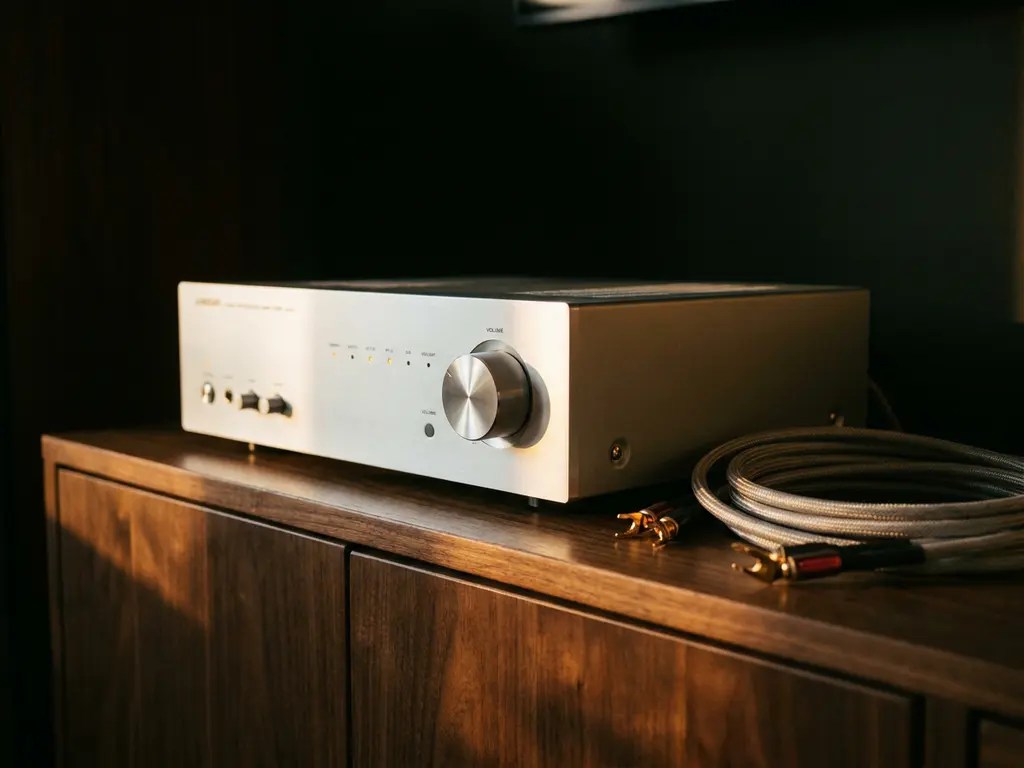
Choosing a high-end integrated amplifier is one of the most consequential decisions an audiophile can make. Unlike separates, an integrated amplifier combines a preamplifier and power amplifier into a single chassis, and when that design is executed with genuine care, the result is a component that sits at the emotional heart of an entire system. With so many options available in 2026, knowing what separates a truly exceptional amplifier from a merely adequate one makes all the difference between a system that sounds impressive and one that genuinely moves you.
Whether you are assembling your first reference-grade system or upgrading a long-established setup, this integrated amplifier guide walks through the key criteria that matter most. These are the factors that experienced audiophiles and audio engineers return to time and again when evaluating an audiophile amplifier worth investing in.
Power output and headroom for your speakers
Matching amplifier power to your speakers is the foundation of any successful system pairing. Raw wattage figures, however, tell only part of the story. What matters equally is how an amplifier behaves as it approaches its limits, and how much headroom it holds in reserve for dynamic musical peaks.
Speakers with lower sensitivity ratings typically require more power to reach realistic listening levels without strain, while high-efficiency designs can sing convincingly with modest output. The critical point is not to run an amplifier at the edge of its capability. An amplifier with generous headroom will handle sudden orchestral swells or the transient impact of a drum kit without compression or distortion, preserving the natural dynamics that make music feel alive. Always consider your room size and typical listening levels alongside the speaker’s impedance curve, since difficult loads can stress an underpowered design in ways that pure wattage figures do not reveal.
Circuit topology and its impact on sound character
The internal architecture of an amplifier defines its fundamental sonic personality. Class A designs run their output devices continuously, generating more heat but delivering a smoothness and linearity that many listeners find deeply satisfying. Class AB operation is more efficient and remains the most common topology in high-end integrated amplifiers, offering an excellent balance of performance and practicality when implemented well. Tube hybrid designs blend the harmonic richness associated with valve amplification with the control and dynamics of solid-state output stages.
Beyond the broad class of operation, the quality of the signal path itself is paramount. Short, direct signal routing, careful management of feedback, and the separation of sensitive analogue stages from power supply noise all influence how the amplifier ultimately sounds. A well-designed circuit preserves the integrity of the original recording rather than imposing its own character on the music. When exploring amplifier products, pay close attention to how manufacturers describe their circuit philosophy, since this reflects their priorities and values as engineers.
Build quality and component-grade standards
In high-end audio, the materials and components inside an amplifier are as important as the design itself. Premium capacitors, precision resistors, high-grade transformers, and carefully matched output devices all contribute to long-term reliability and sonic consistency. These choices reflect the manufacturer’s commitment to the product performing at its best not just on launch day, but for decades of ownership.
Mechanical build quality also plays a role that goes beyond aesthetics. A rigid, well-damped chassis reduces microphonic interference and keeps sensitive components isolated from vibration. Heavy-gauge metalwork, quality binding posts, and solid input connectors are tangible indicators that the engineering team considered every detail. An amplifier that feels substantial and precise in use usually reflects the same care taken inside its enclosure. Rigorous testing protocols, including extended burn-in periods before a unit leaves the factory, are another hallmark of manufacturers who take component-grade standards seriously.
Input flexibility and source compatibility
A great high-end integrated amplifier should grow with a system rather than constrain it. Input flexibility determines which sources can be connected, and the quality of each input stage determines how faithfully those sources are reproduced. A well-specified integrated amplifier will typically offer a balanced XLR input alongside multiple single-ended RCA connections, accommodating CD players, DACs, streaming transports, and phono stages without compromise.
Phono stage integration deserves particular attention for listeners who value vinyl. A built-in phono stage of genuine quality removes the need for an additional component and simplifies the signal chain, though it must be implemented with sufficient precision to avoid introducing noise or coloration. Some audiophiles prefer a dedicated external phono stage for ultimate performance, and in that case, confirming the integrated amplifier has a high-quality line-level input to receive it is equally important. Thinking through your current and likely future source components before committing to a purchase will save considerable frustration later.
How German engineering heritage shapes high-end performance
German engineering has long been associated with precision, durability, and an uncompromising approach to quality control. In high-end audio, these values translate directly into measurable and audible differences. German manufacturers have historically drawn on deep expertise in electronics manufacturing, acoustics research, and a cultural commitment to getting things right rather than getting them out quickly.
This heritage influences every stage of product development, from the selection of components to the tolerances held during assembly and the depth of testing applied before a unit reaches a listener. The philosophy that a product should perform exactly as intended, consistently and reliably, is embedded in the engineering culture. It also informs a broader understanding of what high-end audio is for: not the display of technical achievement for its own sake, but the faithful reproduction of music in a way that carries genuine emotional weight. For audiophiles who regard their listening room as a sanctuary rather than a showroom, this alignment of values and engineering discipline is a powerful reason to look closely at German-designed components when buying an integrated amplifier.
How Accustic Arts elevates the integrated amplifier experience
We at Accustic Arts have spent decades translating the principles above into products that audiophiles and music industry professionals trust for serious listening. Our integrated amplifiers are designed and built in Germany with a philosophy we call Absolute Sound Fidelity Through Reproduction, and every decision in the development process reflects that commitment. Here is what sets our approach apart:
- Uncompromising component selection: We use only precision, high-grade components across every product line, chosen for their long-term sonic and mechanical reliability.
- Rigorous testing: Each individual unit undergoes testing that can last up to two weeks before it is deemed ready to leave our facility, ensuring consistent, reference-grade performance.
- Circuit expertise across topologies: Our range spans solid-state and tube hybrid designs, giving listeners genuine choice in the sonic character that best suits their musical tastes.
- Real-world acoustic insight: Our engineering draws on experience from recording studios and professional live venues, grounding our designs in how music actually sounds at its source.
- Award-winning recognition: Our products have received recognition from leading publications, including The Absolute Sound, reflecting independent validation of our performance standards.
If you are ready to explore what a truly exceptional integrated amplifier can bring to your listening room, we welcome you to browse our full product range or get in touch with us directly. We are happy to help you find the component that fits your system, your room, and most importantly, your music.
Related Articles
- How do you pair an amplifier with a DAC and CD player for a coherent system?
- How does electrical interference affect audio signal quality?
- How do you balance sound accuracy with emotional engagement?
- What is the difference between resolution and detail in audio?
- How do you recreate the feeling of a live performance at home?