

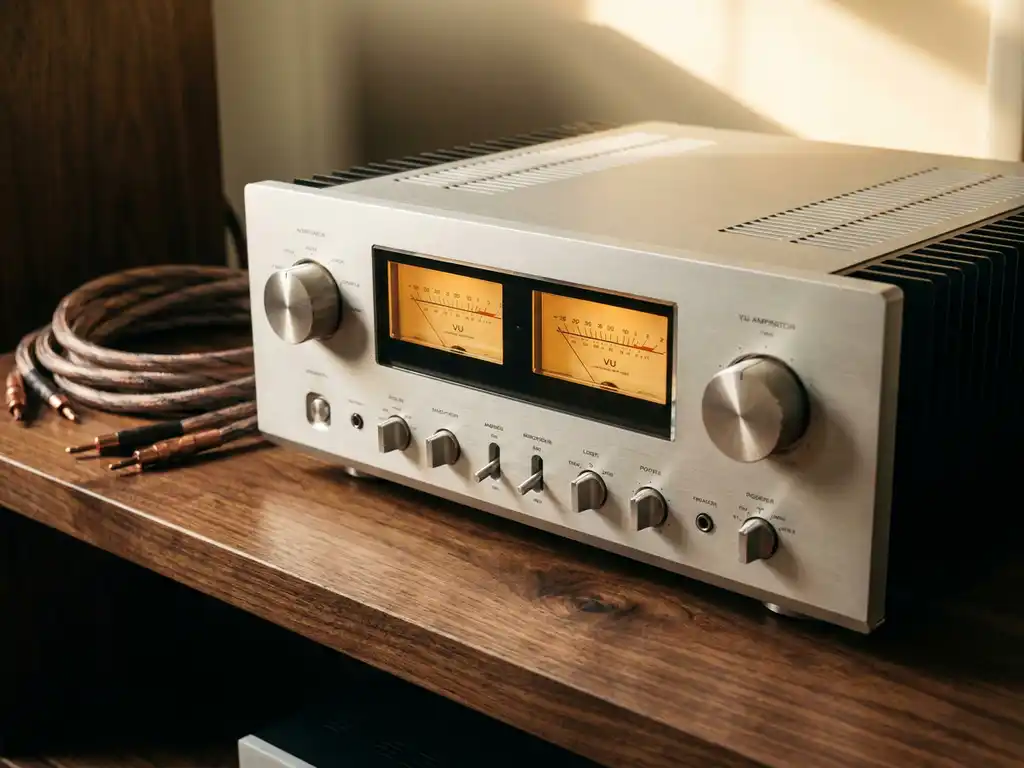
An integrated amplifier sits at the heart of countless high-end audio systems, yet many listeners are unsure exactly what happens inside the chassis between the source signal and the speakers. Understanding how an integrated amplifier works not only deepens appreciation for the engineering involved, but also helps when making informed decisions about which component truly suits a listening room and musical taste. Whether new to high-fidelity audio or a seasoned enthusiast refining an existing setup, getting to grips with the fundamentals of an audiophile integrated amplifier is a worthwhile investment of time.
At its core, an integrated amplifier combines two traditionally separate functions into a single, carefully engineered unit. The result is a component that handles everything from the delicate incoming signal to the final drive of the loudspeakers, all within one elegant enclosure. Let’s walk through exactly how that works.
Preamplifier and power amplifier in one box
The defining characteristic of an integrated amplifier is that it merges the preamplifier and power amplifier into a single chassis. In a separates-based system, these two functions live in distinct boxes connected by interconnects. An integrated amplifier combines them on a shared platform, which reduces the signal path and, in well-executed designs, can actually improve sonic coherence.
The preamplifier section handles input selection and volume control. It receives the relatively weak signal from a source component such as a CD player, streamer, or turntable, and prepares it for amplification. The power amplifier section then takes that conditioned signal and drives it to a level capable of moving loudspeaker drivers with authority. When both sections are designed to work together from the ground up, the preamplifier-power-amplifier-combined approach can achieve a level of synergy that is difficult to replicate by pairing two separate units from different manufacturers.
The key stages inside an integrated amplifier
Inside a well-designed integrated amplifier, the signal passes through several distinct stages, each with a specific role in shaping and amplifying the audio.
- Input stage: Selects the active source and presents the signal to the preamplifier circuitry at the correct impedance. High-quality switching here preserves signal integrity from the very first contact.
- Gain stage: Amplifies the signal voltage to a usable level. The design of this stage has a profound influence on the character of the sound, particularly in the midrange frequencies.
- Volume control: Adjusts the signal level before it enters the power amplifier section. Precision components here, such as stepped attenuators, maintain channel balance and low noise at all listening levels.
- Driver stage: Prepares the amplified signal to drive the output devices. It acts as an intermediary between the voltage gain stage and the output transistors or tubes.
- Output stage: Delivers current to the loudspeakers. This is where the actual power is generated, and its design determines how the amplifier behaves under real-world speaker loads.
Every stage introduces the potential for noise, distortion, or signal degradation. The best integrated amplifier designs treat each stage as equally important, using high-grade components throughout rather than cutting costs at any point in the chain.
How output power and impedance matching affect sound
Output power is one of the most discussed specifications in amplifier design, but wattage alone tells only part of the story. The relationship between an amplifier’s output characteristics and a loudspeaker’s impedance curve is what truly determines how well the two components work together.
Loudspeakers present a varying impedance across the frequency range, often dipping significantly below their nominal rating at certain frequencies. An amplifier that maintains stable current delivery as impedance drops will control the speaker drivers more authoritatively, resulting in tighter bass, cleaner dynamics, and a more composed presentation at higher volumes. An amplifier that struggles with low-impedance loads may sound compressed or strained, even if its rated wattage appears adequate on paper.
A high damping factor, which describes how well the amplifier controls the back-EMF generated by speaker drivers, contributes to precise bass reproduction and a stable stereo image. For listeners who use speakers with complex or demanding impedance curves, choosing an integrated amplifier with a robust power supply and a well-engineered output stage is essential, not optional.
Solid-state, tube, and hybrid designs compared
The technology used in the output stage defines much of an integrated amplifier’s sonic personality, and the choice between solid-state, tube, and hybrid topologies is one of the most meaningful decisions an audiophile will make.
Solid-state amplifiers
Solid-state designs use transistors to amplify the signal. They typically offer high output power, excellent control over loudspeaker drivers, low noise floors, and reliable long-term performance. Modern solid-state integrated amplifiers can achieve vanishingly low distortion figures while delivering the dynamic headroom needed for large orchestral passages or demanding bass lines. For listeners who prioritise accuracy and control, solid-state remains a compelling choice.
Tube amplifiers
Valve-based designs use vacuum tubes in the gain or output stages. They are celebrated for a particular quality of harmonic richness and a midrange presentation that many listeners describe as natural and involving. Tube amplifiers typically produce lower output power than their solid-state equivalents, and they require periodic maintenance in the form of tube replacement. However, for listeners who find that music through a well-matched tube design simply draws them deeper into the performance, the trade-offs are entirely worthwhile.
Hybrid designs
Hybrid integrated amplifiers combine elements of both technologies, often using tubes in the preamplifier or gain stage and solid-state devices in the output stage. This approach aims to capture the harmonic warmth and dimensional quality associated with tubes while retaining the current delivery and control of transistor output stages. A well-executed hybrid design can offer a genuinely balanced sonic character that suits a wide range of musical genres and loudspeaker types. Explore the full range of amplifier designs to understand how different topologies translate into real-world listening experiences.
What separates a high-end integrated amplifier from the rest
The gap between a competent integrated amplifier and a truly high-end one is not simply a matter of price. It reflects the cumulative effect of decisions made at every stage of the design and manufacturing process.
Component quality plays a central role. High-end integrated amplifiers use precision resistors, film capacitors, and custom-wound transformers that are selected and matched for their measured and sonic performance rather than their cost. The power supply, often overlooked in budget designs, receives serious engineering attention in reference-grade units. A robust, well-regulated power supply ensures that the amplifier can respond to musical transients without compression, regardless of the demands placed on it.
Mechanical construction matters equally. Chassis resonance can colour the sound in subtle but audible ways. High-end manufacturers address this through careful chassis design, strategic use of damping materials, and attention to component placement and internal wiring. The layout of an amplifier’s internal topology, specifically how signal paths are kept short and how sensitive circuits are isolated from power supply noise, separates thoughtful engineering from generic assembly.
Finally, testing and quality control distinguish reference-level products from the rest of the market. An integrated amplifier that has been individually tested, measured, and listened to before leaving the factory carries a level of assurance that mass-produced alternatives simply cannot match.
How Accustic Arts approaches the integrated amplifier
We at Accustic Arts have spent decades refining exactly what a high-end integrated amplifier should be. Our approach draws on experience from recording studios and live performance environments, which means every design decision is grounded in a genuine understanding of how music is created and how it should be reproduced. When we build an integrated amplifier, we focus on:
- Uncompromising component selection: Only precise, high-grade components are used throughout, with no compromises made at any stage of the signal path.
- Rigorous individual testing: Every unit undergoes an elaborate testing process that can last up to two weeks before it is considered ready to leave our facility.
- Emotionally engaging midrange reproduction: Our signature sonic characteristic, the result of years of development in cooperation with audio experts, delivers a musical presentation that draws listeners into the performance.
- Optimised price-value ratio: A no-holds-barred approach to quality does not mean ignoring value. Our designs are engineered to deliver reference performance at a price point informed by real-world experience.
- Available in solid-state and hybrid topologies: We offer designs that suit different listener preferences and system requirements, all built to the same standard of absolute sound fidelity.
If an integrated amplifier that combines German engineering precision with genuinely emotional musical reproduction sounds like the right fit, we would love to help. Get in touch with us to discuss which Accustic Arts component is the right match for a specific system and listening preference.
Related Articles
- What is a Class AB amplifier and how does it compare to Class A?
- What is jitter in digital audio and how does it degrade sound?
- How does digital-to-analog conversion shape the emotion in music?
- What is the difference between warmth and accuracy in sound?
- Why does room size affect bass response in a hi-fi system?