

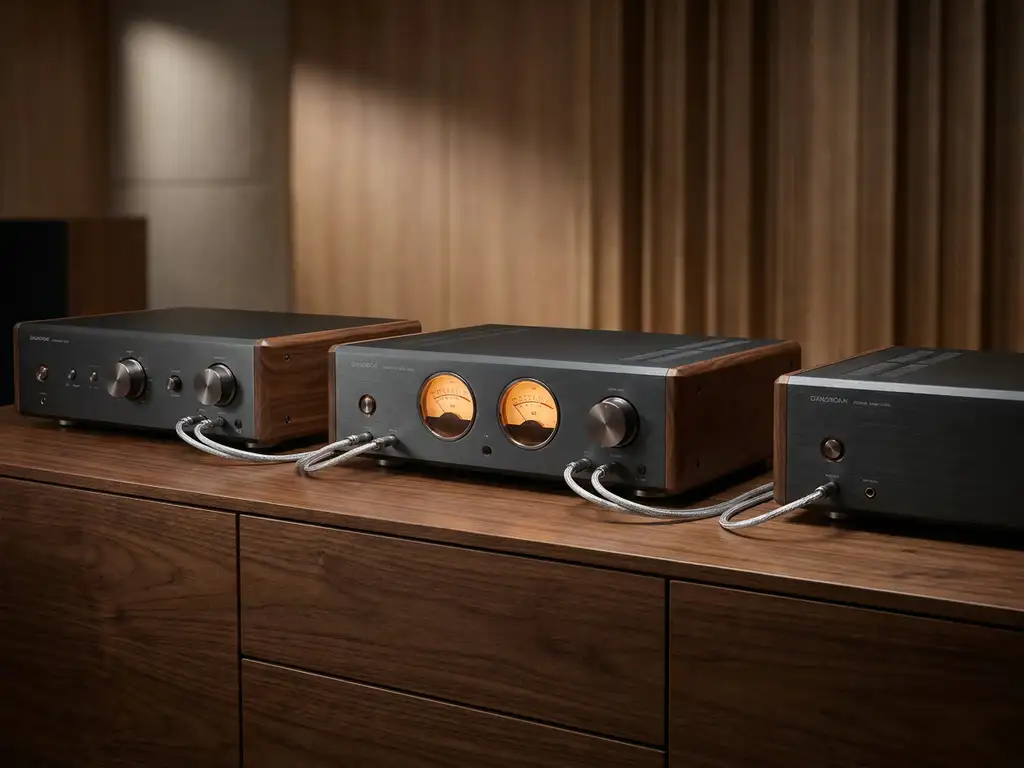
Choosing between an integrated amplifier and a separates system is one of the most debated decisions in hi-fi audio. Whether you are stepping into high-end audio for the first time or reconsidering your current setup, understanding how these two approaches differ helps you invest with confidence and build a system that genuinely serves your listening goals.
What is an integrated amplifier and how does it work?
An integrated amplifier is a single unit that combines a preamplifier and a power amplifier into one chassis. The preamplifier stage handles source selection and volume control, while the power amplifier stage drives the loudspeakers. By housing both functions together, an integrated amplifier offers a complete amplification solution in a compact, cohesive design.
The preamplifier section receives low-level signals from your sources, such as a CD player or DAC, and prepares them for amplification. The power amplifier section then takes that signal and delivers the current and voltage needed to move your speaker drivers. In a well-engineered integrated amplifier, the internal communication between these two stages is optimized from the ground up, which can result in excellent synergy and a clean signal path.
Modern high-end integrated amplifiers often include additional features such as built-in phono stages, digital inputs, or headphone outputs, making them genuinely versatile components for a wide range of listening rooms.
What is a separates system in hi-fi audio?
A separates system in hi-fi audio refers to a configuration where the preamplifier and power amplifier are housed in independent units connected by an interconnect cable. Rather than combining amplification functions into one box, each component performs a dedicated role in its own enclosure, with its own power supply and shielding.
A typical separates setup consists of at least two components: a standalone preamplifier and a standalone power amplifier. Some audiophiles extend this further with separate phono stages, DACs, or even monoblock amplifiers, where each channel of amplification has its own dedicated chassis. The result is a highly modular system where each component can be selected, upgraded, or replaced independently.
Hi-fi separates are popular among experienced audiophiles because they allow a level of customization and component matching that a single integrated unit cannot offer. Each piece can be chosen to complement the others, and the physical separation helps reduce interference between sensitive circuit stages.
What are the main differences between an integrated amplifier and separates?
The key difference between an integrated amplifier and a separates system lies in how amplification stages are housed and powered. An integrated amplifier combines preamplification and power amplification in one unit, while a separates system places each function in its own chassis with a dedicated power supply. This separation affects flexibility, cost, potential interference, and upgrade paths.
Here is a direct comparison of the two approaches:
- Chassis and power supply: Separates give each stage its own power supply, reducing the risk of one stage interfering with another. An integrated amplifier shares a single power supply, though premium designs use heavily regulated and isolated sections to minimize this.
- Flexibility: Separates allow you to mix and match components from different manufacturers or upgrade one piece at a time. An integrated amplifier is a fixed pairing, though it is chosen as a matched, optimized whole.
- Signal path: In an integrated amplifier, the internal connection between the pre and power stages is direct and controlled by the manufacturer. With separates, an external interconnect cable introduces an additional variable in the signal path.
- Cost: A comparable level of performance from a separates system typically requires a higher overall investment, since you are purchasing two or more full chassis with independent engineering.
- Space and complexity: Separates require more physical space and additional cabling. An integrated amplifier keeps the system tidy and straightforward.
Does a separates system actually sound better than an integrated amplifier?
Not necessarily. A separates system does not automatically sound better than an integrated amplifier. At comparable price points, a well-engineered integrated amplifier often outperforms a separates system assembled from budget components. Sound quality depends far more on the quality of engineering and component selection than on whether the preamplifier and power amplifier share a chassis.
The argument for separates rests on the idea that independent power supplies and physical isolation reduce crosstalk and interference between circuit stages. This is a legitimate engineering consideration at the highest levels of performance. However, manufacturers of premium integrated amplifiers address these concerns through careful internal layout, independent regulated power supplies for each stage, and extensive shielding.
The honest answer is that the best integrated amplifiers compete seriously with separates systems costing significantly more. Where separates genuinely pull ahead is at the very top of the performance spectrum, where no compromise is acceptable and the budget reflects that ambition. For most listeners, the performance ceiling of a high-end integrated amplifier is more than sufficient to deliver a deeply engaging, emotionally rewarding musical experience.
Which setup is right for your listening room and budget?
The right setup depends on your budget, available space, and how deeply you want to engage with system building. For most audiophiles seeking outstanding sound quality without the complexity of multiple components, a high-end integrated amplifier is the more practical and often the more cost-effective choice. A separates system makes the most sense when you are ready to invest significantly more and want maximum flexibility.
Consider these factors when making your decision:
- Budget: If your budget allows for one strong investment, a premium integrated amplifier will typically deliver better sound per dollar than splitting the same amount across two entry-level separates.
- Room and aesthetics: A single integrated amplifier is cleaner, requires less cabling, and takes up less space. If your listening room has limited rack space or you value a minimal setup, this matters.
- Upgrade ambitions: If you already know you want to build toward a reference-grade system over time, starting with a separates-friendly approach may save you from replacing components unnecessarily.
- Source components: The quality of your source, whether a CD player, DAC, or turntable, plays an enormous role in the final sound. Investing in a great source alongside a strong integrated amplifier often yields better results than splitting a modest budget across a separates chain.
Can you upgrade from an integrated amplifier to separates over time?
Yes, upgrading from an integrated amplifier to a separates system over time is a well-trodden path in high-end audio. Many audiophiles begin with a high-quality integrated amplifier and later transition to separates as their listening experience deepens and their budget allows. The transition is straightforward and does not require replacing your entire system at once.
A common upgrade path looks like this:
- Start with a high-quality integrated amplifier that performs well on its own terms.
- When ready, add a dedicated power amplifier and use the integrated amplifier’s preamplifier output to drive it, effectively converting your system to a separates configuration.
- Later, replace the integrated amplifier with a standalone preamplifier, completing the transition to a full separates system.
This staged approach means you can spread the investment over time while continuing to enjoy excellent sound at each step. It also gives you the opportunity to listen critically at each stage and make informed decisions about where to invest next. Explore the full range of amplification components available to understand how different pieces can work together as your system evolves.
How Accustic Arts Supports Your Amplifier Decision
At Accustic Arts, we have spent decades engineering amplification components that refuse to compromise on the musical experience. Whether you are drawn to the elegance of a single integrated amplifier or the modularity of a full separates system, our range is built to meet you where your listening journey is right now and where it is heading.
Here is what we offer to help you find the right solution:
- High-end integrated amplifiers engineered with independent internal power supply sections and meticulous signal path design, delivering separates-level performance in a single chassis
- Standalone preamplifiers and power amplifiers for audiophiles ready to build a full separates system with precision-matched components
- Monoblock amplifiers for those seeking the ultimate in channel separation and power delivery
- A two-week individual product testing process that ensures every component leaving our facility in Lauffen am Neckar meets our uncompromising standard of absolute sound fidelity
- A philosophy rooted in real musical experience, informed by decades of work in recording studios and live venues, so our components are voiced for genuine emotional engagement rather than technical showmanship
If you are ready to explore which amplification path suits your system and your listening room, we would love to help. Get in touch with us and let us guide you toward the setup that brings your music to life.
—
Disclaimer: This article was created with the assistance of Artificial Intelligence and has been reviewed by our editorial team.