

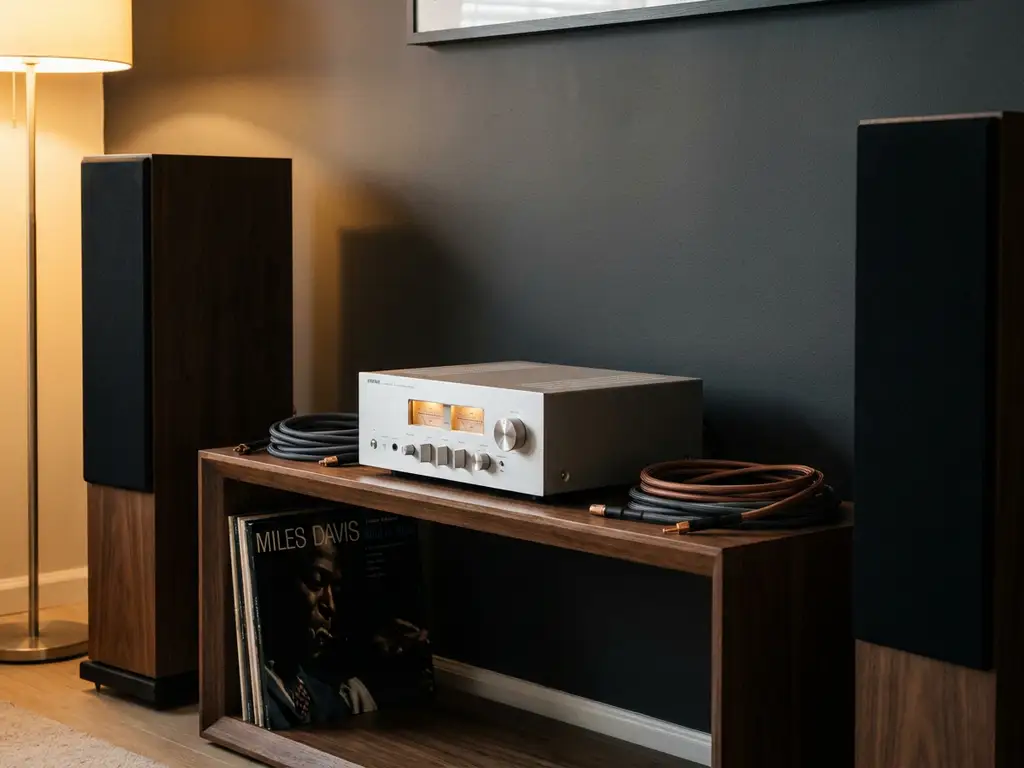
Setting up a high-end audio system for the first time is one of the most rewarding projects an audiophile can undertake. Done right, it transforms your listening room into a space where music feels alive, detailed, and emotionally present. Done carelessly, even the finest components can underperform. This guide walks you through every key question, from understanding what separates a high-end system from ordinary hi-fi to knowing when your setup has truly reached its potential.
What is a high-end audio system and what makes it different?
A high-end audio system is a carefully engineered chain of audio components designed to reproduce music with the highest possible fidelity, preserving the emotional and acoustic character of a live performance. Unlike mass-market hi-fi, high-end systems prioritize accuracy, resolution, and musicality over convenience or cost compromises.
The difference lies in the details. High-end components use precision-matched parts, superior power supplies, and advanced circuit designs that minimize distortion and noise at every stage of the signal path. The goal is not to add coloration or artificially enhance the sound, but to get out of the way of the music and let it speak for itself.
What audiophiles often describe as the defining quality of a true high-end system is its ability to reproduce the midrange with emotional honesty. Voices, strings, and acoustic instruments sound natural and present rather than processed. This is the quality that separates systems that impress on paper from those that genuinely move listeners.
What components do you need to build a high-end audio system?
A complete high-end audio system requires five core components: a source (such as a CD player, streaming device, or turntable), a D/A converter if the source outputs a digital signal, a preamplifier to control volume and select inputs, a power amplifier to drive the speakers, and the loudspeakers themselves. Each link in this chain matters equally.
Here is a breakdown of the essential building blocks:
- Source component: This is where playback begins. A high-quality CD player or network streamer with a precision transport and low-jitter output preserves the integrity of the original recording.
- D/A converter (DAC): Converts digital audio data into an analogue signal. A high-end DAC recovers fine musical detail that lower-grade converters obscure.
- Preamplifier: Acts as the control center of the system, managing input selection and volume while keeping the signal path clean and transparent.
- Power amplifier or monoblock amplifiers: Delivers the current needed to drive loudspeakers with authority and control. Monoblock configurations, where each channel has its own dedicated amplifier, eliminate crosstalk and maximize channel separation.
- Loudspeakers: The final transducer, converting electrical energy back into sound. Speaker choice has an enormous influence on the character of a system and should match the room and amplifier.
- Cables and interconnects: Often underestimated, quality signal and speaker cables preserve the work done by the electronics upstream.
Integrated amplifiers, which combine preamplifier and power amplifier stages in a single chassis, offer a compelling alternative for listeners who want a streamlined setup without sacrificing performance. You can explore the full range of high-end audio components available to build a reference-grade system at every level.
How do you choose the right room for a high-end audio setup?
The right room for a high-end audio setup is one with proportions that avoid strong standing waves, surfaces that balance absorption and reflection, and enough space to allow proper speaker placement. Room acoustics are as important as the electronics themselves, and no amount of component quality can compensate for a severely problematic listening space.
When evaluating a room, consider the following:
- Avoid perfectly square rooms. Equal dimensions create reinforcing standing waves that cause certain bass frequencies to boom while others disappear.
- Prefer moderate room sizes. Very small rooms make low-frequency control difficult. Very large rooms can make a system sound diffuse and distant.
- Hard parallel surfaces are problematic. Bare concrete or glass walls facing each other create flutter echoes that smear detail. Rugs, bookshelves, and soft furnishings help break up reflections naturally.
- Consider the listening position relative to room boundaries. Sitting too close to a rear wall reinforces bass unevenly. A position roughly one-third of the room’s length from the front wall is a useful starting point.
Acoustic treatment does not need to be expensive or visually intrusive. Strategically placed panels at first reflection points on the side walls and a diffuser behind the listening position can make a substantial difference to clarity and imaging.
How do you position speakers for the best sound quality?
For the best sound quality, speakers should form an equilateral triangle with the listening position, be toed in slightly toward the listener, and be placed away from walls to reduce bass buildup and improve imaging. Small adjustments of just a few centimeters can produce audible differences in soundstage width and focus.
Follow these steps when positioning your speakers:
- Start with an equilateral triangle. The distance between the two speakers should roughly equal the distance from each speaker to your listening position.
- Pull speakers away from the front wall. A minimum of 60 to 90 centimeters of clearance between the rear of the speaker and the wall behind it reduces bass reinforcement and improves definition.
- Experiment with toe-in. Angling the speakers so they point slightly toward your ears improves high-frequency focus and imaging precision. Start with the tweeters aimed just outside your ears and adjust from there.
- Check the listening height. The tweeter should ideally be at ear height when you are seated in your primary listening position.
- Listen and iterate. Move speakers in small increments and listen for changes in bass weight, stereo image width, and vocal presence. Trust your ears over any formula.
What are the most common mistakes when setting up a hi-fi system?
The most common mistakes when setting up a hi-fi system include placing speakers too close to walls, rushing the break-in period, neglecting cable management and vibration control, and failing to treat the room acoustics. Many audiophiles invest heavily in components while overlooking the environmental factors that shape how those components actually sound.
Other frequent errors include:
- Mixing incompatible components. Pairing a high-output amplifier with speakers of very low sensitivity, or a low-powered amplifier with demanding speakers, leads to distortion or underwhelming dynamics.
- Ignoring component placement and vibration. Electronics placed on unstable surfaces or stacked directly on top of each other can suffer from microphonic interference. Use dedicated equipment racks and isolation feet where possible.
- Using poor-quality power. Mains power quality affects analogue circuitry more than many beginners expect. A basic power conditioner or filtered power strip can reduce audible noise in a system.
- Setting up in a hurry. A high-end audiophile system setup rewards patience. Rushing to a final configuration before components have warmed up or broken in leads to premature and often inaccurate judgments about performance.
How long does it take for a high-end audio system to sound its best?
A high-end audio system typically reaches its best performance after a break-in period of between 100 and 300 hours of use, depending on the components involved. During this period, capacitors form, speaker drivers loosen, and mechanical parts settle, all of which noticeably improve the sound compared to the first hours of operation.
Different components break in at different rates:
- Loudspeakers often show the most dramatic improvement during break-in. New drivers can sound tight and constrained at first, opening up in bass extension and midrange fluidity over the first 100 to 200 hours.
- Amplifiers and preamplifiers benefit from thermal stabilization. Allow solid-state electronics to warm up for at least 30 to 60 minutes before critical listening sessions, even after the initial break-in is complete.
- Cables also benefit from extended use, though the effect is subtler. New cables sometimes sound slightly bright or lean before settling into their final character.
Beyond break-in, the system also benefits from consistent warm-up before each listening session and from a stable listening environment. Patience is not just a virtue in high-end audio setup – it is part of the process.
How Accustic Arts Helps You Build the Right System
We at Accustic Arts have spent decades engineering components that make every step of this process easier and more rewarding. Our approach to high-end audio system design is rooted in a single principle: Absolute Sound Fidelity Through Reproduction. Every product we build is designed to serve the music, not the marketing brief.
Here is how we support audiophiles at every stage of their setup journey:
- Complete signal chain coverage: From CD players and DACs to preamplifiers, integrated amplifiers, power amplifiers, and monoblock configurations, our product range covers every component you need for a reference-grade system.
- Uncompromising quality control: Every component undergoes individual testing for up to two weeks before it leaves our facility in Lauffen am Neckar, Germany. You receive a product that is fully run-in and verified to perform.
- Real-world calibration: Our engineering draws on experience from professional recording studios and live sound environments, ensuring that our components perform not just in controlled conditions but in real listening rooms.
- Tube hybrid and solid-state options: Whether you prefer the warmth of tube hybrid designs or the precision of solid-state circuits, our range offers paths to the sound you are looking for.
- Audiophile recordings for system evaluation: Through our Accustic Arts Audiophile Recordings label, we offer reference-quality recordings specifically suited to evaluating and enjoying your system.
If you are ready to take the next step, get in touch with us and we will help you find the right combination of components for your room, your music, and your listening goals.
—
Disclaimer: This article was created with the assistance of Artificial Intelligence and has been reviewed by our editorial team.
Related Articles
- What is bi-amping and does it really improve sound quality?
- What is a Class A amplifier and why do audiophiles prize it?
- What is a Class AB amplifier and how does it compare to Class A?
- Can too much or too little power damage your speakers?
- What is the difference between high-end and mid-fi audio components?