

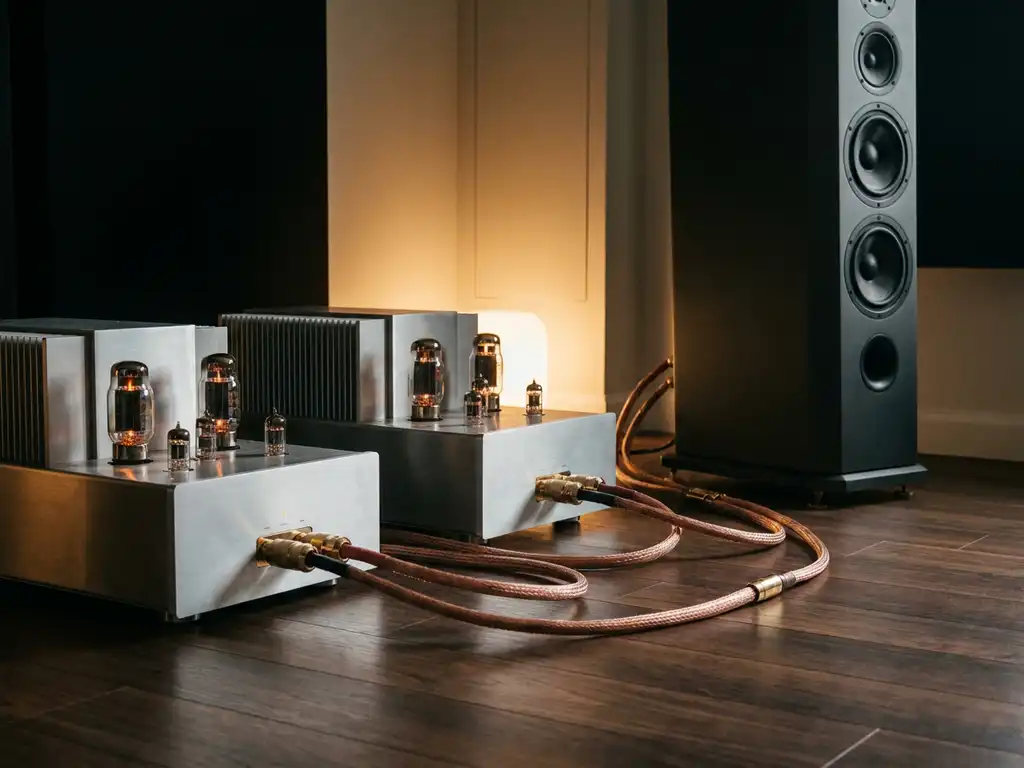
Bi-amping is a speaker-driving technique that uses two separate amplifiers to power different frequency ranges of a single speaker, rather than relying on one amplifier to handle the full audio spectrum. It can genuinely improve sound quality, but the degree of improvement depends on the type of bi-amping used and the quality of the components involved. The sections below break down exactly how it works, what separates passive from active bi-amping, and when it is worth pursuing.
How does bi-amping actually work?
Bi-amping works by splitting the audio signal so that one amplifier drives the high-frequency drivers of a speaker, such as tweeters, while a second amplifier drives the low-frequency drivers, such as woofers. Instead of one amplifier managing the entire frequency range, each amplifier operates within a narrower band, reducing the load on each unit and allowing each driver to receive a more focused, dedicated power supply.
Most speakers designed for bi-amping feature two sets of binding posts on the back, one pair for the high-frequency section and one pair for the low-frequency section. In a standard single-amplifier setup, a metal bridge connects these terminals so that one amplifier feeds the entire crossover network. When bi-amping, you remove that bridge and connect each pair of terminals to its own amplifier channel or dedicated amplifier unit.
The result is that each amplifier works less hard, operates in a more controlled environment, and delivers cleaner power to its designated driver. This separation can reduce intermodulation distortion, which occurs when low-frequency signals interfere with the reproduction of high-frequency signals within a single amplifier stage.
What’s the difference between passive and active bi-amping?
The key difference between passive and active bi-amping is where the crossover filtering happens. In passive bi-amping, the speaker’s built-in passive crossover still performs the frequency splitting after the signal leaves the amplifiers. In active bi-amping, electronic crossovers divide the signal before it reaches the amplifiers, meaning each amplifier receives only the frequency band it is meant to reproduce.
Passive bi-amping
Passive bi-amping is the more accessible approach. You connect two amplifiers to the speaker’s existing binding posts, but the speaker’s internal passive crossover network still filters the frequencies after amplification. The practical benefit is limited compared to active bi-amping because the passive crossover components, such as capacitors and inductors, still introduce losses and interact with the amplifier outputs. That said, passive bi-amping can still reduce amplifier strain and improve dynamics in some systems.
Active bi-amping
Active bi-amping is the more technically demanding and rewarding approach. An active electronic crossover sits between the preamplifier and the power amplifiers, dividing the signal at line level before amplification. Each amplifier then drives its designated driver directly, bypassing the passive crossover entirely. This eliminates crossover insertion losses, gives precise control over crossover points and slopes, and allows each amplifier to be optimized for its specific frequency range. Active bi-amping is the standard approach in professional recording studios and high-end monitoring systems for exactly these reasons.
Does bi-amping genuinely improve sound quality?
Active bi-amping can deliver a meaningful improvement in sound quality, particularly in terms of bass control, dynamic headroom, and high-frequency clarity. Passive bi-amping offers more modest gains and is sometimes debated among audiophiles, since the passive crossover remains in the signal path. The improvement is most noticeable in demanding listening conditions and with high-quality amplifiers and speakers that reveal fine differences in reproduction.
The improvements most commonly reported with active bi-amping include tighter, better-defined bass, a wider dynamic range, reduced smearing between frequency bands, and a more open, airy presentation of high frequencies. These gains are not imaginary, but they are also not guaranteed. They depend heavily on the quality of the crossover implementation, the matching of amplifier characteristics, and the transparency of the rest of the signal chain.
Passive bi-amping, by contrast, can still offer some benefit by reducing the current demands on a single amplifier, which may lower distortion at high listening levels. However, if the amplifiers used are mismatched in gain or output impedance, passive bi-amping can actually introduce tonal imbalances rather than improvements. Careful matching and calibration are essential.
What speakers and amplifiers are suited for bi-amping?
Speakers suited for bi-amping are those with separate binding posts for high- and low-frequency sections, often labeled as dual-wire or bi-wire ready. Amplifiers suited for bi-amping are those with closely matched gain characteristics, low output impedance, and sufficient current delivery to drive their designated driver range cleanly and without strain.
On the speaker side, look for floorstanding or large standmount designs from manufacturers who build in genuine bi-amp capability, not simply dual binding posts that feed the same crossover node. The crossover design matters enormously. A well-designed passive crossover in a bi-amp-ready speaker will respond better to the technique than a budget design where the dual posts are a marketing afterthought.
For amplifiers, the most important consideration in passive bi-amping is matched gain. If one amplifier has a higher gain than the other, the tonal balance of the speaker will shift, typically making either the bass or treble too prominent. Many audiophiles use identical amplifiers in a bi-amp configuration for this reason. In active bi-amping, gain matching is handled by the active crossover, giving you more flexibility in amplifier selection, including pairing a high-power solid-state amplifier for the bass section with a lower-power tube amplifier for the midrange and treble.
Explore our full range of amplifiers and audio components to find combinations suited to demanding bi-amp setups.
When should you consider bi-amping your system?
You should consider bi-amping when your current system is already performing well at a high level and you want to extract more dynamic range, bass control, or resolution without replacing your speakers. It makes the most sense when your speakers support the configuration properly, your amplifiers are well matched, and you have already optimized room acoustics and source quality.
Bi-amping is not a fix for a system that has fundamental weaknesses elsewhere. If your speakers are not well suited to your room, or your source components and cables are limiting the signal quality, bi-amping will not resolve those issues. It is best understood as a refinement technique for a system that is already performing at a high baseline.
Consider bi-amping in the following situations:
- Your speakers have genuine dual binding posts and a well-designed crossover network
- You want to increase dynamic headroom without upgrading to larger speakers
- You are building an active system around a dedicated preamplifier and electronic crossover
- You have access to a second amplifier that closely matches the gain of your existing one
- You are seeking a more defined low end and a cleaner high-frequency presentation
For most audiophiles, the move to active bi-amping is a significant step that rewards careful planning and system matching. It is the kind of upgrade that experienced listeners pursue once they have a clear picture of what their system can and cannot do.
How Accustic Arts supports your bi-amping journey
At Accustic Arts, we design our amplifiers and electronics with the demands of serious high-end audio in mind, including configurations like bi-amping where component quality, gain precision, and signal integrity are critical. Our approach to engineering means that every product in our range is built to perform in exacting setups, not just conventional single-amplifier systems.
Here is what we bring to a bi-amping configuration:
- Precisely matched gain characteristics across our amplifier range, making it easier to build a coherent bi-amp system without tonal imbalances
- Exceptionally low noise floors that allow the gains of bi-amping to be clearly audible rather than masked by amplifier-introduced coloration
- Rigorous testing standards, with each component tested for up to two weeks before leaving our facility, ensuring reliable and consistent performance in demanding setups
- A full ecosystem of components, from preamplifiers to monoblock amplifiers, designed to work together and with high-quality third-party equipment
Whether you are exploring passive bi-amping for the first time or building a fully active system, our team is ready to help you find the right configuration for your listening goals. Contact us directly to discuss your setup and get expert guidance on which Accustic Arts components will work best in your bi-amp system.