

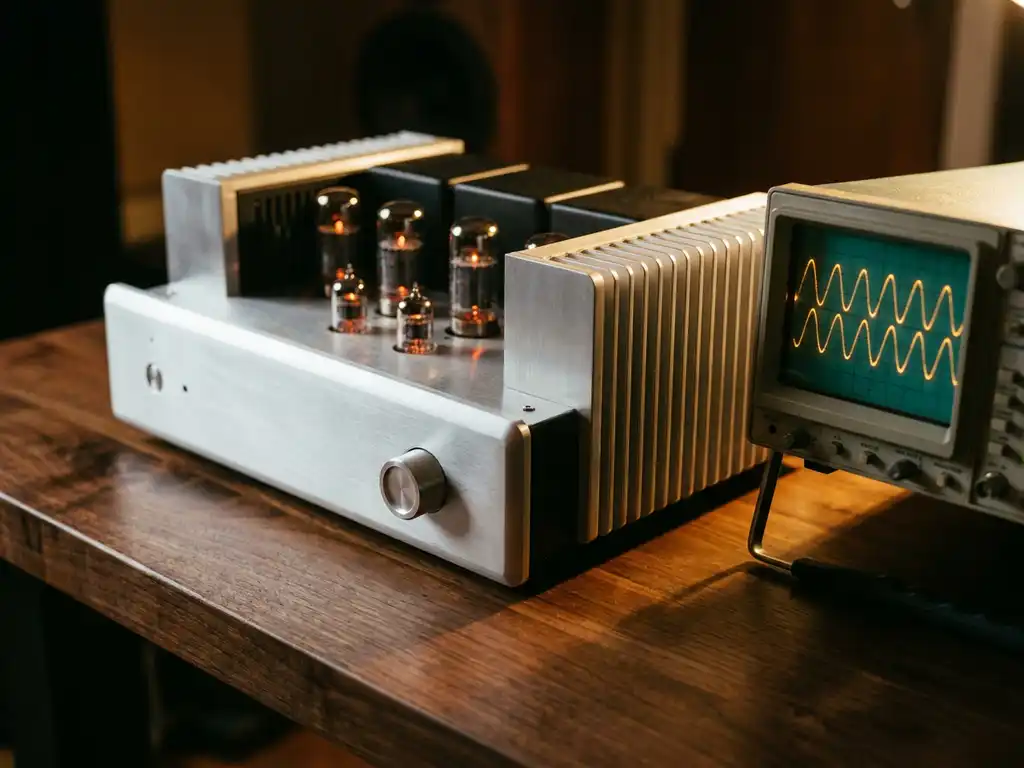
Evaluating an amplifier is one of the most rewarding and sometimes most confusing parts of building a high-end audio system. With so many variables at play — from circuit topology to listening room acoustics — it can be difficult to know where to start. Whether you are a seasoned audiophile or stepping into the world of high-fidelity audio for the first time, understanding how to assess amplifier sound quality in a structured, meaningful way will help you make confident decisions and, more importantly, find the sound that genuinely moves you.
What does sound quality actually mean in an amplifier?
Sound quality in an amplifier refers to how faithfully and expressively the device reproduces the original audio signal. A high-quality amplifier preserves the dynamics, tonal balance, spatial depth, and emotional character of the music without adding coloration, distortion, or noise that was not present in the source material.
This definition sounds straightforward, but in practice it encompasses a wide range of sonic attributes. Tonal accuracy describes whether instruments and voices sound natural and correctly weighted across the frequency range. Dynamic performance refers to the amplifier’s ability to handle both the quietest whisper and the most explosive orchestral crescendo without compression or strain. Soundstage and imaging describe how convincingly the amplifier recreates the sense of space and placement of performers in a three-dimensional listening environment.
Importantly, sound quality is not simply about technical perfection. Many audiophiles find that the most emotionally satisfying amplifiers are those that balance technical accuracy with a sense of musicality — a quality that allows the listener to feel connected to the performance rather than merely analyzing it.
What are the key listening criteria for evaluating an amplifier?
The key listening criteria for evaluating an amplifier are tonal balance, dynamic range, detail retrieval, soundstage depth and width, bass control, midrange clarity, and high-frequency extension. These criteria together give a comprehensive picture of how an amplifier performs across real musical material.
- Tonal balance: Does the amplifier reproduce all frequencies in proportion, or does it emphasize certain ranges at the expense of others?
- Dynamic range: Can the amplifier convincingly convey the difference between soft and loud passages without sounding compressed or strained?
- Detail retrieval: Are subtle textures — the breath of a vocalist, the decay of a piano note — clearly audible and natural-sounding?
- Soundstage: Does the amplifier create a convincing three-dimensional space, with instruments placed distinctly within it?
- Bass control: Is low-frequency reproduction tight and articulate, or does it sound loose and undefined?
- Midrange clarity: The midrange is where most musical information lives. Does the amplifier render voices and instruments with warmth and presence?
- High-frequency extension: Are the upper registers smooth and extended, or do they sound harsh and fatiguing over time?
Using familiar recordings you know well is essential when applying these criteria. Music you have heard many times gives you a reliable reference point, making it easier to notice differences between components.
How does an amplifier’s design affect its sound character?
An amplifier’s design directly shapes its sound character through choices in circuit topology, component quality, power supply implementation, and output stage configuration. Each design decision introduces specific sonic tendencies that define how the amplifier interacts with music.
Class A amplifiers, for example, operate with their output transistors conducting at all times, which tends to produce a smooth, continuous sound with low crossover distortion. Class AB designs are more energy-efficient but introduce a small transition point between positive and negative signal cycles that, if poorly implemented, can introduce subtle harshness. Tube-based or tube-hybrid designs often produce a warmer harmonic character that many listeners find more natural and engaging.
Does component quality matter as much as topology?
Yes, component quality plays an enormous role alongside topology. High-grade capacitors, precision resistors, and well-designed transformers all contribute to lower noise floors, better channel separation, and more stable performance over time. An amplifier built with premium components and a well-executed power supply will typically outperform a theoretically superior design built with mediocre parts.
The physical layout of a circuit also matters. Careful attention to signal path length, shielding, and ground plane design can reduce interference and preserve the integrity of delicate audio signals from input to output.
What’s the difference between listening tests and technical specifications?
Listening tests reveal how an amplifier actually sounds in real-world conditions with real music, while technical specifications describe measured performance under controlled laboratory conditions. Both are valuable, but neither tells the complete story on its own. The most informed evaluation combines both approaches.
Technical specifications such as total harmonic distortion (THD), signal-to-noise ratio (SNR), frequency response, and output power provide an objective baseline. An amplifier with very low THD, a wide and flat frequency response, and a high SNR has the technical foundation for excellent sound. However, measurements do not always correlate perfectly with perceived listening quality. Two amplifiers with nearly identical specifications can sound noticeably different in practice.
Listening tests fill in what measurements cannot capture — the sense of musical flow, the emotional engagement, the ease with which the amplifier handles complex passages. Experienced audiophiles often describe listening to a great amplifier as feeling effortless, as though the music simply appears in the room without the electronics drawing attention to themselves. That quality is difficult to quantify but immediately recognizable when you hear it.
How should you set up a proper amplifier listening test?
A proper amplifier listening test requires a consistent signal chain, familiar reference recordings, adequate warm-up time for the components, and a quiet, controlled listening environment. Removing as many variables as possible ensures that what you hear reflects the amplifier’s true character rather than external factors.
- Use the same source and speakers throughout: Changing any other component in the chain introduces additional variables that make it impossible to isolate the amplifier’s contribution.
- Allow adequate warm-up time: Most amplifiers require at least 30 minutes of operation before they reach thermal and electrical stability. Evaluating a cold amplifier can give a misleading impression.
- Match volume levels carefully: Even small differences in playback volume can make one amplifier seem more dynamic or detailed than another. Use a sound level meter or careful ear matching to keep levels consistent.
- Use a diverse selection of music: Include recordings that test different aspects of performance — a solo acoustic instrument for detail and tonal accuracy, a large orchestral piece for dynamics and soundstage, and a well-recorded vocal for midrange expressiveness.
- Listen over an extended period: Initial impressions can be misleading. An amplifier that sounds exciting in the first few minutes may become fatiguing over a longer session, while a more neutral design may reveal its strengths gradually.
- Take notes: Write down your impressions systematically against your key criteria. Memory is unreliable when comparing components over time.
If possible, audition amplifiers through a reputable dealer or directly from a manufacturer who offers a home trial. Listening in your own room, with your own speakers and source components, is the most reliable way to assess whether an amplifier is right for your system. You can explore high-end amplifier options to get a sense of what reference-grade design looks and sounds like before committing to a listening session.
What common mistakes should you avoid when judging amplifier sound?
The most common mistakes when judging amplifier sound quality are evaluating without a warm-up period, relying on a single music track, making judgments based on volume differences, and confusing initial excitement with long-term satisfaction. Avoiding these pitfalls leads to more accurate and reliable conclusions.
- Judging a cold amplifier: As noted above, thermal stability affects performance. Always allow proper warm-up time before forming any opinion.
- Using only one type of music: A track that flatters one amplifier may not reveal its weaknesses. Diverse program material exposes a broader range of performance characteristics.
- Ignoring system synergy: An amplifier does not exist in isolation. Its interaction with your specific speakers, cables, and source components will significantly shape the final sound. An amplifier that performs brilliantly in one system may not suit another.
- Overweighting first impressions: Brighter, more forward-sounding amplifiers often make a strong initial impression. Over longer listening sessions, a more neutral and refined design frequently proves more satisfying.
- Dismissing specifications entirely: While measurements are not the whole story, an amplifier with very high distortion figures or a limited frequency response is unlikely to perform well regardless of how it sounds in a brief audition.
- Evaluating in a dealer showroom only: Showroom acoustics, unfamiliar equipment, and time pressure can all distort your perception. Wherever possible, arrange a home audition.
How ACCUSTIC ARTS Helps You Find Your Perfect Amplifier Sound
At Accustic Arts, we have spent decades refining what it means to build an amplifier that genuinely serves music. Our approach directly addresses every dimension of audio amplifier performance discussed in this article, giving you the tools to experience the difference for yourself.
- Uncompromising component selection: We use only precision, high-grade components across every product line, ensuring that the technical foundation for excellent sound is firmly in place.
- Rigorous testing: Every amplifier undergoes an individual product test lasting up to two weeks before it leaves our facility. This process ensures that what reaches you performs exactly as designed, not just on paper but in real listening conditions.
- Real-world development context: Our engineering is informed by experience in professional recording studios and live PA environments, which means our products are built around how music actually sounds and behaves, not just how it measures.
- Emotionally engaging midrange reproduction: Our signature achievement is a midrange character that allows the emotional content of music to shine through naturally, without artificial warmth or coloration.
- A complete high-end signal chain: From preamplifiers and CD players to monoblock power amplifiers and D/A converters, we offer every component you need to build a fully optimized system around a consistent sonic philosophy.
If you are ready to hear what a truly reference-grade amplifier sounds like in your own system, we invite you to get in touch with us and speak with one of our audio specialists. We are happy to guide you through our product range and help you find the amplifier that brings your music to life exactly as it was meant to be heard.
—
Disclaimer: This article was created with the assistance of Artificial Intelligence and has been reviewed by our editorial team.
Related Articles
- What does an amplifier actually do in a hi-fi system?
- How does component matching affect overall sound quality?
- How do you balance sound accuracy with emotional engagement?
- What is the difference between accuracy and musicality in hi-fi?
- What is the difference between passive and active acoustic treatment?