

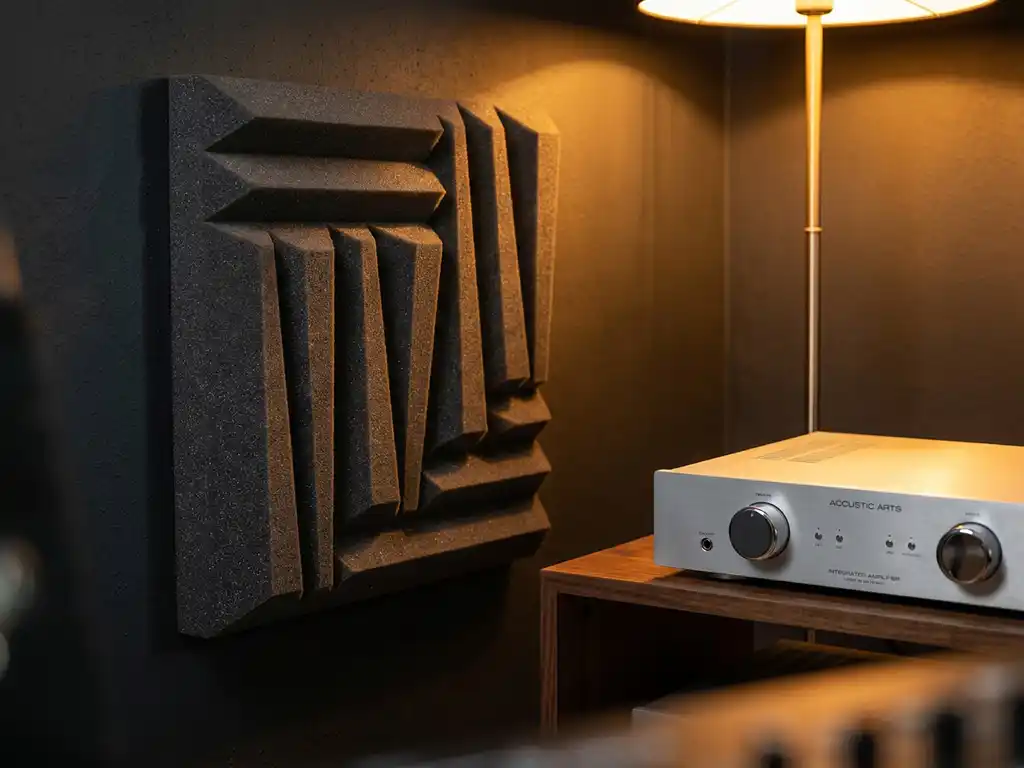
If you have ever wondered why your listening room sounds different from a professional recording studio, room acoustics are almost certainly a major factor. The way sound behaves in an enclosed space can elevate or completely undermine even the finest audio equipment. Understanding the tools available to address this, specifically passive acoustic treatment and active acoustic treatment, is essential for anyone serious about high-end audio reproduction. This guide answers the most common questions clearly and directly, so you can make informed decisions about your own listening environment.
What is passive acoustic treatment?
Passive acoustic treatment refers to physical materials and structures placed within a room to absorb, diffuse, or redirect sound energy without using any power source or electronic processing. These solutions work purely through their physical properties, shaping the acoustic behavior of a room by interacting with sound waves directly.
The most common forms of passive acoustic treatment include:
- Acoustic panels: Fabric-wrapped panels filled with dense foam or mineral wool that absorb mid and high-frequency sound energy, reducing flutter echo and unwanted reflections.
- Bass traps: Thick, dense absorptive materials, typically placed in corners where low-frequency energy accumulates, designed to reduce bass buildup and room modes.
- Diffusers: Structured surfaces, often made from wood or other rigid materials, that scatter sound waves in multiple directions rather than absorbing them, preserving a sense of liveliness in the room while breaking up harsh reflections.
Passive treatment works at the physical level and is generally considered the foundation of any serious acoustic treatment strategy. It requires no maintenance, produces no noise, and introduces no signal processing into the audio chain, making it the preferred first step for audiophiles who want to preserve signal purity.
What is active acoustic treatment?
Active acoustic treatment uses electronic systems to measure and correct acoustic problems in a room through digital signal processing (DSP). Rather than physically altering how sound waves behave in a space, active systems analyze the room’s acoustic signature and apply compensating filters or corrections to the audio signal before or after it reaches the speakers.
Common forms of active acoustic treatment include:
- Room correction software: Programs that use a measurement microphone to capture the room’s frequency response and then apply digital filters to compensate for peaks, dips, and timing anomalies.
- DSP-based equalizers: Dedicated hardware or software equalizers that target specific problem frequencies identified through acoustic measurement.
- Active bass management systems: Electronic systems that address low-frequency room modes through real-time signal correction rather than physical absorption.
Active room correction can be highly effective at addressing measurable acoustic problems, particularly in the bass range where physical treatment becomes impractical due to the large panel sizes required. However, it works within the signal chain, which means it introduces processing that some audiophiles prefer to avoid.
What’s the difference between passive and active acoustic treatment?
The key difference between passive and active acoustic treatment is where the correction happens. Passive treatment addresses sound waves physically in the room before they reach your ears, while active treatment corrects acoustic problems electronically within the audio signal. One works in the physical domain; the other works in the digital domain.
Here is a direct comparison of the two approaches:
- Mechanism: Passive treatment uses absorptive and diffusive materials; active treatment uses DSP and digital filters.
- Signal purity: Passive treatment leaves the audio signal untouched; active treatment processes the signal, which can introduce subtle coloration or phase shifts depending on the system.
- Frequency range: Passive panels and diffusers work most effectively in the mid and high frequencies; bass traps help with low frequencies but have physical size limitations. Active systems can address a full range of frequencies, including deep bass.
- Flexibility: Active systems can be adjusted and recalibrated easily; passive treatment requires physical repositioning or replacement.
- Cost profile: Passive treatment typically involves a one-time investment in materials; active systems may require software licenses, hardware, and periodic recalibration.
Neither approach is inherently superior. The right choice depends on the specific acoustic challenges of your room, your budget, and your tolerance for signal processing in the audio chain.
Which type of acoustic treatment works better for high-end audio listening rooms?
For high-end audio listening rooms, passive acoustic treatment is generally the preferred foundation because it addresses acoustic problems without touching the signal chain. Audiophiles who invest in reference-grade electronics typically want to preserve the integrity of every component in the system, and introducing digital processing downstream can compromise that goal.
That said, no single approach is universally superior. The practical answer depends on several factors:
- Room size and construction: In rooms with severe low-frequency problems caused by parallel walls or small dimensions, passive bass traps alone may not fully resolve the issue, and active correction can fill the gap.
- Budget and aesthetics: A fully treated room with broadband panels, corner bass traps, and well-placed diffusers can require significant investment and careful interior planning.
- System transparency goals: If preserving the exact character of your source components and amplification is the priority, minimizing any active processing in the chain is a reasonable principle.
Many experienced listeners and acoustic consultants recommend starting with passive treatment to resolve the most audible problems first, then evaluating whether active correction adds meaningful benefit on top of that foundation.
Can passive and active acoustic treatment be combined?
Yes, passive and active acoustic treatment can be combined, and in many real-world listening rooms, a hybrid approach delivers the best results. Passive treatment handles the physical acoustic environment, while active correction addresses any remaining measurable anomalies that physical materials cannot fully resolve.
A practical combined strategy might look like this:
- Install broadband acoustic panels at primary reflection points on the side walls and ceiling.
- Place bass traps in corners to reduce low-frequency buildup.
- Add diffusers on the rear wall to maintain a sense of space and natural ambience.
- Use a room measurement tool to identify any remaining frequency response problems.
- Apply targeted active correction only where passive treatment has not fully resolved the issue, particularly in the bass range.
This layered approach is increasingly common among serious listeners who want the transparency of a well-treated room combined with the precision of measured correction. The key is to treat active correction as a refinement tool rather than a substitute for proper physical treatment.
What are the most common mistakes when treating a listening room?
The most common mistake when treating a listening room is over-absorbing the space. Covering every surface with thick acoustic panels creates a room that sounds unnaturally dead, which can actually make music feel flat and fatiguing rather than natural and engaging.
Other frequent errors include:
- Ignoring bass treatment: Many listeners focus on mid and high-frequency panels while neglecting corner bass traps. Low-frequency buildup is often the most damaging acoustic problem in small rooms and the hardest to hear without measurement tools.
- Treating only the front wall: Reflections from side walls and the ceiling at the first reflection points have a significant impact on stereo imaging and clarity. These areas deserve equal attention.
- Relying on active correction alone: Room correction software is a powerful tool, but it cannot replace physical treatment. Correcting a problem electronically does not eliminate the acoustic energy causing it, it simply compensates for the result.
- Neglecting speaker and listening position: Even perfect acoustic treatment cannot fully compensate for a poorly positioned speaker or listening chair. Placement within the room is the first variable to optimize before any treatment is applied.
- Underestimating diffusion: Many listeners install only absorptive panels and end up with a room that lacks natural ambience. A balance of absorption and diffusion creates a more realistic and enjoyable listening environment.
Taking time to measure your room before and after treatment, using a calibrated microphone and free acoustic measurement software, is one of the most valuable steps you can take to avoid these mistakes and make informed decisions about where treatment is genuinely needed.
How Accustic Arts Supports Your Listening Room Journey
We at Accustic Arts understand that even the finest electronics can only perform to their full potential in an acoustically optimized environment. Our products are engineered to reveal every detail and emotion in recorded music, which makes the quality of your listening room directly relevant to what you hear. Here is how we can help:
- Reference-grade electronics that reward acoustic investment: Our high-end audio components are built to resolve the full dynamic and tonal range of music, meaning improvements to your room acoustics will be clearly audible through our equipment.
- Products designed for transparency: Because our amplifiers, preamplifiers, D/A converters, and CD players are engineered with signal purity as a core principle, they pair naturally with passive acoustic treatment strategies that preserve the integrity of the audio chain.
- Expert guidance and personal support: Our team is happy to discuss how your listening environment and system components interact. Reach out to us directly and we will help you understand how to get the most from your setup.
If you are ready to explore what reference-level audio reproduction truly sounds like in a well-treated room, we invite you to discover the Accustic Arts range and take the first step toward the listening experience your music deserves.
—
Disclaimer: This article was created with the assistance of Artificial Intelligence and has been reviewed by our editorial team.
Related Articles
- What is a Class A amplifier and why do audiophiles prize it?
- What is the difference between an all-in-one system and a separates setup?
- How do you evaluate the sound quality of an amplifier?
- What is the difference between soundproofing and acoustic treatment?
- Why does the same music sound different on different systems?