

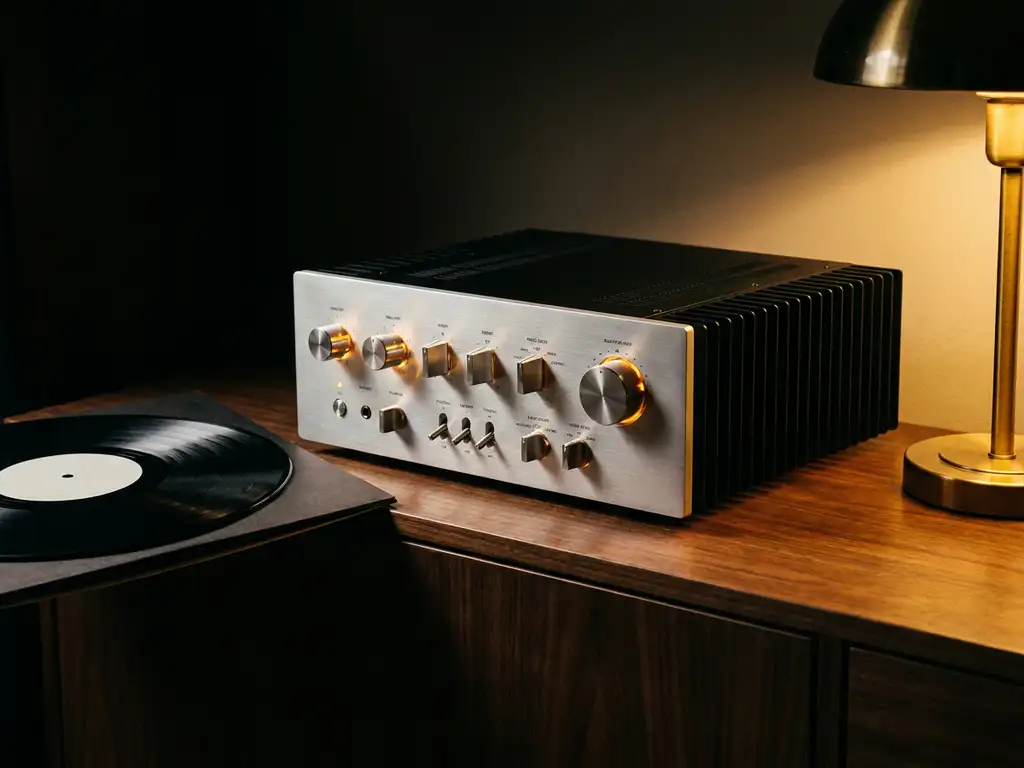
A reference-grade amplifier is worth the investment if you are serious about hearing music as it was meant to be heard. These components are built without compromise, using precision-matched parts, exhaustive testing, and engineering principles drawn from professional recording environments. The result is a level of sonic accuracy, emotional engagement, and long-term reliability that mainstream alternatives simply cannot match. Below, we answer the most important questions audiophiles ask before making this kind of investment.
How does a reference-grade amplifier differ from a high-end consumer model?
A reference-grade amplifier differs from a standard high-end consumer model in the depth of its engineering, the quality of its internal components, and the rigor of its testing process. Where a consumer model targets a price point, a reference-grade design targets a performance ceiling, often with no compromise made along the way. The gap between the two is not just measurable on paper, it is audible in real listening conditions.
Consumer high-end amplifiers are well-made and often impressive, but they are designed with production efficiency and accessible pricing in mind. A reference-grade audiophile amplifier, by contrast, is typically built with individually selected components, hand-assembled circuits, and extended burn-in and testing periods. Every decision in the design process is driven by sonic performance rather than cost management. The result is an amplifier that does not just reproduce music accurately, it allows the emotional content of a recording to come through intact.
What components inside an amplifier determine its sound quality?
The components that most directly determine an amplifier’s sound quality are its power supply, output stage transistors or tubes, capacitors, resistors, and the quality of its internal wiring and circuit board layout. Each of these elements affects how faithfully an electrical signal is amplified before it reaches your speakers. Even small compromises in component quality can introduce distortion, noise, or coloration that accumulates across the signal chain.
The power supply is often the most underappreciated factor. A robust, well-regulated power supply ensures that the amplifier can respond instantly to dynamic musical peaks without sagging or introducing instability. High-grade capacitors store and release energy cleanly, while precision-matched resistors maintain signal integrity across the full frequency range. In a premium amplifier, these parts are not simply sourced from a catalog, they are selected, tested, and often matched in pairs or groups to ensure consistent performance across channels.
Circuit topology also plays a defining role. Whether a design uses a pure Class A output stage, a Class AB configuration, or a tube hybrid approach, the topology shapes the character of the amplification. Each has strengths, and the best reference designs exploit those strengths deliberately rather than defaulting to whatever is cheapest to manufacture. You can explore our full product range to see how these principles are applied across different amplifier types.
Why does midrange reproduction matter so much to audiophiles?
Midrange reproduction matters so much to audiophiles because the midrange frequency band is where the human voice, most instruments, and the emotional core of nearly all music reside. An amplifier that handles midrange accurately and naturally makes music feel real and present. One that distorts or thins the midrange makes even technically impressive recordings feel hollow or fatiguing over time.
Human hearing is most sensitive in the midrange, roughly between 500 Hz and 5 kHz. This is the region where a piano note blooms, where a vocalist’s breath and vibrato live, and where the body of a cello or guitar communicates warmth and texture. When an amplifier compresses or colors this range, it subtly strips music of the qualities that make it emotionally moving. Audiophiles who have heard a truly transparent midrange, one that neither flatters nor diminishes the source, rarely settle for anything less afterward.
This is why the midrange is often the first thing experienced listeners evaluate when auditioning a high-end amplifier. It is the most difficult region to get right and the most revealing of an amplifier’s true character.
How long does a reference-grade amplifier last compared to mainstream alternatives?
A reference-grade amplifier, when properly maintained, can last decades, often outlasting multiple generations of mainstream consumer electronics. The combination of high-quality components, conservative operating tolerances, and thorough quality control at the manufacturing stage means these amplifiers are built to remain in service for 20 to 30 years or more. Mainstream alternatives, designed to hit lower price points, typically use components rated for shorter operational lifespans.
The longevity of a reference-grade design comes down to several factors. Premium capacitors, for example, have significantly longer rated lifespans than budget-grade equivalents. Transformers wound with higher-grade materials are less likely to degrade over time. Conservative thermal management means components run cooler and experience less stress during normal operation. All of these factors compound over years of use.
There is also a practical financial argument here. A well-built reference-grade amplifier retains its value far better than a mainstream product. Many audiophile components from reputable manufacturers hold strong resale value for years, and some actually appreciate. When you spread the cost of a reference component over its actual useful lifespan, the per-year cost of ownership often compares favorably with replacing a cheaper amplifier every five to seven years.
What should you listen for when auditioning a high-end amplifier?
When auditioning a high-end amplifier, listen for tonal neutrality, dynamic range, midrange clarity, bass control, and the amplifier’s ability to separate individual instruments within a complex mix. These qualities reveal how faithfully the amplifier is reproducing the source signal rather than imposing its own character on the music.
- Tonal balance: Does the amplifier sound natural across the full frequency range, or does it emphasize bass, thin the midrange, or harden the treble?
- Dynamic response: Can it handle sudden loud passages without compressing or losing composure, and does it resolve quiet passages with equal care?
- Midrange texture: Does a vocalist sound like a real person in a real space, or does the voice feel processed or distant?
- Bass definition: Is the low end tight and controlled, or does it bloom and blur into the lower midrange?
- Soundstage and imaging: Can you locate instruments within the stereo field with precision, and does the performance feel three-dimensional?
- Listening fatigue: After 30 to 45 minutes, do you feel drawn further into the music, or do you feel the urge to turn it down?
Bring familiar recordings you know well, ideally music you have heard on live instruments. The goal is not to find an amplifier that sounds impressive on first contact, but one that reveals more detail and emotion the longer you listen.
Is a reference-grade amplifier worth it for a home listening setup?
Yes, a reference-grade amplifier is worth it for a home listening setup if musical reproduction is a genuine priority and the rest of your system is capable of resolving the improvement. A reference-grade component will only perform to its potential when paired with speakers, source components, and cabling that can keep up. In a well-matched system, the difference it makes to the listening experience is not subtle.
The key question is not whether the amplifier is expensive, but whether it is the right investment for your specific setup and listening habits. If you listen critically, spend meaningful time with music, and have already optimized your room acoustics and speaker placement, a premium amplifier will reward that effort with a level of engagement that cheaper alternatives cannot provide. If your listening is casual and your system is otherwise entry-level, the gains will be harder to realize.
It is also worth considering what you are investing in beyond the sound itself. A reference-grade amplifier is a long-term relationship with a piece of engineering built to last. The craftsmanship, the testing, and the design philosophy behind a serious high-end audio component carry their own value for listeners who care about how their equipment is made and what it represents.
How Accustic Arts elevates your amplifier investment
We design and manufacture every amplifier with a single guiding principle: Absolute Sound Fidelity Through Reproduction. Our approach to reference-grade amplification is built on decades of experience in professional recording studios and live performance environments, and it shows in every product we release. Here is what sets our amplifiers apart:
- Two-week individual product testing: Every component undergoes an exhaustive testing process before it leaves our facility in Lauffen am Neckar, Germany. Nothing ships until it meets our standards.
- Precision-selected components: We use only high-grade parts chosen for their sonic and technical performance, not their cost efficiency.
- Emotionally engaging midrange: Our signature midrange reproduction has earned recognition from publications including The Absolute Sound and built a loyal following among audiophiles and music professionals worldwide.
- Complete system compatibility: From integrated amplifiers to monoblock power amplifiers and tube hybrid designs, our range is built to work together or alongside carefully chosen third-party components.
- German engineering heritage: Every design decision reflects our commitment to accuracy, longevity, and the kind of craftsmanship that makes an amplifier a lifelong investment.
If you are ready to experience what a truly reference-grade amplifier sounds like, we invite you to get in touch with us and find the right component for your system.