

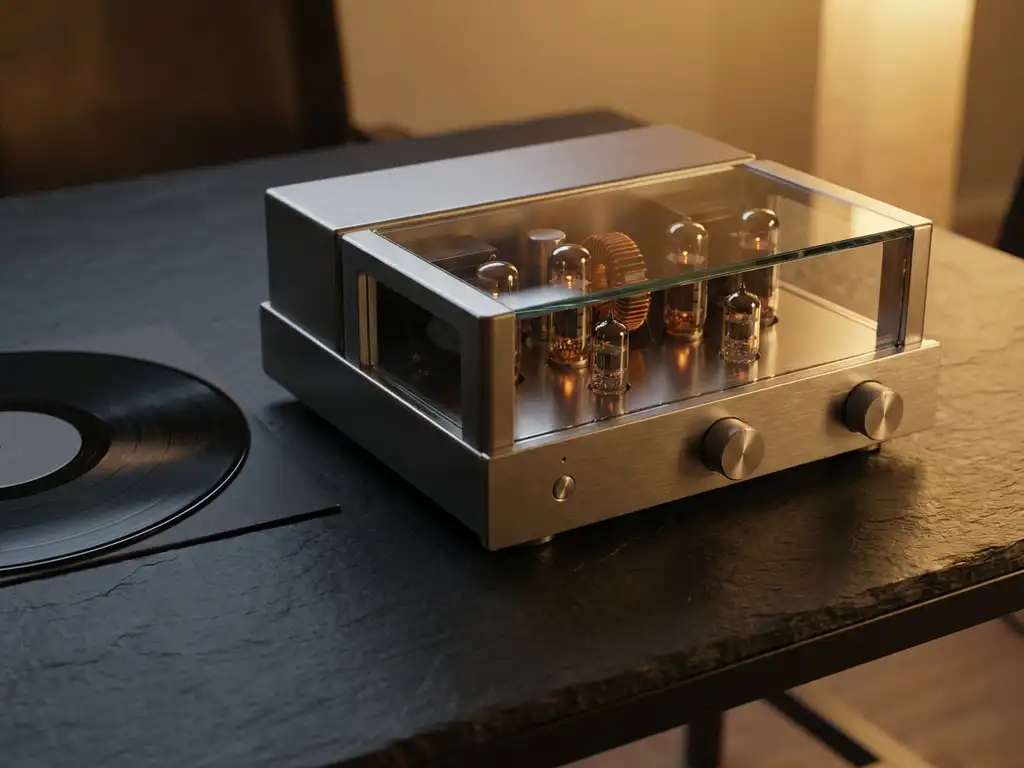
For anyone who has ever sat in a concert hall and felt music move through them, the pursuit of recreating that experience at home is deeply personal. Absolute sound fidelity sits at the heart of that pursuit, and it shapes every decision a serious audiophile makes, from the electronics they choose to the room they listen in. Whether you are new to high-end audio or a seasoned enthusiast refining your system, understanding what fidelity truly means and how it is achieved will sharpen your instincts and deepen your enjoyment of music.
What is absolute sound fidelity?
Absolute sound fidelity is the faithful, unaltered reproduction of a recorded musical performance, preserving every detail, dynamic, and emotional nuance exactly as it was captured. The goal is not to enhance or color the sound, but to reproduce it with complete accuracy, so the listener hears music as close as possible to the original live event.
The phrase draws on a foundational concept in audio: that a recording is a document of a real performance, and a playback system should serve as a transparent window to that performance rather than an interpreter of it. This means no added warmth that was not in the recording, no artificial brightness, and no compression of dynamics. Every texture, every breath, every spatial cue should arrive intact. Achieving this demands precision at every stage of the signal chain, from the source to the amplifier to the loudspeaker.
Why does sound fidelity matter to audiophiles?
Sound fidelity matters to audiophiles because music carries emotional information that is easily lost when reproduction is inaccurate. Distortion, coloration, and dynamic compression do not just affect technical measurements, they erode the emotional impact of music, making performances feel flat, distant, or unconvincing.
For the serious listener, the difference between high-fidelity and mediocre reproduction is not subtle. It is the difference between hearing a pianist’s touch on the keys and hearing only notes. It is the difference between sensing the acoustic space of a recording studio and hearing a wall of sound with no depth. Audiophiles invest in accurate sound reproduction because they want to connect with music on its own terms, not as filtered through the limitations of inferior equipment. The listening room becomes a personal sanctuary, and the system within it becomes a tool for emotional and artistic engagement.
How does high-end audio engineering achieve accurate sound reproduction?
High-end audio engineering achieves accurate sound reproduction by minimizing every form of signal degradation throughout the playback chain. This involves precision component selection, low-noise circuit design, rigorous mechanical construction, and exhaustive testing to ensure that the electrical signal representing music is transferred with as little alteration as possible.
Several engineering principles underpin this approach:
- Low distortion circuits: Amplifier stages are designed to amplify without adding harmonic or intermodulation distortion that would color the sound.
- High signal-to-noise ratio: Backgrounds must be completely silent so that quiet musical passages are not masked by electronic noise.
- Mechanical isolation: Vibration from transformers, motors, and external sources is isolated from sensitive circuit boards to prevent microphonic interference.
- Premium passive components: Resistors, capacitors, and inductors of the highest tolerance and stability ensure that the signal path behaves consistently across all frequencies and temperatures.
- Power supply design: A stable, well-regulated power supply is foundational, since any instability in the power rail introduces noise and compression into the audio signal.
The result of combining these principles is a component that handles music with integrity, allowing the recording’s original character to reach the listener undisturbed.
What’s the difference between high fidelity and high-end audio?
High fidelity, or hi-fi, refers to the broad standard of accurate sound reproduction, while high-end audio describes a category of equipment engineered to the most demanding levels of performance, craftsmanship, and material quality. All high-end audio aims to be high fidelity, but not all hi-fi qualifies as high-end audio.
The distinction is one of degree and intention. A competent hi-fi system reproduces music accurately enough for enjoyable listening. A high-end audio system is built to eliminate every remaining compromise, using reference-grade components, hand-selected parts, and construction tolerances that go far beyond commercial necessity. High-end audio also carries a philosophy: the belief that the pursuit of perfect sound reproduction is worth extraordinary effort and investment. It reflects a commitment to music itself, not merely to functional playback. You can explore the full range of what this philosophy looks like in practice by browsing high-end audio electronics designed around these principles.
What components are most critical for achieving sound fidelity?
The most critical components for achieving sound fidelity are the digital-to-analog converter (DAC), the preamplifier, and the power amplifier, because these three elements handle the core tasks of decoding, controlling, and amplifying the audio signal. Weakness in any one of them introduces distortion or noise that cannot be corrected downstream.
Here is how each contributes:
- DAC or CD transport: The source component sets the ceiling for quality. If digital music is not converted accurately, no amount of downstream refinement can recover lost information.
- Preamplifier: The preamp controls volume and routes signals without adding noise or altering tonal balance. A transparent preamp preserves the character of the source.
- Power amplifier: This stage drives the loudspeakers. It must deliver current cleanly and consistently across the full dynamic range of music, without clipping or compression.
- Loudspeakers and cables: While not electronics, speakers translate the electrical signal into acoustic energy and are the final point where fidelity is either honored or lost.
Integrated amplifiers combine the preamplifier and power amplifier into a single chassis, which can simplify system building while maintaining high performance when the design is executed at a reference level.
How can you tell if an audio system is truly high fidelity?
You can tell if an audio system is truly high fidelity by listening for three qualities: tonal neutrality, dynamic honesty, and spatial accuracy. A genuinely high-fidelity system does not favor any frequency range, does not compress loud or quiet passages, and presents instruments and voices in a believable three-dimensional space.
Practical listening tests to evaluate fidelity include:
- Play familiar recordings: Use music you know intimately. A high-fidelity system will reveal details you have heard before but may also surface subtleties you missed on lesser equipment.
- Listen at low volumes: Poor systems lose clarity and tonal balance at low listening levels. A high-fidelity system maintains its character at any volume.
- Test dynamic extremes: Orchestral music or jazz with wide dynamic range will expose compression or distortion in systems that cannot handle transient peaks cleanly.
- Check the midrange: The midrange is where voices and most instruments live. Coloration or hardness in this region is a reliable sign that the system is adding its own character to the music.
- Assess the silence: Backgrounds should be completely black. Any hiss, hum, or grain points to noise in the signal chain.
A system that passes these tests consistently, across different genres and recording qualities, is one that respects the music and the listener.
How Accustic Arts approaches absolute sound fidelity
At Accustic Arts, our guiding philosophy, “Absolute Sound Fidelity Through Reproduction,” is not a marketing statement but a precise engineering commitment that shapes every product we build. Our name itself reflects this: ACCUrate acouSTIC ARTS, the correct art of sound. Every component we produce is designed to eliminate the compromises that prevent music from reaching the listener exactly as it was recorded.
Here is how we put that commitment into practice:
- Exhaustive testing: Each individual component undergoes a testing process that can last up to two weeks before it leaves our facility in Lauffen am Neckar, Germany.
- Precision component selection: We use only high-grade parts and the latest construction principles across our full product range, including preamplifiers, power amplifiers, monoblock amplifiers, DACs, CD players, integrated amplifiers, and tube hybrid components.
- Real-world experience: Our engineering is informed by direct work in professional recording studios and live PA environments, ensuring our understanding of accurate sound is grounded in how music is actually made and captured.
- Audiophile recordings: Through our Accustic Arts Audiophile Recordings label, we are involved in the music production process itself, giving us a direct reference for what faithful reproduction truly sounds like.
If you are ready to experience what absolute sound fidelity means in practice, we invite you to get in touch with us or discover our full range of high-end audio electronics and find the components that will bring you closer to the music you love.
—
Disclaimer: This article was created with the assistance of Artificial Intelligence and has been reviewed by our editorial team.
Related Articles
- How many watts do I actually need to drive my speakers?
- Why do high-end audio components use premium internal parts?
- How does electrical interference affect audio signal quality?
- What is the difference between resolution and detail in audio?
- How do you recreate the feeling of a live performance at home?