

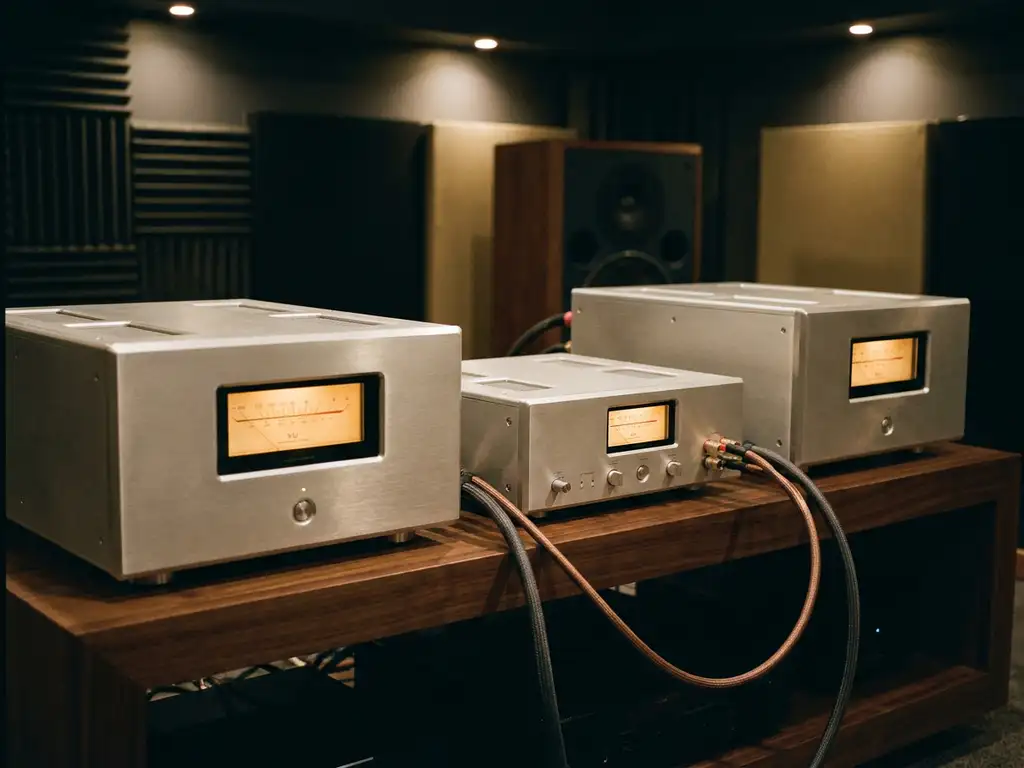
Choosing between a monoblock and a stereo power amplifier is one of the most meaningful decisions an audiophile can make. The choice shapes not just the technical performance of your system, but the emotional character of every listening session. Whether you are building a reference-grade setup from scratch or upgrading an existing system, understanding the real differences between these two amplifier formats will help you invest with confidence.
What is the difference between a monoblock and a stereo power amplifier?
A monoblock amplifier is a single-channel power amplifier dedicated entirely to driving one speaker, meaning you need two units for a stereo system. A stereo power amplifier houses both left and right channels within a single chassis. The core difference is physical and electrical separation: monoblocks give each channel its own power supply, transformer, and signal path, while a stereo amplifier shares these resources between two channels.
This distinction matters more than it might first appear. In a stereo amplifier, both channels draw from the same power supply. During dynamic musical passages, one channel’s demands can influence the other, a phenomenon known as crosstalk or inter-channel interference. Monoblocks eliminate this entirely by design. Each unit operates as a completely independent amplification engine, free from any electrical relationship with the other channel.
Beyond the electrical architecture, there is also a practical difference in placement. Monoblocks can be positioned directly beside or even behind each speaker, dramatically shortening speaker cable runs while keeping interconnect cables between preamplifier and amplifier longer. This flexibility can have real acoustic and practical benefits depending on your room layout.
How does channel separation affect sound quality in power amplifiers?
Channel separation refers to how effectively an amplifier keeps the left and right audio signals electrically isolated from one another. Higher channel separation means less interference between channels, which translates directly into a cleaner, more precise stereo image, better instrument placement within the soundstage, and a lower noise floor across the entire frequency range.
In practical listening terms, poor channel separation can subtly blur the edges of the stereo image. Instruments that should appear clearly positioned in space can feel smeared or less defined. Vocals may lose their pinpoint presence at the center of the stage. These are not always dramatic failures; they are often subtle degradations that experienced listeners notice before they consciously identify them.
Stereo power amplifiers from reputable manufacturers address this through careful internal layout, shielded channel sections, and high-quality power supply design. However, the most complete solution to channel separation remains the monoblock format, where separation is absolute by virtue of physical independence rather than engineering mitigation.
What are the main advantages of monoblock amplifiers?
Monoblock amplifiers offer several concrete advantages over stereo designs, particularly in high-performance audio systems. The primary benefits are complete channel separation, a dedicated power supply per channel, greater headroom for demanding speakers, and flexible placement close to each loudspeaker.
- Complete channel isolation: With no shared circuitry, left and right channels cannot influence each other electrically, resulting in a purer, more precise stereo image.
- Dedicated power reserves: Each monoblock has its own transformer and power supply, meaning neither channel ever competes for current during demanding musical passages.
- Greater dynamic headroom: Because all available power is devoted to a single channel, monoblocks typically deliver more effortless dynamics and better control over difficult speaker loads.
- Flexible placement: Positioning each monoblock close to its speaker minimizes speaker cable length, reducing resistance and potential signal degradation.
- Reduced electromagnetic interference: Separate chassis mean that the transformer and power circuitry of one channel cannot radiate interference into the signal path of the other.
For listeners who prioritize soundstage depth, three-dimensional imaging, and the ability to reproduce complex orchestral or jazz recordings with full dynamic authority, monoblocks represent the most direct path to those qualities.
When does a stereo power amplifier make more sense?
A stereo power amplifier makes more sense when simplicity, space efficiency, and value are priorities without sacrificing genuine high-end performance. A single well-engineered stereo amplifier requires only one power connection, one position in your rack, and a simpler cable arrangement, making it a practical and often excellent choice for many audiophile systems.
Not every listening room or system architecture benefits from the monoblock format. If your speakers are relatively easy to drive, your room is modest in size, or your system is built around a single listening position rather than a large acoustic space, a high-quality stereo amplifier can deliver everything you need and more.
Stereo amplifiers also tend to offer a more accessible entry point into high-end performance. A single stereo unit from a serious manufacturer will often outperform two budget monoblocks, because the quality of the components, power supply, and circuit design matters far more than the format alone. For listeners building toward a reference system incrementally, starting with a strong stereo amplifier is a very sensible approach.
Additionally, some integrated system designs and smaller listening spaces simply do not require the additional complexity or cost of a dual-chassis monoblock setup. The best amplifier is always the one that matches your speakers, your room, and your musical priorities.
How do you match a power amplifier to your speakers and system?
Matching a power amplifier to your speakers requires considering three key factors: output power relative to speaker sensitivity, impedance compatibility, and the amplifier’s current delivery capability. A speaker with low sensitivity or a demanding impedance curve needs an amplifier with generous power reserves and strong current output, while an efficient speaker may perform beautifully with a lower-powered design.
Start with your speaker’s sensitivity rating, typically expressed in decibels at one watt at one meter. A speaker rated at 87 dB sensitivity needs significantly more amplifier power to reach reference listening levels than one rated at 96 dB. As a general principle, doubling amplifier power adds approximately 3 dB of output, so the gap between an 87 dB and a 90 dB speaker is meaningful in terms of the amplifier power required.
Impedance is equally important. Speakers with nominal impedances that dip below 4 ohms place significant demands on an amplifier’s power supply and output stage. An amplifier that doubles its power output as impedance halves, a specification known as good damping factor and current stability, will control these speakers far more effectively than one that does not.
Beyond the numbers, consider the character of the music you listen to most. Large-scale orchestral works, dynamic rock recordings, and complex jazz arrangements all benefit from amplifiers with substantial headroom. Chamber music and acoustic recordings may be less demanding, but will still reveal everything an amplifier does to the midrange and treble.
You can explore the full range of high-end audio components available to understand how different amplifier designs align with specific system goals before making your decision.
Which should you choose: a monoblock or a stereo amplifier?
Choose a monoblock amplifier if your priority is the highest possible channel separation, maximum dynamic headroom, and the flexibility to place amplification close to each speaker. Choose a stereo power amplifier if simplicity, space efficiency, and a streamlined system architecture matter as much as outright performance. Both formats can achieve genuinely exceptional sound when the engineering behind them is uncompromising.
The decision ultimately comes down to your speakers, your room, your budget, and how far you want to take your system. If you are driving large, power-hungry loudspeakers in a dedicated listening room and you want the absolute best in imaging precision and dynamic authority, monoblocks are the natural destination. If you are building a refined, high-performance system in a living space where elegance and simplicity are part of the experience, a great stereo amplifier is a perfectly serious choice.
It is also worth considering the upgrade path. Many audiophiles begin with a stereo amplifier and later transition to monoblocks as their system and listening priorities evolve. Both formats exist within the same pursuit: music reproduced with honesty, control, and emotional engagement.
How Accustic Arts Supports Your Power Amplifier Decision
We at Accustic Arts have spent decades engineering both stereo and monoblock power amplifiers to the highest possible standard, drawing on experience from professional recording studios and live performance environments. Our approach to the monoblock vs stereo amplifier question is rooted in one principle: the music must always come first.
Here is what sets our amplifier range apart:
- Uncompromising component selection: Only precision-grade parts are used across every amplifier, whether in stereo or monoblock format.
- Rigorous testing: Every amplifier undergoes individual testing that can last up to two weeks before it leaves our facility, ensuring it meets our exacting standards.
- Emotionally engaging midrange: Our signature midrange reproduction is recognized by audiophiles and music professionals worldwide for its natural, detailed, and deeply involving character.
- German engineering heritage: Designed and built in Lauffen am Neckar, Germany, our amplifiers reflect decades of accumulated expertise in high-end audio electronics.
- Award-winning performance: Our products have received recognition from leading high-end audio publications including The Absolute Sound.
Whether you are drawn to the architectural elegance of a monoblock setup or the refined simplicity of a stereo power amplifier, we build both to the same uncompromising standard. Contact us to speak with our team about which amplifier configuration is the right match for your speakers, your room, and your musical vision.
—
Disclaimer: This article was created with the assistance of Artificial Intelligence and has been reviewed by our editorial team.