

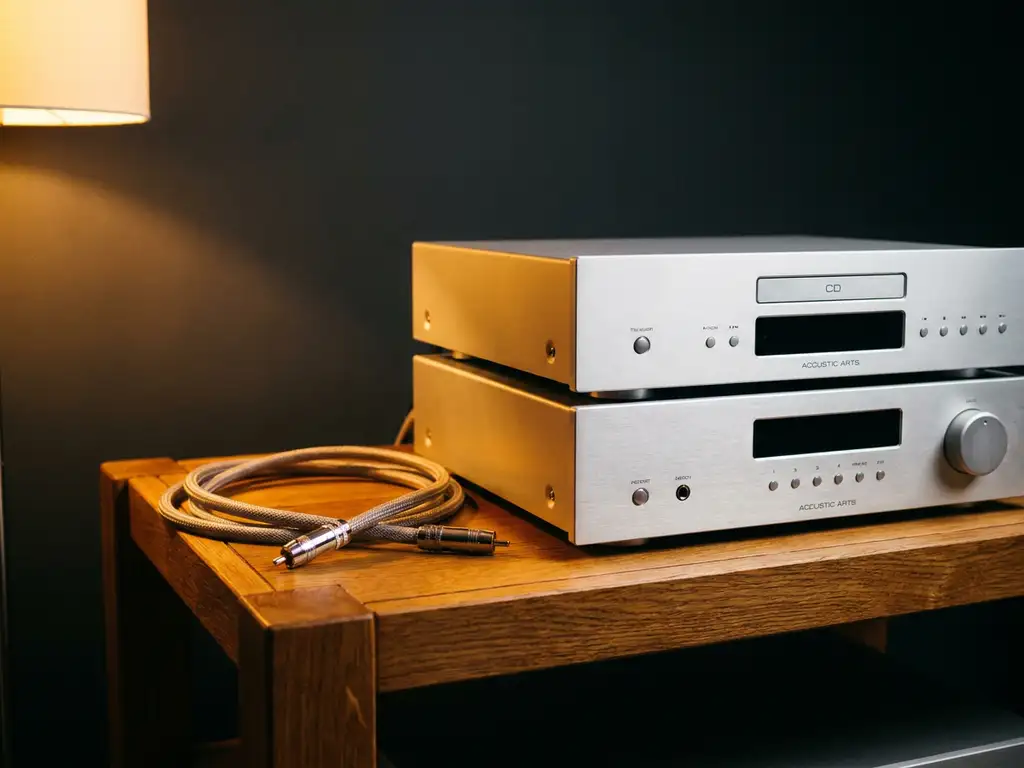
Building a high-end digital source system from scratch is one of the most rewarding journeys an audiophile can undertake. Done thoughtfully, it transforms a listening room into a space where music feels genuinely alive, where the emotional weight of a recording lands with full force. Done carelessly, even the most expensive components can leave a system sounding flat, mechanical, or fatiguing. The good news is that with the right understanding of digital audio fundamentals, the path from blank slate to reference-grade performance becomes far more navigable than it first appears.
Whether starting with a CD player, a dedicated digital transport, or a streaming source feeding a high-quality D/A converter, the principles that govern a great high-fidelity digital source system remain consistent. This guide walks through each of those principles in practical terms, from component selection to the often-overlooked physical environment that shapes everything upstream.
Choosing the right digital transport and DAC pairing
The foundation of any high-end digital source system is the relationship between the transport and the DAC. A digital transport reads data from a source, whether a CD, a file server, or a network stream, and passes that data to a D/A converter, which translates the digital signal into an analog waveform. The quality of both devices matters enormously, but so does how well they work together.
When evaluating a transport and DAC pairing, the connection type between them deserves serious attention. AES/EBU balanced digital connections, S/PDIF coaxial, and I2S each carry the signal with different levels of noise rejection and jitter sensitivity. Higher-end systems often benefit from AES/EBU or a proprietary interface that keeps the clock signal stable, since jitter, the tiny timing irregularities in a digital signal, is one of the most audible sources of degradation in digital audio. A well-matched pairing minimizes jitter at the source rather than relying on the DAC to compensate downstream.
It is also worth considering whether an integrated CD player with a built-in DAC suits the system better than a separate transport and outboard converter. Integrated solutions offer simplicity and are often optimized as a single unit, which can be a significant sonic advantage. Separate components, on the other hand, allow for targeted upgrades over time and can offer greater flexibility as source formats evolve.
How digital signal paths shape sound fidelity
The digital signal path is where data becomes music, and every stage within it introduces the potential for both improvement and degradation. Understanding this path helps explain why two systems using similar specifications can sound dramatically different in practice.
From the moment data leaves a transport, it travels through a digital interface, enters the DAC’s receiver circuit, passes through a digital filter, and finally reaches the analog output stage. Each of these stages involves design decisions that affect the final sound. The digital filter, for instance, shapes how the DAC handles the reconstruction of the analog waveform from discrete digital samples. Filters with a linear phase characteristic preserve timing relationships between frequencies but can introduce pre-ringing artifacts. Minimum phase filters avoid pre-ringing but alter the phase relationship across the frequency spectrum. Neither approach is universally superior, and the best high-end DACs offer selectable filter options to suit different recordings and listener preferences.
The analog output stage of a DAC is equally critical and often underappreciated. This is where the converted signal transitions into the domain of preamplifiers and amplifiers, and a poorly designed output stage can undo the careful work of everything that came before it. High-quality components in this stage, including precision resistors, film capacitors, and well-designed operational amplifiers or discrete transistor circuits, preserve the delicate low-level information that makes music feel three-dimensional and emotionally present.
Matching components for coherent system performance
A high-fidelity digital source system is only as strong as its weakest link, and coherence between components matters as much as individual component quality. Matching is about more than impedance and gain structure, though those technical factors are genuinely important. It is also about ensuring that the sonic character of each component complements rather than conflicts with the others.
Impedance matching between the DAC’s output and the preamplifier’s input is a practical starting point. A DAC with a high output impedance driving a preamplifier with a low input impedance will result in frequency response anomalies and a loss of dynamic contrast. As a general guide, the preamplifier’s input impedance should be at least ten times the DAC’s output impedance for a clean electrical handoff.
Beyond the technical, tonal matching plays a real role in system coherence. A DAC with an exceptionally detailed, extended high-frequency presentation paired with a similarly bright amplifier can produce a system that fatigues the listener over long sessions. Balancing components that each bring complementary strengths, warmth, detail, dynamic authority, and spatial depth, produces a system that is greater than the sum of its parts. At Accustic Arts, we design our D/A converters and preamplifiers to work in harmony, which is why many listeners find that our components pair naturally with one another.
Common mistakes that compromise digital source quality
Even experienced audiophiles make choices in the digital domain that quietly undermine system performance. Recognizing these pitfalls early saves both money and frustration.
One of the most common mistakes is underestimating the importance of the digital cable. Because digital connections carry binary data, it is tempting to assume that any cable capable of transmitting the signal will perform identically. In practice, cable construction affects impedance consistency, noise rejection, and high-frequency rolloff, all of which influence jitter and signal integrity. A well-constructed, properly terminated 75-ohm coaxial cable for S/PDIF or a balanced AES/EBU cable makes a measurable and audible difference.
Another frequent error is running a digital source system from a shared or unfiltered power supply. Digital components generate switching noise that can contaminate the power line and bleed into analog stages. Dedicated power conditioning or a high-quality linear power supply for sensitive components reduces this interference significantly. Similarly, placing a digital transport directly on top of a DAC or preamplifier invites both electromagnetic and vibration-based interference between components.
Finally, many listeners overlook the impact of sample rate conversion within the signal chain. When a DAC upsamples internally, or when a computer audio source applies software resampling before the signal reaches the DAC, the quality of that conversion process matters. Asynchronous sample rate conversion performed by a high-quality dedicated chip is generally preferable to software-based resampling, which can introduce artifacts depending on the algorithm used.
Room, rack, and isolation: the physical foundation
The physical environment surrounding a high-end digital source system has a more direct influence on sound quality than many audiophiles initially expect. Vibration, electromagnetic interference, and poor power quality are physical problems that no amount of digital processing can fully correct after the fact.
A quality equipment rack designed for audio use does more than organize components neatly. Rigid, well-damped shelving prevents mechanical vibrations from the room, the speakers, and even the components themselves from coupling back into sensitive circuits. CD transports are particularly susceptible to vibration, since the laser mechanism must track a spinning disc with extraordinary precision. Even small amounts of vibration can cause read errors or force the error correction system to work harder, subtly degrading the output.
Isolation platforms and footers placed beneath individual components address vibration at the component level. Options range from constrained-layer damping platforms to pneumatic isolators, and the right choice depends on the specific resonance characteristics of the component and the rack shelf beneath it. Experimenting with isolation is one of the most cost-effective ways to improve the performance of an existing system without changing any electronics.
Power quality deserves equal attention. A dedicated circuit for the audio system, separate from other household loads, reduces the noise floor and improves dynamic headroom. High-quality power conditioning or a regenerator that reconstructs a clean sine wave from the mains provides the most comprehensive solution. When the physical foundation is solid, every component in the digital source chain has the best possible conditions in which to perform, and that is where a truly great high-fidelity system begins to reveal its full potential.