

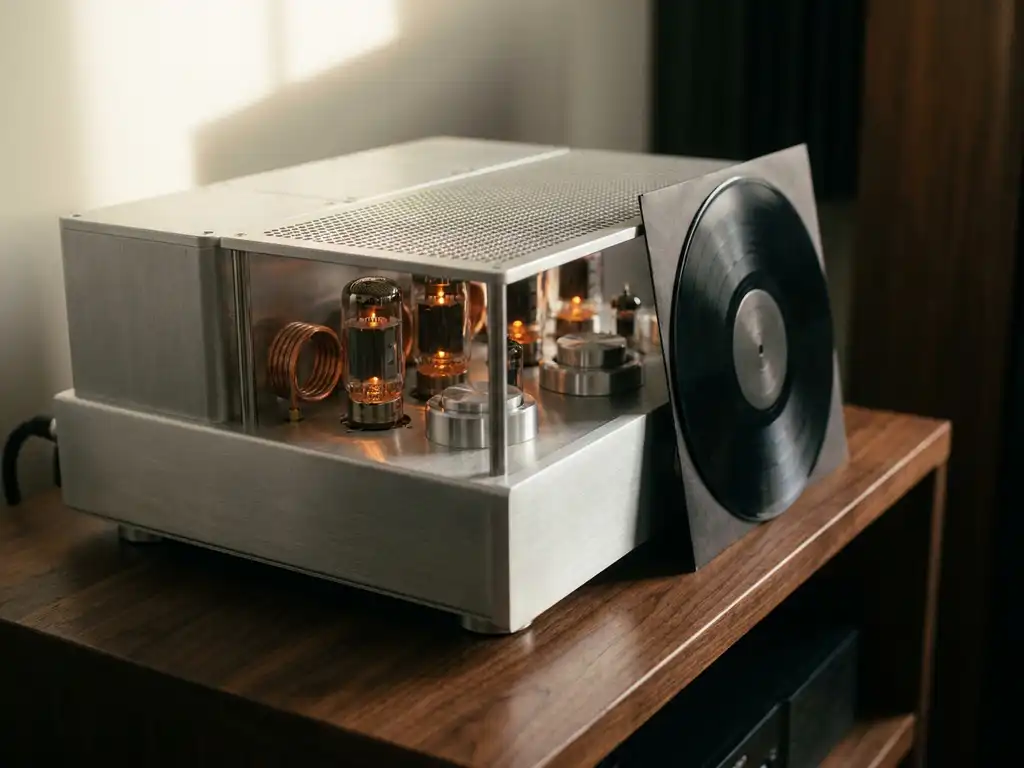
Every amplifier has a personality. Two units with identical power ratings, similar specifications, and comparable price tags can sound remarkably different when connected to the same speakers and source components. That difference is what audiophiles call an amplifier sound signature: the distinctive tonal character that shapes how music feels, not just how it measures. Understanding where that character comes from is one of the most rewarding journeys in high-end audio, and it starts with looking under the hood.
An amplifier’s sound signature is not an accident or a marketing invention. It emerges from hundreds of deliberate and sometimes unavoidable design decisions, from the topology chosen at the drawing board to the grade of capacitor soldered onto the circuit board. For anyone investing seriously in audiophile electronics, grasping these fundamentals transforms the listening experience from passive enjoyment into something far more intentional.
The design choices that shape an amplifier’s character
At the most fundamental level, amplifier tonality is determined by the circuit topology a designer chooses. The three broad categories, Class A, Class AB, and Class D, each carry inherent sonic tendencies. Class A amplifiers, which keep their output transistors conducting at all times, are widely associated with a smooth, natural midrange and a sense of ease in the music. Class AB designs trade some of that warmth for efficiency, while Class D amplifiers prioritize power density and run cool, though their sonic character has evolved considerably with modern implementations.
Beyond the class of operation, the choice between solid-state and tube-based amplification is perhaps the most consequential decision a designer makes. Tubes introduce a particular harmonic texture that many listeners find emotionally engaging, while solid-state circuits typically offer tighter bass control and lower noise floors. Hybrid designs, which combine both technologies, attempt to capture the expressive qualities of each. These foundational choices set the tonal direction before a single component value is even selected.
How components and materials leave their mark on sound
Once the topology is established, the individual components filling that circuit become the next layer of sonic influence. Resistors, capacitors, inductors, and transformers are not neutral, interchangeable parts: each type and grade carries its own sonic behavior that accumulates across a complex circuit.
Capacitors are a particularly vivid example. Film capacitors, electrolytic capacitors, and ceramic capacitors all handle electrical charge differently, and those differences manifest as audible changes in transient response, bass weight, and high-frequency air. Similarly, the quality and composition of internal wiring, the grade of solder used, and even the material of the circuit board substrate can contribute to the final sound. This is why high-end audio electronics manufacturers select components with an almost obsessive level of care, rejecting parts that measure adequately but fall short in listening tests. At Accustic Arts, we use only precise, high-grade components across every product line, and individual product testing can extend up to two weeks before a unit is approved for dispatch, because the difference between adequate and exceptional is often found in exactly these details.
The role of distortion, noise, and feedback in tonal character
Distortion has an uncomfortable reputation in audio, yet it is one of the most nuanced contributors to an amplifier’s perceived character. Not all distortion sounds the same or registers the same way to human hearing. Second-order harmonic distortion, which is common in tube amplifiers, tends to be perceived as warmth or richness because it mimics the natural overtone structure of acoustic instruments. Higher-order odd harmonics, by contrast, can sound harsh and fatiguing even at very low levels.
Noise is a related factor. The noise floor of an amplifier determines how much low-level musical detail survives amplification. A quieter background allows subtle textures, the breath of a vocalist, the decay of a piano note, to remain audible and emotionally present. Feedback, applied to reduce distortion and flatten the frequency response, introduces its own trade-offs. Global negative feedback can tighten the sound and improve measurements, but some designers argue it also compresses the dynamic life of the music. The balance a designer strikes between these elements is a core part of what gives an amplifier its distinctive audio-electronics fingerprint.
Why manufacturing precision shapes what you actually hear
A design that looks perfect on paper can still sound mediocre if it is not built with consistency and care. Component tolerances, mechanical resonance, grounding quality, and the physical layout of a circuit board all affect how faithfully a design translates from schematic to sound. Two amplifiers built to the same specification but with different manufacturing standards will not sound identical.
Precision in manufacturing means matching component values closely, minimizing mechanical vibration that can modulate sensitive signal paths, and ensuring that power supply regulation is stable and consistent under real-world load conditions. It also means testing, genuinely rigorous testing, not just a quick functional check. When every unit leaving a factory has been listened to and verified against a reference standard, the gap between the designer’s intention and the listener’s experience narrows significantly. This commitment to manufacturing quality is what separates a truly great audiophile amplifier from one that merely has impressive specifications on its data sheet.
Matching an amplifier’s sound signature to your system
Understanding sound signature becomes practically useful the moment it informs a purchasing decision. An amplifier does not exist in isolation: it interacts with every other component in the signal chain, and particularly with the loudspeakers it drives. A speaker with a forward, analytical character may be beautifully complemented by an amplifier with a warmer, more relaxed presentation. Conversely, a speaker with a naturally full and rich sound might benefit from an amplifier that offers precision and control rather than additional warmth.
Source components, cables, and room acoustics all play into this equation as well. The goal is not to find the amplifier with the most impressive measurements or the most celebrated reputation, but to find the one whose amplifier character completes the musical picture in a given system. Listening before committing is always the most reliable guide. Trust the emotional response to the music, whether it feels alive, whether nuances feel present and real, whether the sound invites longer listening sessions rather than shorter ones. That instinct, informed by an understanding of what shapes sound fidelity, is the most powerful tool any audiophile has.
Ähnliche Artikel
- How do you achieve natural sound reproduction at home?
- What is the difference between a tube amplifier and a solid-state amplifier?
- How do reflections in a room degrade sound quality?
- What is the effect of listening fatigue and how do you avoid it?
- Was ist der Unterschied zwischen einem DAC und einem CD-Transport?