

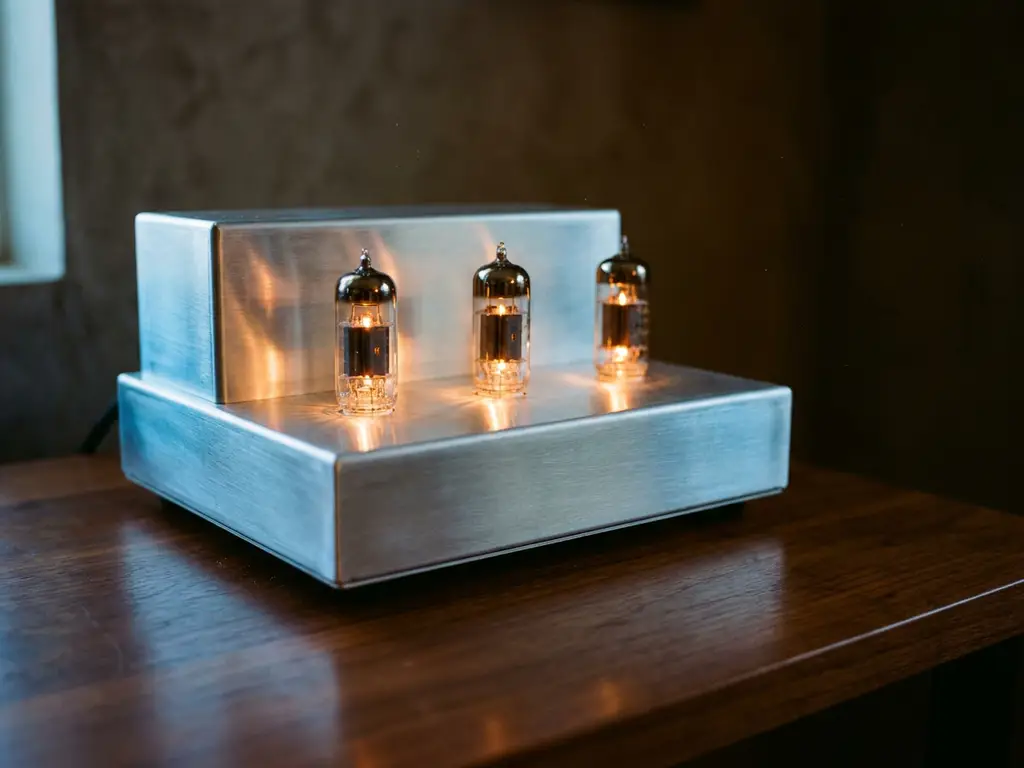
There is something undeniably captivating about the warm glow of a vacuum tube. For decades, audiophiles and music lovers have been drawn to the tube preamplifier not just as a piece of audio equipment, but as a statement about how music should be heard. Whether you are new to high-end audio or a seasoned listener reconsidering your signal chain, understanding what a tube preamp actually does and how it sounds is the first step toward making a genuinely informed choice.
A preamplifier sits at the heart of any audio system, conditioning and amplifying the signal from a source before it reaches the power amplifier and speakers. When that preamplifier uses vacuum tubes rather than transistors, the entire character of the audio chain shifts in ways that are both measurable and deeply felt. This guide explores what makes a valve preamplifier special, how it compares to solid-state alternatives, and what to consider when choosing one for a high-end system.
How vacuum tubes shape the audio signal
Vacuum tubes amplify audio signals through the controlled flow of electrons across a heated element inside a glass envelope. When an audio signal enters the tube, it modulates this electron flow, and the output is an amplified version of the input. This process is inherently analogue, continuous, and remarkably linear within the tube’s operating range.
One important characteristic of tube amplification is the way it handles distortion. When a tube is pushed beyond its linear range, it tends to produce even-order harmonics, particularly the second harmonic, which is musically related to the fundamental frequency. This behaviour is quite different from the odd-order distortion more commonly associated with transistor circuits, and it is one reason why tube-based systems are often described as sounding more natural and less fatiguing over long listening sessions.
The sonic character of a tube preamplifier
The sound of a well-designed tube preamp is often described as open, dimensional, and richly textured. These are not vague impressions; they reflect real differences in how the circuit handles dynamics, transients, and harmonic content across the frequency spectrum.
The midrange is where tube preamplifiers tend to distinguish themselves most clearly. Vocals, acoustic instruments, and strings are reproduced with a sense of presence and body that many listeners find deeply engaging. This is not about coloration in a negative sense; rather, it is about a quality of resolution that allows the emotional content of a recording to come through intact. Bass response can be full and warm, while the high frequencies, depending on the design, can be smooth and extended without harshness.
Tube preamp vs solid-state: key sonic differences
Comparing tube preamp vs solid-state designs is one of the most enduring debates in high-end audio, and the honest answer is that both approaches have genuine strengths. Understanding those differences helps listeners make choices that align with their musical priorities.
Where solid-state excels
Solid-state preamplifiers typically offer lower noise floors, tighter bass control, and greater measured accuracy across the frequency range. They are often more consistent over time, requiring less maintenance, and they tend to perform well in demanding, high-output scenarios. For genres where precision and speed are paramount, a well-designed solid-state unit can be exceptional.
Where tubes make the difference
Tube designs, by contrast, tend to offer a more organic and three-dimensional soundstage. The sense of space around instruments, the natural decay of notes, and the textural richness of the midrange are qualities that many audiophiles find difficult to replicate with transistor-based circuits. For listeners who prioritise emotional engagement and long-term listening comfort, a tube preamplifier often feels closer to the experience of live music. The choice ultimately comes down to personal values: measurement performance versus musical involvement, or ideally, a design that pursues both.
What to look for in a high-end tube preamplifier
Not all tube preamplifiers are created equal, and the quality of the design and components makes an enormous difference to the final result. When evaluating an audiophile preamplifier, several factors deserve close attention.
- Tube selection and quality: The specific tubes used, and their quality grade, directly affect noise, dynamics, and tonal character. Premium designs use carefully matched and tested tubes from reliable sources.
- Power supply design: A robust, well-regulated power supply is critical in tube circuits. Noise and ripple in the supply translate directly into the audio signal, so high-quality transformers and regulation stages are essential.
- Output impedance: A tube preamp’s output impedance must be compatible with the input impedance of the power amplifier it drives. Mismatches can result in tonal imbalances, particularly in the bass and treble regions.
- Build quality and component selection: High-grade capacitors, resistors, and wiring materials contribute to the overall performance and longevity of the component. In reference-grade designs, these choices are made with obsessive care.
- Topology: Whether the design is fully tube-based or a tube hybrid influences the overall sonic signature. Each approach has its merits, and the best choice depends on the listener’s priorities and the rest of the system.
It is also worth considering how the manufacturer tests and validates their products. Extended burn-in and testing periods, sometimes lasting several weeks, can reveal subtle issues that shorter tests would miss, and they reflect a commitment to consistency that matters in a component this critical to the system.
Pairing a tube preamplifier with your system
A tube preamplifier performs best when it is matched thoughtfully to the rest of the signal chain. The interaction between source components, the preamp, the power amplifier, and the speakers all shapes the final sound, and a valve preamplifier introduces specific considerations worth understanding before committing to a system configuration.
Impedance matching, as mentioned earlier, is a practical priority. Beyond that, the character of the power amplifier matters significantly. Pairing a tube preamp with a warm-sounding power amplifier can push the overall presentation too far in one direction, while combining it with a neutral or slightly analytical solid-state amplifier can produce a beautifully balanced result. Speaker sensitivity also plays a role: higher-sensitivity speakers tend to reveal more of the preamp’s character, making the quality of the tube stage even more audible. Exploring high-end audio components as a complete, coherent system rather than as isolated purchases tends to produce the most satisfying long-term outcome.
Cable quality, system grounding, and even the listening room itself interact with the tube preamp’s output in ways that are worth exploring gradually. The rewarding aspect of building a high-end system around a quality valve preamplifier is that improvements elsewhere in the chain become more audible, not less.
How Accustic Arts approaches the tube preamplifier
We have spent decades refining our understanding of what makes a preamplifier genuinely exceptional, and our tube and tube-hybrid designs reflect everything we have learned from working in recording studios, live venues, and dedicated listening environments. Our approach to the high-end preamplifier is guided by a single principle: Absolute Sound Fidelity Through Reproduction.
Here is what sets our tube preamplifier designs apart:
- Uncompromising component selection: We use only precision, high-grade components chosen for their contribution to sonic accuracy and long-term reliability.
- Rigorous testing: Every unit undergoes an individual testing process that can last up to two weeks before it leaves our facility in Lauffen am Neckar, Germany. This is not a formality; it is a guarantee of consistency.
- Emotionally engaging midrange: Our signature achievement, recognised by audiophiles and music industry professionals worldwide, is a midrange reproduction that allows the full emotional content of music to come through without artificial coloration.
- Optimised price-to-value ratio: Reference-grade performance should not require compromise on value. Our products are designed to deliver the most honest listening experience possible at each price point.
- Award-winning recognition: Our components have received recognition from leading publications including The Absolute Sound, reflecting the consistency and quality that our listeners experience every day.
If you are ready to explore what a truly exceptional tube preamplifier can bring to your listening experience, we would love to help. Get in touch with us to discuss your system, your musical priorities, and how our components can take your listening to the next level.
Ähnliche Artikel
- How do you know if your amplifier is underpowered for your speakers?
- What is the difference between an all-in-one system and a separates setup?
- How does power supply quality affect audio component performance?
- Was ist Dynamikumfang und wie prägt er das Hörerlebnis?
- Was ist der hörbare Unterschied zwischen 16-Bit- und 24-Bit-Audio?