

A well-chosen amplifier can feel like a lifelong companion, something that anchors a listening room for decades. But like any precision instrument, amplifiers are not immune to the passage of time. Whether you own a modest integrated amp or a reference-grade monoblock, understanding how amplifiers wear out and degrade over time helps you protect your investment, maintain sonic integrity, and make smarter decisions about care and upgrades. The good news is that with the right knowledge, amplifier lifespan can be remarkably long.
The question of whether amplifiers degrade over time does not have a simple yes or no answer. It depends heavily on component quality, usage habits, environmental conditions, and the engineering philosophy behind the design. Some amplifiers sound nearly identical after thirty years; others begin to soften and distort within a decade. Understanding why requires a closer look at what is actually happening inside the chassis.
How amplifier components age differently
Not every part inside an amplifier ages at the same rate, and recognizing which components are most vulnerable is the first step toward understanding amplifier longevity. The internal landscape of an amplifier is a mix of passive components, active devices, and mechanical parts, each with its own aging curve.
Capacitors
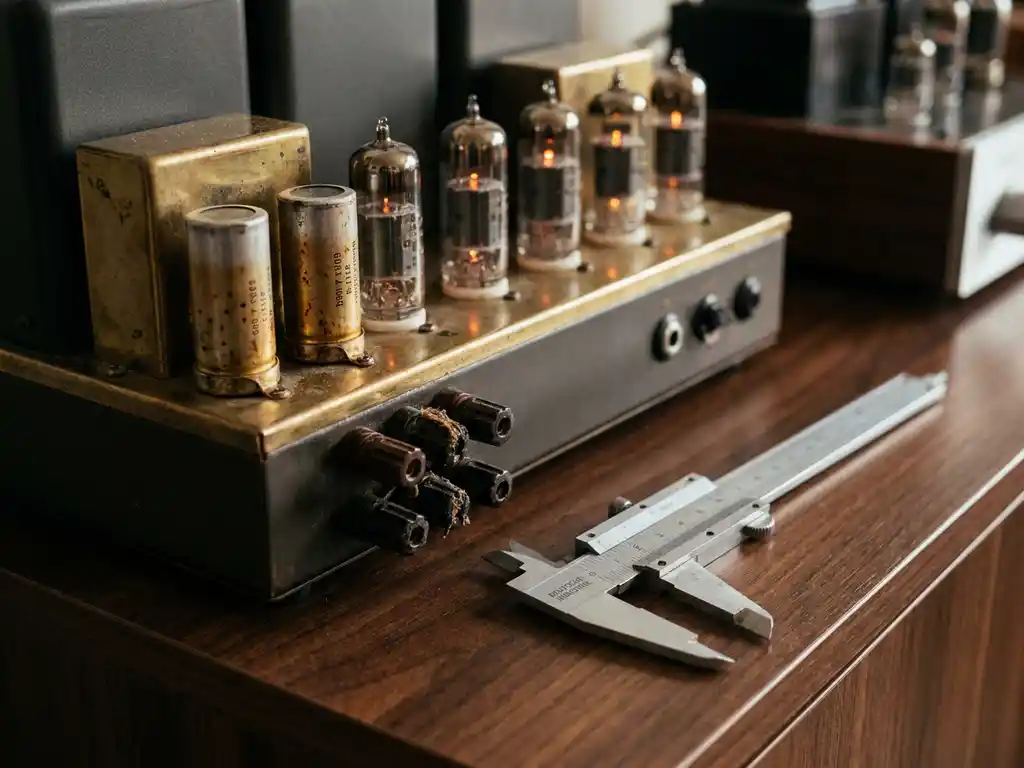
Capacitors are among the most time-sensitive components in any amplifier. Electrolytic capacitors in particular are known for capacitor degradation over time because they rely on a liquid electrolyte that slowly evaporates, even when the amplifier is not in use. As capacitance drifts and equivalent series resistance rises, the amplifier’s ability to filter power supply noise and maintain dynamic headroom diminishes. In high-end designs, large reservoir capacitors in the power supply stage are especially critical, and their condition has a direct bearing on bass control and overall authority in the sound.
Transistors, tubes, and resistors
Transistors are generally long-lived, but they can drift in their operating characteristics after extended thermal cycling. Resistors, particularly carbon composition types, can shift in value over decades, subtly altering gain and frequency response. Tubes present a different picture entirely: they are consumable by nature, with output tubes typically requiring replacement every few thousand hours of use depending on operating conditions. Even so, a well-designed tube circuit with quality tubes can sound extraordinary for years before any meaningful degradation sets in. Mechanical components such as volume potentiometers and input selector switches accumulate oxidation on their contact surfaces, which often shows up as crackling or channel imbalance long before any active component fails.
Signs that an amplifier’s performance is slipping
Performance degradation in an amplifier rarely announces itself dramatically. More often, it creeps in gradually, making it easy to miss if you are not listening critically or comparing against a known reference. Recognizing the early warning signs is essential for preserving sound quality before problems compound.
One of the most common early indicators is a loss of bass definition and control. When power supply capacitors begin to age, the low-frequency foundation of music can become soft or indistinct, losing the grip and authority it once had. A related symptom is increased background noise or hum, which often points to deteriorating filter capacitors struggling to suppress power supply ripple. Crackling during volume adjustments, intermittent channel dropout, or a sense that the soundstage has collapsed inward are also telltale signs that components are no longer performing within their original tolerances. In tube amplifiers, watch for unusual heat, bias drift, or a hardening of the upper midrange, which typically signals that output tubes are nearing the end of their useful life. Any of these symptoms warrants investigation rather than acceptance.
What separates long-lasting amplifiers from short-lived ones
Amplifier lifespan is not simply a matter of luck. It is largely determined at the design stage, before a single component is ever soldered into place. The engineering decisions made during development have a profound and lasting influence on how gracefully an amplifier ages.
Component selection is perhaps the single greatest differentiator. Amplifiers built with premium-grade capacitors, precision resistors, and carefully matched transistors begin with a far larger margin of tolerance before degradation becomes audible. Equally important is thermal management: amplifiers that run cool under normal operating conditions place far less stress on their components than those that run at or near their thermal limits. Conservative operating points, robust power supply design, and high-quality circuit board materials all contribute to longevity in ways that are invisible at the point of purchase but become very apparent over a decade or more of ownership.
At Accustic Arts, this philosophy is built into every product we make. Our components undergo individual testing processes that can last up to two weeks before a unit is approved for dispatch. This level of scrutiny is not just about catching defects at the point of sale; it reflects a design culture oriented toward long-term reliability and sustained sonic performance. An amplifier that leaves our facility has been validated under conditions that give it the best possible foundation for a long working life. The same precision that produces emotionally engaging sound on day one is what ensures that sound remains faithful years down the line.
How to slow degradation and extend amplifier life
Thoughtful ownership habits make a meaningful difference in how long a high-end amplifier maintains its performance. While no amount of care can entirely halt the aging of components, the right practices can significantly extend the window before any degradation becomes audible.
Heat is the primary enemy of electronic longevity, so ensuring adequate ventilation around the amplifier is one of the simplest and most effective steps an owner can take. Avoid stacking equipment directly on top of an amplifier, and ensure the rack or shelf allows free airflow around the chassis. Powering the amplifier on and off with care, rather than leaving it in standby indefinitely or subjecting it to repeated hard power cycles in quick succession, also reduces thermal stress on components over time.
Periodic amplifier maintenance by a qualified technician is worth scheduling every few years, particularly for older units. A skilled technician can measure capacitor health, check bias settings, clean oxidized contacts, and identify components that are drifting out of specification before they affect sound quality. For tube amplifiers, keeping a log of operating hours and replacing output tubes on a sensible schedule prevents the gradual sonic degradation that comes from running exhausted tubes. Storing amplifiers in stable, low-humidity environments and using a quality power conditioner to protect against mains voltage fluctuations are additional measures that pay dividends over the long term.
Ultimately, a great amplifier is a long-term relationship. Treat it with the same care and attention you bring to your listening, and it will reward you with decades of faithful, emotionally resonant sound.