

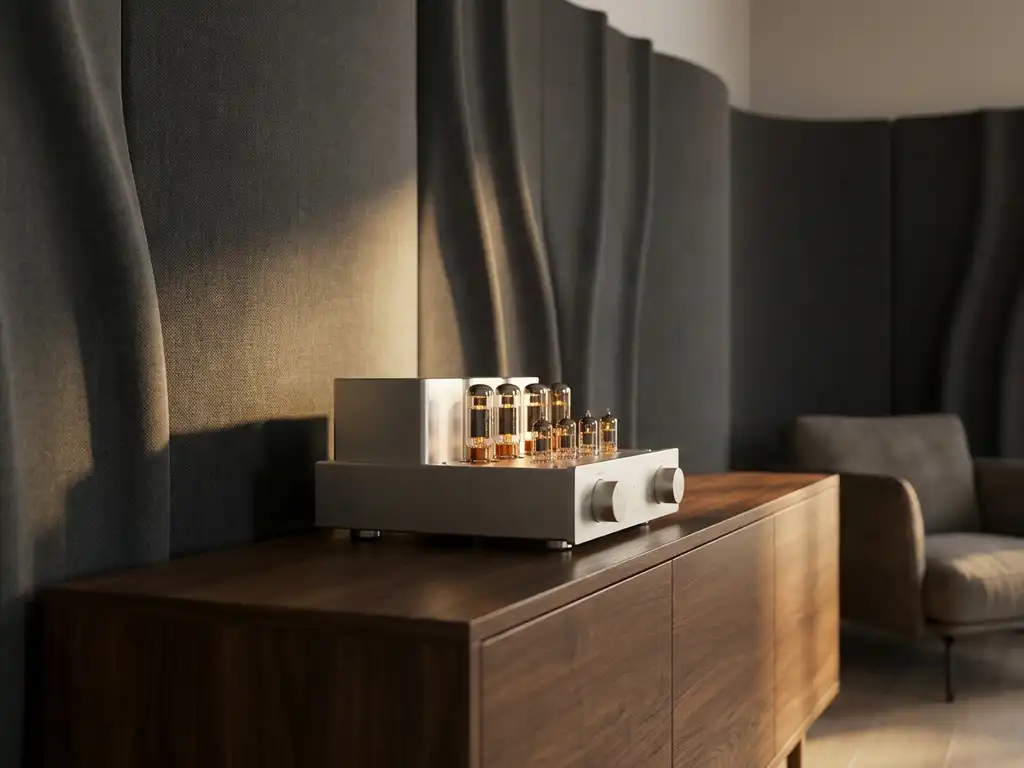
Your audio equipment can be flawless, your speakers perfectly matched, and your amplifier a genuine masterpiece of engineering — yet if the room itself is working against you, the sound you hear will never reflect what those components are truly capable of. Room acoustics shape every listening experience in ways that are often invisible but always audible. Understanding how your listening space interacts with sound is one of the most rewarding steps any audiophile can take toward genuinely great audio.
What is room acoustics and why does it matter?
Room acoustics refers to the way sound waves behave within an enclosed space — how they reflect off surfaces, are absorbed by materials, and interact with the room’s geometry before reaching your ears. In any listening environment, the sound you hear is never just the direct signal from your speakers. It is a combination of that direct sound and countless reflections, resonances, and decays shaped entirely by the room around you.
This matters enormously in a high-end audio context because even the finest components can only perform as well as the acoustic environment allows. A room with poor acoustics can introduce coloration, muddiness, harsh high frequencies, or an unnatural sense of space that has nothing to do with the recording itself. Conversely, a well-treated room lets every detail of the music come through cleanly, preserving the emotional nuance and spatial accuracy that audiophiles seek. Room acoustics is not a secondary concern — it is a fundamental part of the listening experience.
How does room size and shape affect sound quality?
Room size and shape directly determine which frequencies build up, which decay naturally, and how sound energy is distributed across the listening space. Larger rooms generally support lower frequencies more evenly, while smaller rooms tend to create stronger resonance problems. The shape of the room influences how reflections travel and where they converge, which affects imaging, stereo width, and tonal balance.
Rectangular rooms are the most common in domestic settings and present a predictable set of acoustic challenges. When two parallel walls are the same distance apart, sound bounces back and forth between them in a very regular pattern, which amplifies certain frequencies and cancels others. Rooms with non-parallel walls, angled ceilings, or irregular geometry naturally break up these patterns and can produce a more balanced acoustic response without any additional treatment. Room dimensions also matter: rooms whose length, width, and height share simple mathematical ratios tend to produce more severe resonance issues than rooms with dimensions that are acoustically diverse.
What are standing waves and how do they distort your audio?
Standing waves, also called room modes, are resonances that form when sound waves traveling in opposite directions between two parallel surfaces reinforce or cancel each other at specific frequencies. At those frequencies, certain positions in the room experience an exaggerated bass boost, while others experience a deep null where bass seems to almost disappear entirely.
The distortion standing waves introduce is particularly problematic for bass reproduction. A listener seated at a bass null will perceive a recording as thin and lacking weight, while someone seated at a pressure point will hear an artificially bloated low end. Because standing waves are tied to specific frequencies determined by room dimensions, they affect the tonal balance of everything you listen to — not just bass-heavy music. This is why two people listening in the same room but seated a meter apart can have a genuinely different experience of the same track. Addressing standing waves is one of the most impactful steps in achieving accurate room sound quality.
What’s the difference between acoustic absorption and diffusion?
Acoustic absorption reduces sound energy by converting it into heat as sound waves pass through or strike a porous or dense material. Acoustic diffusion scatters sound energy in multiple directions rather than absorbing it, preserving a sense of liveliness and space in the room while breaking up problematic reflections. Both are legitimate tools in acoustic treatment, but they serve different purposes and should be used in combination.
- Absorption is most effective at controlling flutter echo, reducing excessive reverberation, and managing first reflections from side walls and the ceiling. Soft materials such as thick fabric panels, acoustic foam, and heavy curtains all absorb sound to varying degrees. Over-absorption, however, creates a room that feels unnaturally dead and fatiguing to listen in.
- Diffusion scatters reflections so they arrive at the listener from many angles rather than as a single strong echo. Diffuser panels with irregular surfaces are particularly effective on the rear wall of a listening room, where they preserve a sense of acoustic space without adding reflections that blur imaging.
A well-treated listening room typically uses absorption at the first reflection points and in corners where bass energy accumulates, combined with diffusion at the rear and upper surfaces to maintain a natural, engaging acoustic environment. The balance between the two is what separates a room that sounds controlled and musical from one that sounds either chaotic or lifeless.
How does speaker and listening position affect room acoustics?
Speaker placement and listening position are among the most powerful variables in any audiophile room setup because they determine how standing waves, reflections, and room modes interact with the sound before it reaches your ears. Small changes in position can produce dramatic differences in bass response, imaging precision, and tonal balance — without changing any equipment at all.
As a general principle, placing speakers and the listening position away from the midpoints of the room’s walls helps avoid the worst standing wave pressure points. Sitting with your back directly against the rear wall amplifies bass resonances significantly. Pulling your listening seat forward by even half a meter can reveal detail and tightness in the low end that seemed entirely absent before. Similarly, speakers placed too close to a front wall will have their bass reinforced by boundary reflection in a way that obscures definition and makes the low end sound slow and indistinct.
Toe-in angle, height, and the symmetry of the speaker arrangement relative to the side walls all contribute to stereo imaging and soundstage width. Experimentation is genuinely worthwhile here — high-end audio components reveal the benefits of careful positioning in ways that more forgiving equipment may not.
How can you improve room acoustics without major renovation?
You can meaningfully improve room acoustics without structural changes by combining strategic furniture placement, targeted acoustic panels, bass traps, and careful attention to speaker and listening position. Many of the most effective acoustic improvements cost relatively little and require no permanent alterations to the room.
- Add bass traps in corners. Floor-to-ceiling corners are where low-frequency energy accumulates most intensely. Thick, dense absorptive material placed in these corners reduces bass buildup and tightens low-end reproduction noticeably.
- Treat first reflection points. Identify where sound from each speaker first strikes the side walls and ceiling on its way to your listening position, and place absorptive panels at those points. This reduces comb filtering and improves imaging clarity.
- Use a large rug on hard floors. Bare floors create strong reflections that blur the soundstage. A thick rug between the speakers and the listening seat absorbs these early reflections and brings an immediate sense of focus to the sound.
- Introduce bookshelves with irregular surfaces. Filled bookshelves function as natural diffusers and can break up reflections on side and rear walls without the need for dedicated acoustic panels.
- Experiment with listening position. Move your seat forward or backward in increments and listen for changes in bass weight and clarity. Finding a position that avoids the worst room modes costs nothing and can transform the listening experience.
- Add soft furnishings thoughtfully. Sofas, cushions, curtains, and wall hangings all contribute absorption. The goal is a room that feels balanced — controlled but not acoustically dead.
These practical steps apply regardless of equipment level, but their impact becomes most apparent when the components in your system are resolving enough to reveal what the room is doing. Improving your acoustic environment is an investment that pays dividends every time you sit down to listen.
How Accustic Arts Supports Your Listening Environment
We understand that a truly great listening experience depends on the complete picture — the components in your system and the space in which they perform. At Accustic Arts, we design every product with the goal of revealing music as it was intended to be heard, which means our components are built to be transparent enough to reward a well-treated room and resolving enough to make acoustic improvements genuinely audible.
- Reference-grade components that expose the full benefit of acoustic treatment, from preamplifiers and integrated amplifiers to D/A converters and CD players
- Emotionally engaging midrange reproduction that brings out the nuance and spatial detail a good listening room preserves
- Products tested for up to two weeks before leaving our facility, ensuring the performance you hear in your room reflects the full capability of the design
- A philosophy rooted in Absolute Sound Fidelity Through Reproduction — which means our equipment is designed to work in harmony with a thoughtfully set-up listening space, not to compensate for one
If you are ready to take your listening environment and your system to the next level, we would love to help. Get in touch with us to learn more about how our components can complement your acoustic setup and bring you closer to the music you love.
—
Disclaimer: This article was created with the assistance of Artificial Intelligence and has been reviewed by our editorial team.
Ähnliche Artikel
- What is the difference between current and voltage in amplifier design?
- What does an amplifier actually do in a hi-fi system?
- What is the difference between accuracy and musicality in hi-fi?
- What is imaging in audio and how do you improve it?
- Was ist der Signal-Rausch-Abstand und wie wirkt er sich auf Audio aus?