

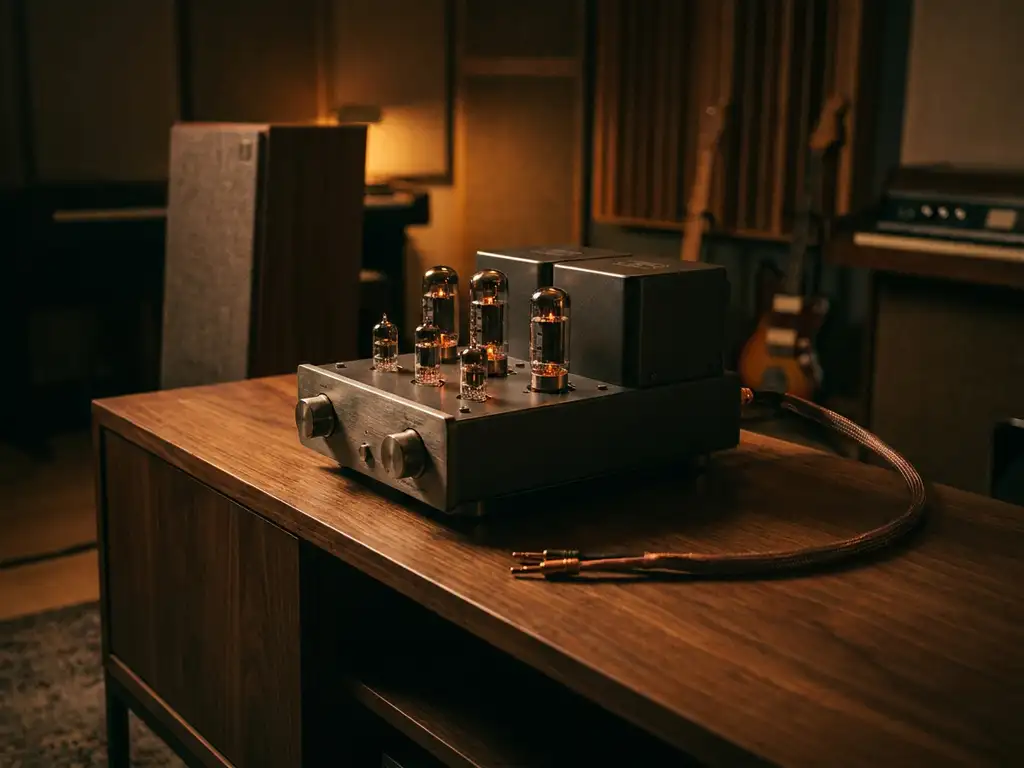
Most speakers sound their best with somewhere between 20 and 200 watts per channel, but the honest answer is that the right amplifier power depends far more on your specific speakers and listening habits than on any single number. Speaker sensitivity is the single biggest factor: a highly sensitive speaker can sing with just a few watts, while a power-hungry design may need hundreds to reach its potential. The sections below unpack every variable that shapes your ideal amplifier wattage, from room size to speaker sensitivity to the difference between RMS and peak power ratings.
Does more wattage always mean better sound?
No, more wattage does not automatically mean better sound. Amplifier power determines how loud a system can play before distortion sets in, but sound quality is shaped by circuit design, component quality, and how cleanly an amplifier delivers power, not by the size of the number on the spec sheet. A well-engineered 50-watt amplifier will almost always outperform a poorly designed 500-watt unit in a typical home listening room.
This is one of the most persistent myths in audio. Buyers fixate on wattage because it is an easy number to compare, but two amplifiers rated at the same output can sound dramatically different depending on how they handle the signal, how stable they are under varying speaker loads, and how much distortion they introduce at different volume levels. Headroom matters, too: an amplifier that can deliver clean power well above your typical listening level will sound more relaxed and controlled than one that is constantly working at its limits, even if the rated wattage looks identical on paper.
For most home listeners, the quality of those watts matters far more than the quantity.
What is speaker sensitivity and why does it change everything?
Speaker sensitivity is a measurement of how much sound pressure a speaker produces from a given amount of power, typically expressed in decibels at one watt measured from one metre away (dB/W/m). It is the single most important factor in determining how many watts you actually need. A speaker rated at 90 dB sensitivity needs roughly half the amplifier power to reach the same volume as a speaker rated at 87 dB.
The relationship is logarithmic, which makes the differences feel dramatic in practice. Consider two speakers side by side:
- High-sensitivity speaker (92 dB/W/m): May reach satisfying listening levels with as little as 10 to 20 watts per channel in an average room.
- Low-sensitivity speaker (84 dB/W/m): May require 100 watts or more to achieve the same perceived volume with the same sense of ease and dynamics.
This is why pairing a low-powered amplifier with an inefficient speaker is one of the most common mismatches in audio. Before asking how many watts you need, always check your speaker’s sensitivity rating. It will tell you more about your power requirements than almost anything else. You can explore our full amplifier range to see how different output classes are matched to different speaker profiles.
How do room size and listening volume affect power needs?
Room size and target listening volume have a direct and significant effect on how much amplifier power you need. Every time you double the distance between the speaker and the listener, sound pressure drops by roughly 6 dB, meaning you need four times the power to compensate. Larger rooms demand more watts simply to fill the space at the same perceived loudness as a smaller room.
Listening habits matter just as much. Someone who prefers background music at moderate levels in a medium-sized room might be perfectly satisfied with 30 to 50 watts per channel on a reasonably sensitive speaker. A listener who wants to recreate the dynamic impact of a live orchestral performance in a large room will need substantially more headroom to handle the sudden peaks in the music without the amplifier straining.
A useful practical guideline:
- Small room, moderate volume: 20 to 50 watts per channel is typically sufficient with average-sensitivity speakers.
- Medium room, varied listening levels: 50 to 100 watts per channel gives comfortable headroom for most music.
- Large room or dynamic listening: 100 to 200 watts or more may be warranted, especially with less sensitive speakers.
These are starting points, not rules. The interaction between room acoustics, speaker sensitivity, and your personal volume preferences will always be the deciding combination.
What’s the difference between watts RMS and peak watts?
Watts RMS (Root Mean Square) represents the continuous power an amplifier can deliver reliably over time, while peak watts describe the maximum power it can produce in very short bursts. RMS is the meaningful number for real-world listening. Peak figures are often used in marketing to make amplifiers appear more powerful than they are in sustained use.
When comparing amplifiers, always compare RMS ratings measured under the same conditions, ideally at a specified distortion level (such as 0.1% THD) and across the full audio frequency range. An amplifier claiming 200 peak watts may only sustain 80 watts RMS before distortion becomes audible, which is the figure that actually matters during normal listening.
In high-end audio, reputable manufacturers publish honest, conservative RMS figures measured under real-world conditions. A well-specified 80-watt RMS amplifier with excellent circuit design will often outperform a cheaper unit claiming 150 peak watts in both sound quality and long-term reliability. Always read the fine print on power specifications and treat peak wattage claims with healthy scepticism.
Should I choose a high-powered or low-powered amplifier for my setup?
Choose your amplifier power based on your specific speakers, room, and listening preferences rather than defaulting to the highest wattage available. A low-powered amplifier paired with the right high-sensitivity speakers can deliver extraordinary results, while a high-powered amplifier is the correct choice for demanding, low-sensitivity speakers or large listening spaces where dynamic headroom is essential.
When a low-powered amplifier makes sense
If your speakers have a sensitivity rating of 90 dB/W/m or higher and your listening room is small to medium in size, a lower-powered amplifier in the 20 to 50 watt range can be an excellent match. Lower-powered designs, particularly those built around tube or tube-hybrid circuits, often excel at the midrange warmth and textural detail that make music feel alive and emotionally present. The key is that the amplifier is never pushed to its limits, which is where distortion and listener fatigue begin.
When a high-powered amplifier is the better choice
Speakers with sensitivity ratings below 87 dB, complex impedance curves, or multiple drivers that demand significant current are best served by amplifiers with generous power reserves. The same applies to larger rooms and listeners who enjoy orchestral, electronic, or any music with wide dynamic swings. Here, headroom is not a luxury but a practical requirement for clean, controlled sound at realistic volumes.
Can underpowering or overpowering speakers damage them?
Yes, both underpowering and overpowering can damage speakers, though the risks work in different ways. Underpowering is actually the more common cause of driver damage: when an amplifier is pushed beyond its limits, it produces a clipped, distorted signal that can overheat and burn out a speaker’s tweeter or voice coil. Overpowering is a risk when an amplifier consistently delivers more power than a speaker’s rated handling capacity, though this is less common in real-world home listening.
Clipping is the critical concept to understand. When an amplifier runs out of clean power and clips the audio signal, it converts the smooth waveform into a squared-off shape that contains a disproportionate amount of high-frequency energy. This is particularly destructive to tweeters, which are not designed to handle sustained high-frequency overload. This is why a modestly rated but clean amplifier is safer for your speakers than a cheap, underpowered unit that clips regularly.
The practical takeaway: always choose an amplifier with enough clean headroom for your speakers and listening habits, and never habitually push any amplifier to its maximum output. The sound will tell you when something is wrong, typically as harshness, compression, or a loss of detail at higher volumes. Trust what you hear and back off before damage occurs.
How Accustic Arts Helps You Find the Right Amplifier Power
Matching amplifier power to speakers is one of the most consequential decisions in building a high-end audio system, and it is exactly the kind of challenge we have spent decades thinking about at Accustic Arts. Our amplifier designs are built around a core principle: every watt must be clean, stable, and musically faithful, whether we are engineering a refined integrated amplifier for a compact listening room or a powerful monoblock for a demanding reference system.
Here is how we approach the power question across our product range:
- Honest power ratings: Every Accustic Arts amplifier is rated conservatively and tested rigorously, so the watts per channel figure you see reflects real-world sustained performance, not marketing peak figures.
- Matched for real speakers: Our amplifier designs are developed with an understanding of how real-world speakers behave, including complex impedance loads, so the power delivery is stable and controlled across the full frequency range.
- Tube hybrid options: For listeners who want the warmth and midrange expressiveness of lower-powered designs without sacrificing control, our tube hybrid components offer a musically compelling middle path.
- Uncompromising testing: Each component undergoes up to two weeks of individual testing before leaving our facility in Lauffen am Neckar, ensuring that the power specification matches the real-world listening experience.
If you are ready to explore which amplifier is the right match for your speakers and listening space, browse our complete product range or get in touch with us directly and we will help you find the ideal solution for your system.