

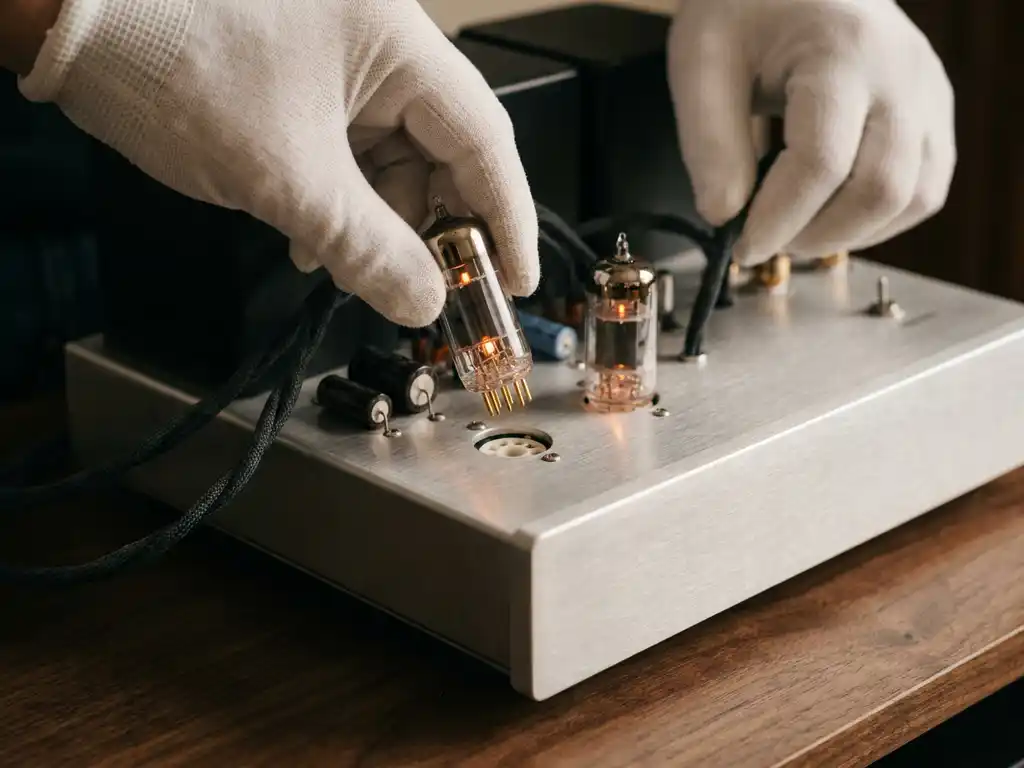
Few upgrades in high-end audio are as immediately accessible and genuinely transformative as tube rolling. For anyone running a tube amplifier or a hybrid component, swapping out the vacuum tubes for a different set can shift the entire character of the sound without touching a single circuit. It is one of those rare opportunities where curiosity and a modest investment can lead to a surprisingly profound listening experience.
The practice has a devoted following among audiophiles precisely because the results are real and repeatable. Tube rolling simply means replacing the tubes in your amplifier or preamplifier with alternative types or brands to explore how those changes affect the sound. Whether you are chasing a warmer midrange, a more extended top end, or tighter bass control, understanding the fundamentals will help you make informed decisions rather than expensive guesses.
How different tube types shape sonic character
Every tube type carries its own sonic fingerprint, shaped by its internal geometry, materials, and design intent. A 12AX7, for example, is a high-gain dual triode that tends toward a full, rich presentation, making it a common choice in preamplifier stages where tonal density is desirable. A 6SN7, by contrast, offers a more linear and open character that many listeners associate with a sense of space and air around instruments.
The physical construction of a tube directly influences how it handles transients, resolves fine detail, and reproduces the midrange. Single-ended triode designs built around tubes like the 300B are celebrated for their natural, almost vocal midrange quality, while pentode tubes such as the EL34 or KT88 tend to deliver greater power and a somewhat more assertive dynamic character. Understanding these fundamental differences is the starting point for any meaningful tube rolling journey.
New production vs. NOS tubes: what actually changes
The debate between new production and NOS (new old stock) tubes is one of the most enduring conversations in the high-end audio world. NOS tubes are original-manufacture units produced decades ago, often by Telefunken, Mullard, Amperex, or GE, that were never put into service and have been stored since. New production tubes are manufactured today by companies primarily in Russia, China, and Eastern Europe.
The practical differences come down to materials and manufacturing tolerances. Many NOS tubes were built during an era when tube technology was the dominant electronics medium, and quality control was exceptionally rigorous. As a result, they often exhibit lower noise floors, tighter channel matching, and a sonic refinement that enthusiasts describe as more organic or three-dimensional. New production tubes have improved considerably in recent years and offer excellent value and reliability, but the finest NOS examples from reputable sources still command premium prices for good reason. When sourcing NOS tubes, always buy from a trusted dealer who tests and grades the stock, since age and storage conditions vary widely.
Matching tubes to your amplifier and listening goals
Successful tube rolling is not just about picking a famous brand and hoping for the best. The starting point should always be the amplifier’s circuit design and the manufacturer’s recommendations. Some amplifiers are sensitive to variations in tube parameters such as transconductance and plate resistance, while others tolerate a wide range of compatible types without requiring any adjustment.
Beyond the technical side, matching tubes to your listening goals requires honest self-assessment. If the current sound feels slightly bright or analytical, a warmer-voiced tube in the input or driver stage can introduce more harmonic richness without altering the fundamental character of the amplifier. If the presentation feels soft or lacks definition, a more linear tube may restore clarity and timing precision. Thinking through what specifically feels missing or excessive in the current sound is far more productive than chasing a tube purely by reputation. Exploring the full range of high-end audio components can also help clarify which part of the signal chain is the most meaningful place to focus your attention.
What to listen for after a tube swap
After installing new tubes, allow a proper burn-in period before drawing conclusions. Most tubes require anywhere from 20 to 100 hours of use before their sonic character stabilizes, and judgments made in the first few hours can be misleading. Play familiar, well-recorded music that you know deeply, since familiarity is the most reliable reference point.
When evaluating the change, listen systematically rather than searching for a single dramatic difference. Start with the midrange, since this is where tube character is most audible and most emotionally meaningful. Then assess the top end for air and extension without harshness. Move to the bass for definition and weight. Finally, consider the overall sense of space and instrument separation. Keeping brief notes during this process helps track subtle impressions that are easy to forget once the initial novelty fades.
Common tube rolling mistakes and how to avoid them
One of the most frequent errors is changing too many variables at once. Swapping multiple tubes simultaneously makes it nearly impossible to identify which change produced which effect. Roll one position at a time, listen carefully, and document the results before moving on.
Another common pitfall is neglecting to check bias settings after installing new tubes in amplifiers that require manual adjustment. Running an amplifier with incorrect bias can affect sound quality and, in some cases, accelerate tube wear. Always consult the amplifier’s manual or a qualified technician if you are unsure whether your design requires rebiasing after a tube change.
Finally, avoid letting online forums substitute for your own ears. Community wisdom is genuinely useful for narrowing down candidates, but the interaction between a specific tube and a specific circuit in a specific room is always unique. Trust the listening process over received opinion, and give each combination adequate time before reaching a verdict.
How Accustic Arts supports your tube rolling journey
At Accustic Arts, we understand that the pursuit of better sound is deeply personal, and tube rolling is one of the most rewarding ways to explore what your system is truly capable of. Our tube hybrid components are designed with this kind of thoughtful experimentation in mind, built to precise tolerances that allow compatible tube types to reveal their character without introducing instability or unwanted coloration.
- Precision engineering: Our hybrid components are designed with clearly defined tube positions and stable operating points, giving you a reliable foundation for meaningful tube rolling experiments.
- Uncompromising quality standards: Every product undergoes individual testing for up to two weeks before leaving our facility, ensuring that the baseline performance is accurate enough for tube differences to be clearly audible.
- Informed guidance: Our team brings experience from professional recording studios and live sound environments, giving us a grounded perspective on what authentic musical reproduction actually requires.
- Compatible product range: From preamplifiers to integrated amplifiers and D/A converters, our product lineup offers multiple entry points for audiophiles looking to explore tube-based performance at a reference level.
If you have questions about which Accustic Arts component best suits your listening goals or want to learn more about our tube hybrid designs, we welcome the conversation. Get in touch with us and let us help you find the right path toward the sound you are looking for.