

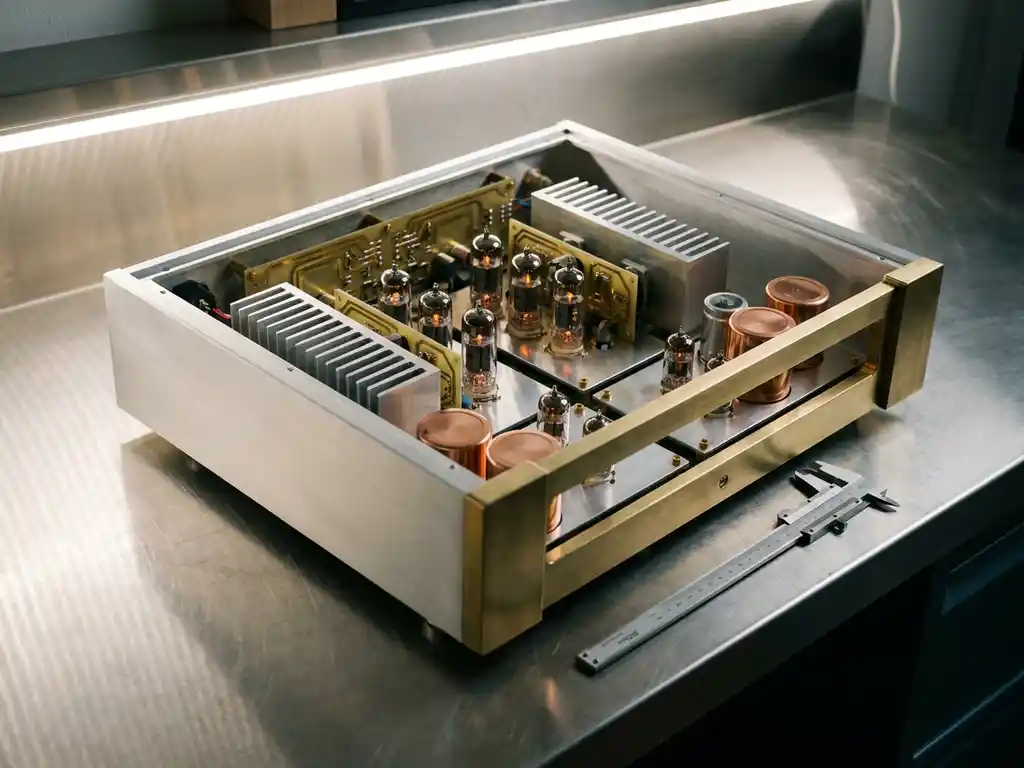
German-engineered amplifiers have earned their reputation for precision because German manufacturing culture places exceptional emphasis on tolerances, component selection, and systematic quality control at every stage of production. This is not simply national pride; it reflects a measurable difference in how products are designed, tested, and built. The questions below unpack the specific engineering decisions, material choices, and listening qualities that define this reputation.
What makes German engineering standards different from other countries?
German engineering standards differ from those in most other countries through a deeply embedded culture of exactness, where tolerances are minimized, processes are documented rigorously, and quality is treated as a non-negotiable baseline rather than a competitive advantage. This approach traces back to a long tradition of precision manufacturing that spans industries from automotive to optics to professional audio.
In audio electronics specifically, this culture manifests as an insistence on selecting components that meet tight specifications rather than approximate ones. German audio engineers tend to reject parts that fall within an acceptable range if a better-matched alternative exists. The result is circuitry that behaves predictably under a wide range of conditions, which directly affects how faithfully an amplifier reproduces the original signal.
Another distinguishing factor is the emphasis on long-term thinking. German manufacturers typically design for durability and serviceability, not just immediate performance. This means engineering decisions are made with a ten- or twenty-year lifespan in mind, which influences everything from solder quality to circuit board layout.
How does precision manufacturing affect amplifier sound quality?
Precision manufacturing affects amplifier sound quality by reducing the gap between what the original recording contains and what the listener actually hears. Every deviation introduced by loose tolerances, mismatched components, or inconsistent assembly adds distortion, coloration, or noise to the signal path. The more precisely an amplifier is built, the less it imposes its own character on the music.
This matters most in areas like channel matching, where the left and right signal paths must behave identically to preserve stereo imaging. It also matters in the power supply, where voltage stability under dynamic loads directly affects how cleanly transients are reproduced. A percussion hit or a plucked string requires the amplifier to respond instantly and accurately, and that responsiveness depends on the precision of the underlying engineering.
For audiophiles who invest in high-end audio amplifiers, precision manufacturing is not an abstract concept. It is the difference between hearing a recording and hearing through it to the performance underneath.
What components inside an amplifier determine its accuracy?
The components that most directly determine an amplifier’s accuracy are resistors, capacitors, transistors or tubes, and the power supply. Each of these contributes to or detracts from signal integrity depending on how closely they match their rated specifications and how consistently they perform across temperature and time.
- Resistors: Low-tolerance resistors ensure that gain stages behave exactly as designed. Even small deviations can shift frequency response or alter channel balance.
- Capacitors: High-quality capacitors with stable dielectric properties prevent frequency-dependent coloration and reduce distortion in the signal path.
- Transistors and tubes: Matched pairs or carefully selected devices ensure that push-pull stages cancel distortion symmetrically rather than adding to it.
- Power supply: A well-regulated, low-noise power supply prevents the amplifier from imposing supply-related artifacts on the audio signal, particularly during dynamic passages.
German audio engineering tends to treat component selection as an ongoing process rather than a one-time specification. Parts are measured, sorted, and often burned in before being installed, which adds time to production but significantly narrows the variance in the finished product.
Why do audiophiles associate German amplifiers with emotional midrange reproduction?
Audiophiles associate German amplifiers with emotional midrange reproduction because the midrange frequencies, roughly 300 Hz to 3 kHz, carry the majority of vocal and instrumental character, and German audio engineering prioritizes accuracy in this band without adding artificial warmth or softening detail. The result is a midrange that feels present and real rather than processed.
This quality is not achieved by boosting or shaping the midrange. It comes from eliminating the distortions and phase errors that typically obscure it. When a voice or a cello is reproduced without those artifacts, the emotional content of the performance becomes audible in a way that listeners describe as involving or even moving.
The connection between engineering precision and emotional response is one that experienced audiophiles understand well. A technically accurate amplifier does not sound clinical; it sounds honest. And honesty in audio reproduction allows the listener to engage with the music rather than the equipment.
How does a rigorous testing process affect an amplifier’s long-term reliability?
A rigorous testing process improves long-term reliability by identifying weak components, marginal solder joints, and performance inconsistencies before a product reaches the listener. Extended burn-in and stress testing expose failures that would otherwise appear weeks or months into use, which means a thoroughly tested amplifier is statistically far more likely to perform consistently over its intended lifespan.
Testing also validates that the amplifier meets its specifications across a range of operating conditions, not just at a single reference point. Temperature cycling, load variation, and sustained operation all reveal how the design behaves in real-world listening environments rather than ideal laboratory conditions.
For a high-end audio amplifier, this matters because the investment is substantial and the expectation of performance is correspondingly high. A listener who builds a reference system around a specific amplifier needs confidence that its sound will remain consistent year after year.
Which German amplifier qualities matter most for a high-end listening room?
For a high-end listening room, the German amplifier qualities that matter most are low noise floor, channel matching, dynamic accuracy, and tonal neutrality. These are the properties that allow the amplifier to disappear into the system and let the recording speak for itself rather than drawing attention to its own character.
- Low noise floor: In a quiet listening room, background noise becomes audible. A low noise floor preserves the silence between notes, which is as important as the notes themselves.
- Channel matching: Precise stereo imaging depends on left and right channels behaving identically. Tight matching creates a stable, three-dimensional soundstage.
- Dynamic accuracy: The ability to reproduce both very quiet and very loud passages without compression or distortion preserves the natural dynamics of live recordings.
- Tonal neutrality: An amplifier that neither warms nor brightens the signal allows the listener to hear the source material as it was recorded, without editorial coloring.
These qualities also interact with the rest of the system. A neutral, accurate amplifier reveals the strengths of a good source component and a well-designed loudspeaker rather than masking them. This is why German amplifier precision is valued not just in isolation but as a foundation for a coherent high-end system.
How Accustic Arts Delivers German Amplifier Precision
We at Accustic Arts have built our entire philosophy around the qualities described above. Founded in Germany and shaped by five years of development with audio experts before our first product ever reached a listener, we approach amplifier design as both a technical discipline and a musical one. Our work in recording studios and professional live sound has given us a direct reference for what accurate reproduction actually sounds like.
What sets our approach apart in practical terms:
- Two-week individual testing: Every component we produce undergoes up to two weeks of testing before it leaves our facility. This is not a batch process; it is an individual evaluation of each unit.
- Precise component selection: We use only high-grade components chosen for their measured performance, not simply their rated specifications.
- Emotionally engaging midrange: Our signature achievement is a midrange reproduction that audiophiles and music professionals describe as involving, natural, and honest, the result of eliminating distortion rather than adding character.
- Full product range: From preamplifiers and integrated amplifiers to monoblock power amplifiers, D/A converters, and tube hybrid components, we offer everything needed for a reference-grade listening system.
If you are building or refining a high-end listening room and want to understand which of our components fits your system, we welcome the conversation. Contact us directly to speak with someone who understands both the engineering and the music.