

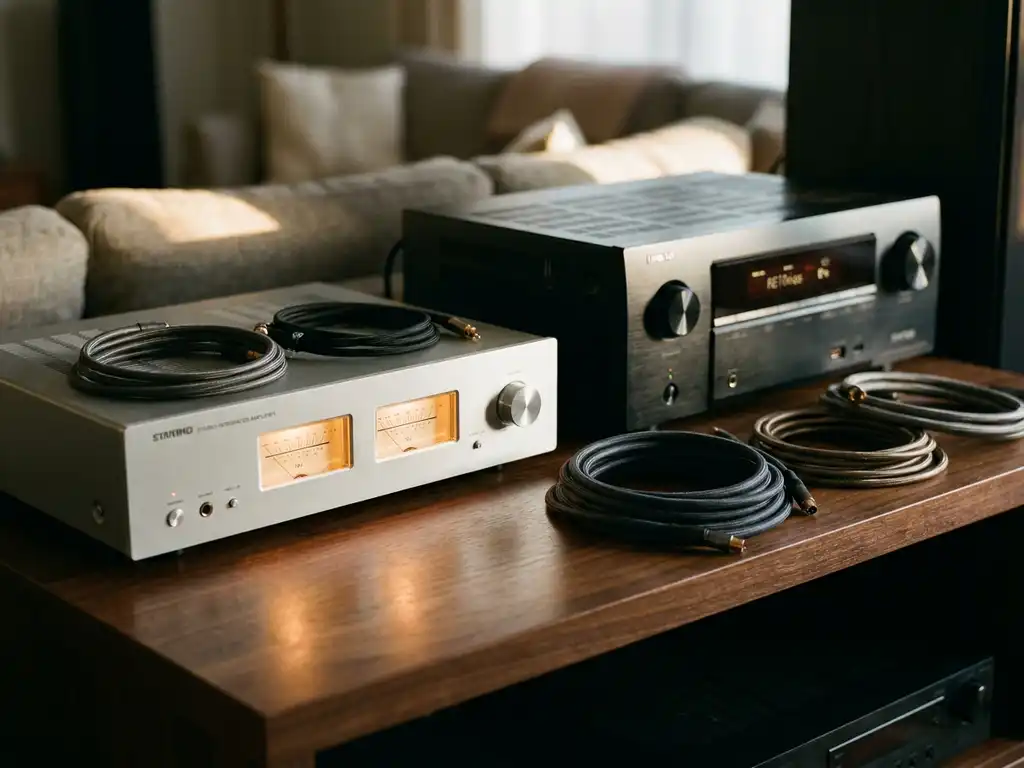
Choosing the right audio electronics can feel overwhelming, especially when terms like amplifier vs AV receiver get thrown around as if they mean the same thing. They do not. Both devices sit at the heart of a sound system, but they serve genuinely different purposes, and understanding that difference is the first step toward building a setup that truly satisfies. Whether the goal is immersive home theater or pure two-channel audio bliss, the choice matters more than most people realize.
At Accustic Arts, we work with audiophiles and music lovers who care deeply about how their system sounds, not just how many features it lists on a spec sheet. That perspective shapes how we think about this question, and it is a question worth exploring properly.
Two paths to great sound
Both amplifiers and AV receivers exist to do one fundamental thing: take an audio signal and make it powerful enough to drive loudspeakers. That shared purpose is where the similarities largely end. The path each device takes to get there, and the priorities built into its design, are quite different.
A stereo amplifier, particularly an integrated amplifier, is purpose-built for music. It combines a preamplifier and a power amplifier into a single chassis, focused entirely on delivering the cleanest, most faithful signal to your speakers across two channels. A dedicated amplifier strips away everything that is not essential to that goal. An AV receiver, by contrast, is a multi-role device. It handles audio decoding, video switching, radio tuners, network streaming, and surround sound processing, all within a single box designed to be the command center of a home theater system.
How amplifiers and AV receivers handle audio differently
The internal architecture of these two devices tells the real story. A dedicated amplifier devotes its entire circuit design, power supply, and component budget to audio performance. There are no video processing chips drawing power, no digital-to-analog conversion for six or eight channels happening simultaneously, and no wireless radios generating electromagnetic interference nearby. Every design decision points toward one outcome: the most accurate, emotionally engaging sound possible from two channels.
An AV receiver packs an enormous amount of functionality into a single enclosure. That versatility comes with trade-offs. The power supply must serve many masters at once, channel separation can be compromised by the sheer density of components, and the analog audio stages often receive less engineering attention than they would in a dedicated amplifier. For high-end audio listening, those compromises are audible. For someone watching action films with five or seven speakers, they may be entirely acceptable.
It is also worth noting that two-channel audio reproduction, done well, is technically demanding. The midrange, in particular, is where music lives emotionally, and it is the hardest region to get right. A well-engineered stereo amplifier has the space, the power supply headroom, and the design focus to handle that challenge in ways a receiver simply cannot match.
When an AV receiver makes sense
An AV receiver is genuinely the right tool when the primary use case is home theater. If a system needs to decode Dolby Atmos or DTS:X, manage HDMI switching between multiple video sources, and power five, seven, or more speakers for immersive cinematic sound, a receiver handles all of that elegantly from a single device.
Receivers also make practical sense for listeners who want a single, simplified setup. One remote, one power button, one device to manage streaming services, radio, and multiple input sources. For living rooms where music is secondary to movies and television, and where the convenience of an all-in-one solution outweighs the pursuit of ultimate sonic purity, an AV receiver delivers strong value. Modern receivers have improved significantly, and entry-level to mid-range home theater listening is well served by them.
When a dedicated amplifier is the right choice
A dedicated amplifier becomes the obvious choice the moment music moves from background activity to the central experience. When someone sits down specifically to listen, when the goal is to hear every nuance of a recording, and when the emotional connection to music matters as much as the technical performance, a stereo or integrated amplifier is the right foundation.
Audiophile listeners consistently report that a well-matched amplifier and speaker pairing reveals details in familiar recordings that a receiver simply glosses over. The soundstage is wider, the imaging is more precise, and the midrange carries the warmth and texture that makes live music feel present in the room. That is not an accident of taste; it is the result of engineering focus applied to a single, well-defined problem.
For those building a reference-grade listening system, a dedicated amplifier also pairs naturally with a high-quality DAC or CD player, allowing each component to be selected and optimized independently. This modular approach is the foundation of serious audio electronics systems, and it reflects a philosophy we at Accustic Arts have built our entire product range around: precision at every stage of the signal chain.
Can you combine both in one system?
Absolutely, and many enthusiasts do exactly that. A common and effective approach is to use an AV receiver for home theater duties while running a dedicated stereo amplifier for two-channel music listening. In this configuration, the receiver handles all the surround processing and video management, while the stereo amplifier takes over for serious listening sessions, often connected to a dedicated pair of high-quality speakers.
Some AV receivers include a stereo direct or pure direct mode that bypasses surround processing and routes the signal more cleanly to the front channels, which improves music performance noticeably. This is a useful feature for those who want one system to handle both roles without a separate amplifier. However, for listeners who have heard what a truly dedicated integrated amplifier can do, that compromise rarely satisfies for long.
The most important thing is to be honest about how a system will actually be used. Home theater first, with occasional music? An AV receiver with a good stereo direct mode may be enough. Music first, with movies as a secondary experience? A dedicated stereo amplifier paired with a quality source component will reward that investment every single time the listening chair is occupied. Both paths lead to great sound, but they lead there in very different ways.