

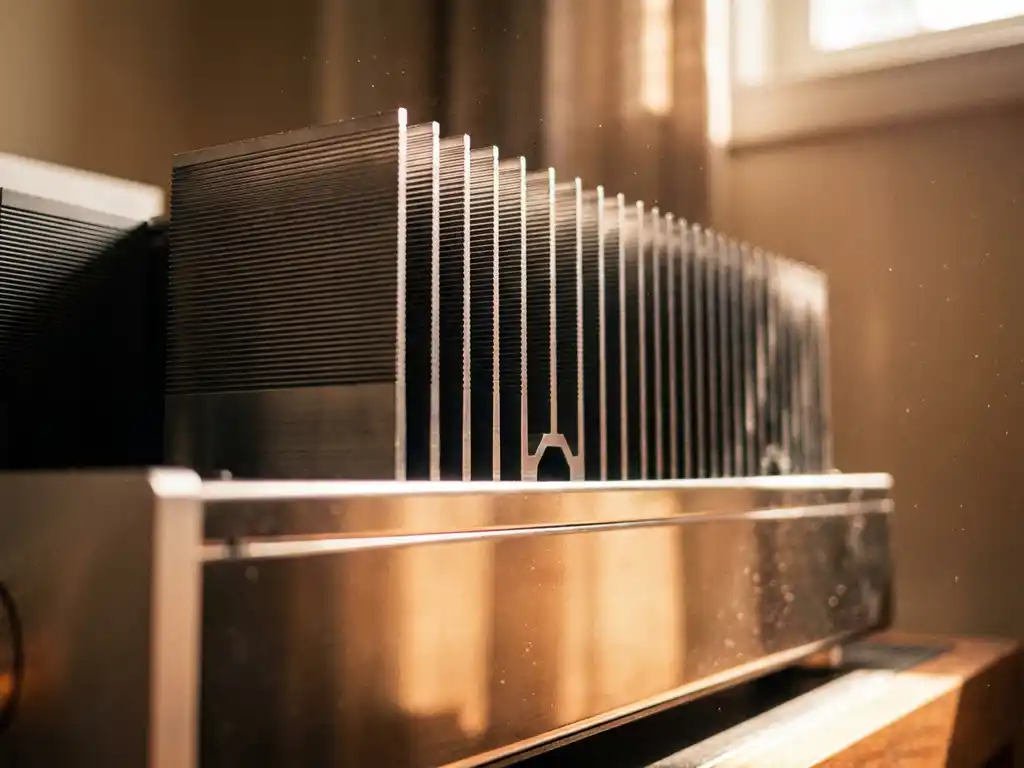
Touch the side of a running amplifier and you will feel it immediately: heat. That warmth is not a flaw or a sign of poor design. It is physics at work. Every amplifier converts electrical energy into audio signals, and during that process, some energy is inevitably lost as heat. Managing that heat is one of the most important engineering challenges in audio electronics, and amplifier heat sinks are the primary solution. Understanding why they exist, and how they work, gives any serious listener a deeper appreciation for what goes into building a great amplifier.
The heat problem inside every amplifier
At the heart of every amplifier are transistors or output devices that regulate and amplify electrical signals. These components are not perfectly efficient. When current flows through them, a portion of the electrical power is converted not into useful audio output but into thermal energy. In high-power amplifiers, this heat generation can be substantial, and without a way to move that heat away from the components, temperatures rise rapidly.
The transistors used in amplifier output stages are particularly vulnerable. They operate within strict temperature limits, and when those limits are exceeded, performance degrades and components can fail permanently. Amplifier thermal management is therefore not an optional extra but a fundamental requirement built into the design from the very first stage of engineering. The better an amplifier manages heat, the more consistently and reliably it performs over its entire lifespan.
How heat sinks keep amplifiers running safely
A heat sink works by drawing thermal energy away from sensitive components and dispersing it into the surrounding air. Most heat sinks are made from aluminium, which conducts heat efficiently and is relatively lightweight. Their distinctive fin-shaped structure dramatically increases the surface area in contact with the air, allowing heat to radiate and convect away far more effectively than a flat metal plate ever could.
The output transistors are mounted directly onto the heat sink, often with a thin layer of thermal compound in between to improve the thermal connection. As the transistors generate heat, it transfers into the heat sink body and spreads across the fins. Air moving across those fins, whether naturally through convection or assisted by a fan, carries the heat away from the amplifier. This continuous cycle of heat dissipation keeps component temperatures within safe operating ranges even during extended listening sessions at high volume levels.
What happens when an amplifier overheats
Thermal protection matters because the consequences of overheating are serious. Most modern amplifiers include built-in thermal protection circuits that shut the unit down automatically when internal temperatures reach a critical threshold. This is a safety net, not a normal operating state, and repeated thermal shutdowns are a sign that something is wrong.
Beyond shutdowns, sustained high temperatures accelerate the ageing of capacitors, resistors, and other components throughout the circuit. The result is a gradual decline in sonic performance long before any component fails outright. Distortion rises, dynamic range narrows, and the fine detail that makes music emotionally engaging begins to erode. For audiophiles who invest in reference-grade equipment specifically to preserve that emotional connection to music, thermal stress is a genuine enemy of long-term listening satisfaction.
Heat sink design in high-end audio amplifiers
In high-end audio, heat sink design is treated as a serious engineering discipline rather than an afterthought. The size, mass, and fin geometry of a heat sink are calculated to match the specific thermal output of the amplifier’s output stage. An undersized heat sink that struggles to cope with peak thermal loads will allow temperatures to fluctuate, which can subtly affect the operating characteristics of the output devices and introduce inconsistencies into the sound.
Passive versus active cooling
Many high-end amplifiers rely exclusively on passive cooling, meaning no fans are used. This is a deliberate choice. Fans introduce mechanical noise and vibration that can couple into the chassis and affect the listening environment. A well-designed passive heat sink, large enough to handle the amplifier’s thermal output without assistance, keeps the unit completely silent while maintaining stable operating temperatures.
Thermal stability and sonic consistency
Thermal stability is closely linked to sonic consistency. When an amplifier’s output devices operate at a stable, well-controlled temperature, their electrical characteristics remain predictable. This predictability is part of what allows a well-engineered amplifier to sound the same at the end of a long listening session as it does at the beginning. At Accustic Arts, this kind of engineering discipline runs through every product we build, supported by an individual testing process that can last up to two weeks before a component leaves our facility.
Placement and ventilation tips for amplifier owners
Even the most carefully engineered heat sink can only do its job if the amplifier has adequate airflow around it. Where and how an amplifier is placed in a listening room has a direct impact on its thermal performance and long-term reliability.
Leave generous clearance above and on the sides of any amplifier. A minimum of 15 to 20 centimetres of free space above the unit allows warm air to rise and escape naturally. Avoid placing amplifiers inside enclosed cabinets without dedicated ventilation, as trapped heat has nowhere to go and temperatures climb quickly. Stacking components directly on top of amplifiers compounds the problem by blocking the very surfaces designed to release heat.
In warmer climates or during summer months, it is worth paying extra attention to room temperature. Amplifiers dissipate heat into the surrounding air, and if that air is already warm, the heat sink’s efficiency drops. A well-ventilated, climate-controlled listening room is not just about acoustic comfort. It actively supports the amplifier cooling process and helps preserve the performance and longevity of every component in the chain. Treating the listening environment as part of the system, rather than just a backdrop for it, is a habit that serious audiophiles consistently find rewarding.
Ähnliche Artikel
- What is a Class D amplifier and can it sound as good as Class A/AB?
- What is an amplifier's "sound signature" and where does it come from?
- How do you set up a high-end audio system for the first time?
- What is the audible difference between 16-bit and 24-bit audio?
- Was ist Hörmüdigkeit und wie vermeidet man sie?