

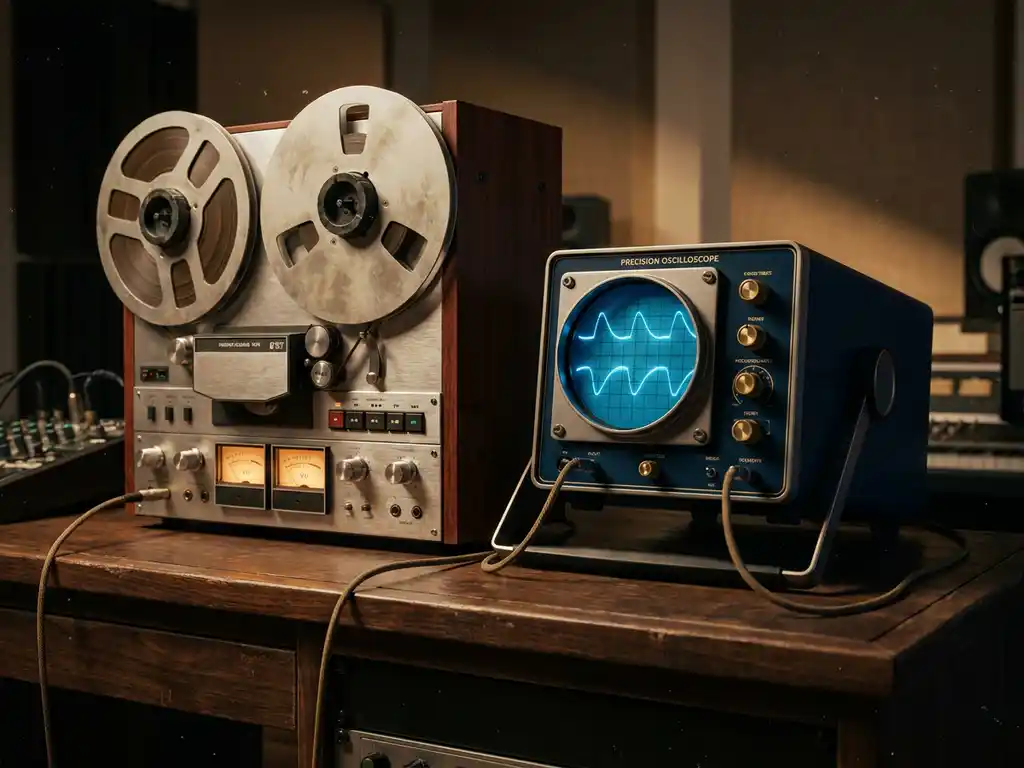
Few debates in the audiophile world generate more passion than the question of warmth versus accuracy. Some listeners swear by the rich, full-bodied sound of a warm system; others insist that accuracy is the only honest measure of audio fidelity. Understanding what these terms actually mean, and how they relate to each other, is essential for anyone serious about high-end audio and the pursuit of genuine musical reproduction.
What do warmth and accuracy mean in audio?
Warmth in audio refers to a tonal character where the lower midrange and upper bass frequencies are slightly emphasized, creating a full, rich, and inviting sound. Accuracy in sound means faithful reproduction of the original recording with minimal coloration, where no frequency range is artificially boosted or reduced. Both describe qualities of sound reproduction, but they approach the ideal from different directions.
Warmth is often described as a feeling as much as a measurement. A warm-sounding system tends to make voices sound fuller, strings sound richer, and the overall listening experience feel more enveloping. It is not necessarily inaccurate, but it does imply a particular tonal balance that leans toward body and density over clinical precision.
Accuracy, by contrast, is about neutrality. An accurate system reproduces what is in the recording, nothing more and nothing less. If a recording has a lean, bright character, an accurate system will reveal that. If it has warmth built in by the recording engineer, an accurate system will faithfully convey it. Accuracy is the canvas; warmth can be part of the painting.
Why do audiophiles care about warm vs. accurate sound?
Audiophiles care about the warm vs. accurate sound distinction because it directly shapes the emotional and musical experience of listening. The choice between a warmer or more neutral presentation affects how natural instruments sound, how voices are rendered, and whether a system feels engaging over long listening sessions or fatiguing after a short one.
For many audiophiles, this is not a purely technical question. It touches on what they believe recorded music should sound like and what role their equipment should play. Those who prioritize accuracy often argue that the recording engineer’s intent should be preserved without interference. Those who favor warmth often argue that a degree of tonal richness makes music more emotionally involving.
The debate also matters practically. When choosing between components, speakers, or cables, understanding where a product sits on the warmth-to-accuracy spectrum helps listeners build a system that matches their musical preferences and listening habits.
What’s the difference between warm and accurate sound reproduction?
The key difference between warm and accurate sound reproduction lies in tonal balance. A warm sound has a gentle lift in the lower midrange and upper bass, adding body and richness. An accurate sound maintains a flat, neutral frequency response that mirrors the source material as closely as possible. Warmth is a tonal character; accuracy is a measure of fidelity.
In practice, the differences show up in specific ways:
- Vocals: A warm system makes voices sound fuller and more resonant. An accurate system renders voices as they were recorded, which can sound leaner or more transparent depending on the recording.
- Bass: Warmth often manifests as a slight bloom or weight in the low end. Accuracy means tight, controlled bass that does not overstep its boundaries in the mix.
- Treble: Accurate systems tend to have extended, detailed treble. Warm systems may roll off slightly at the top, reducing perceived brightness and edge.
- Soundstage: Accuracy typically produces a more precise, three-dimensional image. Warmth can sometimes soften the edges of that image, making it feel more diffuse but also more relaxed.
Neither approach is inherently superior. The right balance depends on the listener, the music, and the rest of the system.
Can a component be both warm and accurate at the same time?
Yes, a component can be both warm and accurate. The best high-end audio components achieve a natural tonal balance where the warmth present in a recording is faithfully reproduced without artificial coloration being added by the equipment itself. This is the distinction between a component that sounds warm because it colors the signal and one that sounds warm because it accurately reveals the warmth already in the music.
This is one of the most nuanced points in audiophile sound quality. A truly accurate component does not strip music of its warmth. If the original performance had warmth, an accurate system will convey it. What accuracy prevents is the addition of false warmth that was never in the recording.
The finest components are designed so that warmth is an outcome of fidelity, not a substitute for it. When a system is truly accurate and the music is warm, the result is deeply emotionally engaging. The emotion comes from the music, not from the equipment flattering it.
How does audio component design affect warmth and accuracy?
Audio component design directly shapes where a product lands on the warmth-to-accuracy spectrum. Circuit topology, component selection, power supply design, and output stage configuration all influence the tonal character of a component. These design decisions determine whether a product adds coloration to the signal or passes it through with high fidelity.
Circuit topology and component choice
Tube-based designs are often associated with warmth due to their harmonic distortion profile, which tends to emphasize even-order harmonics that the human ear finds pleasing. Solid-state designs, when executed well, can achieve very low distortion and high neutrality. However, neither technology is inherently warm or accurate by default. The quality of execution matters far more than the choice of technology.
Power supply and mechanical isolation
A well-designed power supply reduces noise and interference that can introduce harshness or grain into the signal. Mechanical isolation from vibration prevents resonances from coloring the sound. These factors contribute to a cleaner, more accurate presentation that also tends to sound more natural and, paradoxically, more musically satisfying.
Exploring the full range of high-end audio components available today reveals how much design philosophy varies between manufacturers, and why component selection is so consequential for the final sound.
Should you prioritize warmth or accuracy when choosing audio equipment?
You should prioritize accuracy when choosing audio equipment, but with the understanding that true accuracy does not exclude warmth. A neutral, high-fidelity component will reveal the natural warmth in well-recorded music without adding artificial coloration. If a system sounds cold or sterile, that is typically a sign of poor implementation rather than genuine accuracy.
That said, personal preference and listening context matter. Consider these factors:
- Your music library: If you listen predominantly to acoustic music, jazz, or classical recordings made with warmth in mind, an accurate system will let that warmth shine through. If your library skews toward bright or harshly recorded material, a slightly warmer component can make long listening sessions more enjoyable.
- Your room acoustics: A room with hard, reflective surfaces can sound bright and fatiguing. In that context, a slightly warmer component may balance the system more effectively than a strictly neutral one.
- Long-term listening habits: Accuracy tends to be more revealing and more rewarding over time. Artificial warmth can initially feel pleasant but may obscure musical detail that becomes more important the longer you listen critically.
- System synergy: Warmth and accuracy are system-level properties, not just component-level ones. A neutral amplifier paired with warm speakers can produce a balanced result, and vice versa.
The most satisfying approach for serious listeners is to pursue accuracy as the primary goal and allow the warmth of well-recorded music to emerge naturally from a high-fidelity system.
How ACCUSTIC ARTS approaches warmth and accuracy in sound reproduction
At ACCUSTIC ARTS, we have built our entire design philosophy around the idea that warmth and accuracy are not opposites. Our guiding principle, „Absolute Sound Fidelity Through Reproduction,“ reflects our conviction that a truly accurate component does not strip music of its emotional character. Instead, it reveals the warmth, texture, and nuance that were present in the original performance.
Here is how we put that philosophy into practice:
- Uncompromising component selection: We use only precise, high-grade components across every product line, ensuring that signal integrity is maintained from input to output without unnecessary coloration.
- Rigorous testing: Every component undergoes an individual product test that can last up to two weeks before it leaves our facility. This process ensures that each unit performs exactly as designed, delivering consistent audio fidelity in real-world listening environments.
- Studio-informed design: Our experience in recording studios and professional live sound environments has shaped how we think about accurate reproduction. We know what music sounds like at its source, and we design our components to bring listeners as close to that source as possible.
- Emotionally engaging midrange: Our signature achievement is midrange reproduction that feels natural, detailed, and genuinely moving. This is warmth as a product of accuracy, not a substitute for it.
If you are ready to experience what accurate, emotionally engaging sound reproduction truly sounds like, we invite you to explore our full range of high-end audio components or get in touch with us directly to find the right components for your listening environment.
—
Disclaimer: This article was created with the assistance of Artificial Intelligence and has been reviewed by our editorial team.
Ähnliche Artikel
- How do you know if your listening room is hurting your sound?
- Welche Rolle spielt die Erdung in einer High-End-Audioanlage?
- How does an integrated amplifier compare to a separates system?
- What is the role of grounding in a high-end audio system?
- Was ist die hörbare Wirkung eines hochwertigen Endverstärkers?