

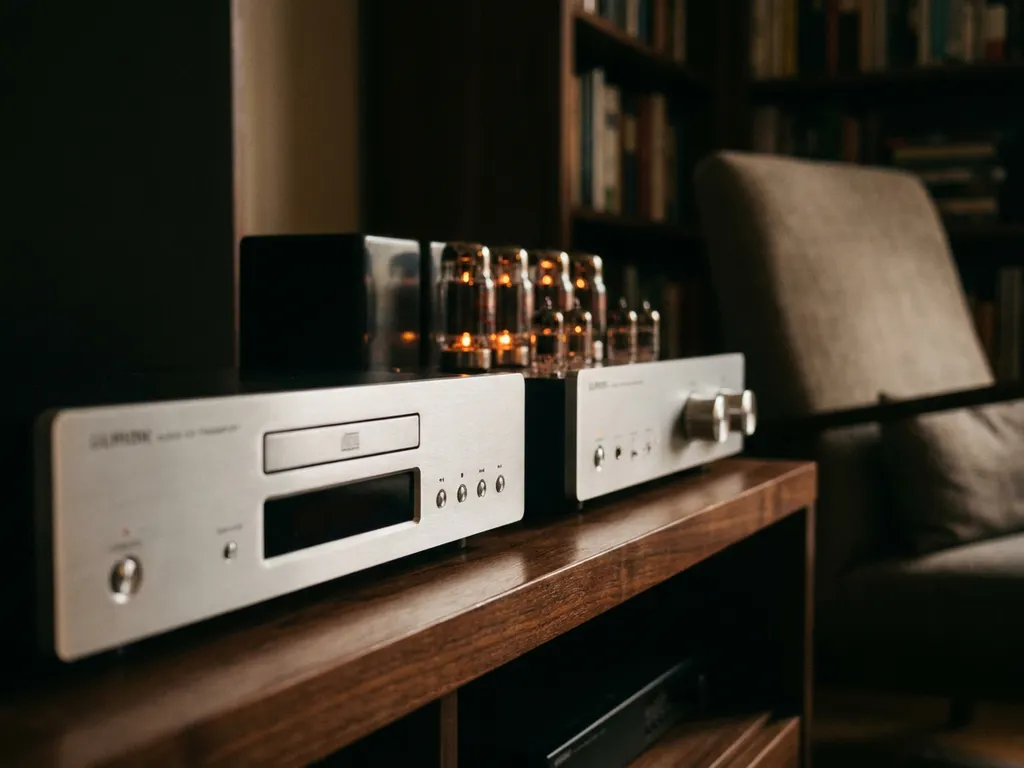
If you have spent any time exploring the world of serious audio, you have almost certainly encountered both terms. Hi-fi and high-end audio are often used interchangeably in casual conversation, but they describe genuinely different things. Understanding where one ends and the other begins can save you a great deal of confusion when you are researching components, reading reviews, or deciding where to invest your money. This guide answers the most common questions directly so you can move forward with clarity.
What do hi-fi and high-end audio actually mean?
Hi-fi, short for high fidelity, refers to audio reproduction that is faithful to the original recording with minimal distortion. High-end audio is a subset of hi-fi that goes significantly further, prioritizing the finest materials, engineering tolerances, and listening experience available, regardless of cost. Hi-fi is a standard; high-end audio is a pursuit.
The term hi-fi emerged in the 1950s to distinguish quality home audio from the low-fidelity sound of early radio and consumer gramophones. Over time, it became a broad category that includes everything from a decent entry-level stereo system to a serious separates setup. Today, a hi-fi system is generally understood to deliver clean, accurate sound that a typical listener would find impressive.
High-end audio, by contrast, is defined not just by technical performance but by philosophy. Manufacturers in this space obsess over every variable in the signal chain, from the purity of internal wiring to the resonance characteristics of a chassis. The goal is not simply accurate sound, but sound that is emotionally engaging and as close as possible to the experience of live music.
What is the real difference between hi-fi and high-end audio?
The core difference between hi-fi and high-end audio lies in the degree of engineering commitment and the listening experience that results. Hi-fi delivers accurate, enjoyable sound within practical cost constraints. High-end audio removes those constraints entirely, pursuing sonic performance as an end in itself.
Several distinctions separate the two in practice:
- Component selection: Hi-fi products use quality parts chosen with cost-efficiency in mind. High-end audio components are selected purely for performance, often sourced from specialist suppliers and used in ways that exceed standard engineering practice.
- Build quality: High-end audio enclosures, circuit boards, and internal layouts are engineered to eliminate resonance, interference, and noise at a level that would be commercially impractical in mainstream hi-fi.
- Testing and quality control: High-end manufacturers typically apply far more rigorous testing before a product leaves the factory, sometimes running individual units through extended evaluation periods measured in days rather than minutes.
- Listening experience: The difference is ultimately heard in the music. High-end audio tends to retrieve more detail, preserve more of the original recording’s texture, and create a more convincing sense of space and presence.
Why does component quality matter so much in high-end audio?
Component quality matters in high-end audio because every element in the signal path affects the final sound. Even small compromises in resistors, capacitors, transformers, or wiring can introduce coloration, noise, or distortion that accumulates across the chain and diminishes the listening experience.
In a high-end audio context, the engineering challenge is not just to meet a specification on paper but to preserve the integrity of a musical signal through every stage of processing. A capacitor that measures adequately in a standard test may still introduce subtle timing errors or harmonic distortion that a trained ear can detect. This is why high-end manufacturers invest heavily in component sourcing, often testing and selecting individual parts rather than accepting batch tolerances.
The power supply is another area where component quality has an outsized impact. A well-designed, generously specified power supply isolates sensitive audio circuits from interference and provides a stable, consistent foundation for the entire system. In high-end audio, the power supply is often treated as a primary engineering priority rather than an afterthought.
How does high-end audio reproduce music more faithfully?
High-end audio reproduces music more faithfully by minimizing the cumulative distortions, timing errors, and signal colorations that occur at every stage of playback. The result is a presentation that preserves the dynamic range, tonal balance, and spatial information of the original recording with greater accuracy than standard hi-fi equipment can achieve.
Faithful reproduction depends on several interconnected factors. First, the source component must extract every detail from the recording without adding noise or altering the signal. Second, the preamplifier must pass that signal to the power stage without compressing dynamics or introducing coloration. Third, the amplification stage must drive loudspeakers with sufficient control and authority to reproduce both delicate passages and powerful transients accurately.
What distinguishes truly faithful reproduction is not just technical accuracy but emotional authenticity. High-end audio systems tend to convey the sense of a performance rather than simply playing back a file. Listeners often describe this as hearing into the music, noticing details, textures, and spatial cues that were always present in the recording but previously obscured. This is the quality that separates a technically competent hi-fi system from a genuinely involving high-end audio experience.
Is high-end audio worth it compared to hi-fi in 2026?
High-end audio is worth it if you are someone for whom music is a central part of your life and you want to hear it as it was recorded, with full emotional impact. For casual listeners, a well-chosen hi-fi system will be entirely satisfying. For dedicated audiophiles, the difference that high-end audio makes is not marginal but fundamental to the listening experience.
In 2026, the case for high-end audio is arguably stronger than ever. Streaming services now deliver high-resolution audio files that contain more musical information than standard CD quality. A capable high-end audio system can reveal the full benefit of those higher-resolution sources in ways that mainstream hi-fi equipment simply cannot. If you are investing in quality recordings, it makes sense to invest in equipment that can do them justice.
The question of value is also worth reframing. High-end audio components are typically built to last for many years, often decades, and they tend to hold their value well in the secondary market. When you consider the cost per hour of genuine musical enjoyment over a long ownership period, the investment looks quite different from a simple price comparison with entry-level alternatives.
Where should you start when moving from hi-fi to high-end audio?
The best place to start when moving from hi-fi to high-end audio is the component that has the greatest impact on your current system’s weakest point. For most listeners, this means beginning with either the source component or the amplification stage, as improvements here tend to produce the most immediately audible results throughout the entire system.
A few practical steps to guide your transition:
- Identify your current bottleneck. Listen critically to your existing system and note where it feels limited. Is the sound lacking detail, dynamics, or spatial depth? The answer often points to a specific component.
- Prioritize source quality. High-end audio wisdom holds that you cannot recover information lost at the source. A high-quality CD player or DAC is often the single most impactful upgrade you can make.
- Listen before you buy. High-end audio is a personal experience, and what sounds right to one listener may not suit another. Seek out demonstrations and, where possible, audition components in your own listening environment.
- Think in terms of system synergy. High-end audio components work best when chosen as a coherent system. Consider how each piece interacts with the others rather than upgrading in isolation.
- Take your time. Moving from hi-fi to high-end audio is a journey, not a single purchase. Building a system gradually and thoughtfully tends to produce better results than rushing toward a complete overhaul.
How Accustic Arts Helps You Make the Move to High-End Audio
We at Accustic Arts have spent nearly three decades designing and building electronics that sit firmly at the high end of the audiophile spectrum. Our entire product philosophy is built around a single goal: Absolute Sound Fidelity Through Reproduction. Every component we make reflects that commitment in concrete, audible ways.
Here is what sets our approach apart:
- Uncompromising component selection: We use only precise, high-grade parts across every product line, chosen for sonic performance rather than cost convenience.
- Rigorous testing: Every unit undergoes an individual product test that can last up to two weeks before it leaves our facility in Lauffen am Neckar, Germany. No product ships until it meets our standard.
- A complete signal chain: From CD players and DACs to preamplifiers, integrated amplifiers, power amplifiers, monoblock amplifiers, and tube hybrid components, we offer everything you need to build a coherent, high-end audio system.
- Real-world musical insight: Our experience in recording studios and professional live sound environments directly informs how we design for emotional authenticity, not just technical specifications.
- Award-winning recognition: Our products have earned recognition from leading high-end publications including The Absolute Sound, reflecting the quality that discerning listeners and critics have found in our work.
Whether you are taking your first serious step into high-end audio or looking to build a reference-grade system, we would love to help you find the right path. Get in touch with us and let us talk about what you are looking for in a listening experience.
—
Disclaimer: This article was created with the assistance of Artificial Intelligence and has been reviewed by our editorial team.