

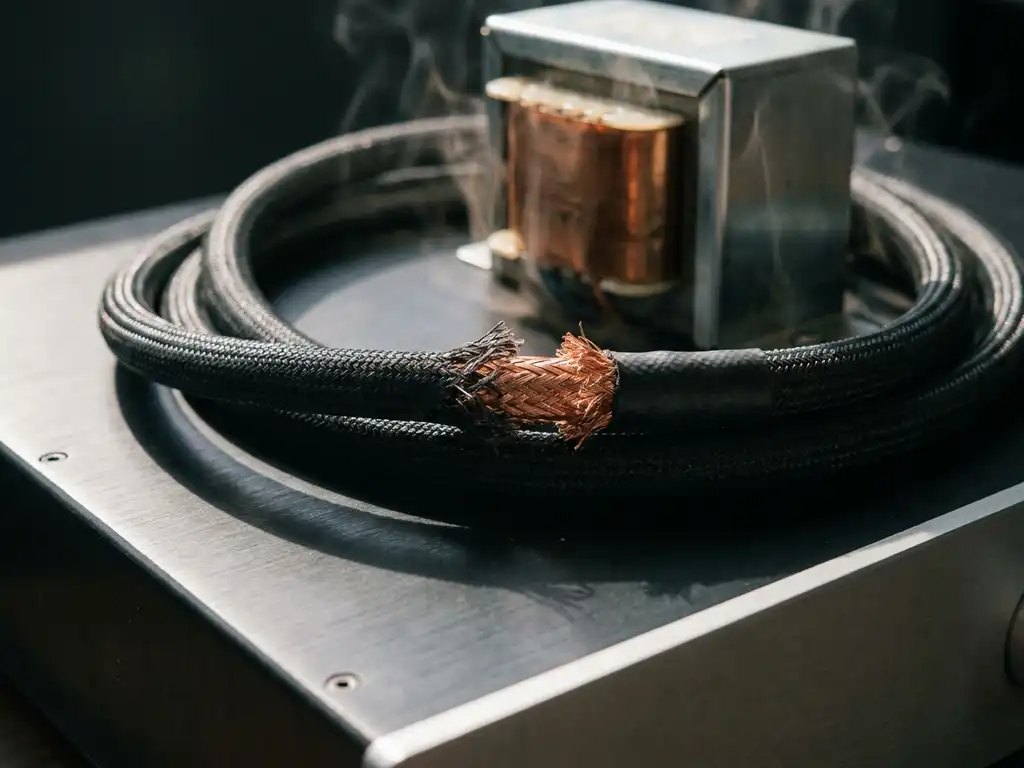
Every audio system, no matter how carefully assembled, exists in an environment filled with invisible electromagnetic energy. Power lines, wireless networks, household appliances, and even the components themselves generate electrical disturbances that can find their way into an audio signal and degrade the listening experience. Understanding how electrical interference works, where it comes from, and how to control it is essential knowledge for anyone serious about high-fidelity sound reproduction.
What is electrical interference in audio systems?
Electrical interference in audio systems refers to any unwanted electrical signal that contaminates the audio signal path, introducing noise, distortion, or coloration that was not present in the original recording. It encompasses two primary categories: electromagnetic interference (EMI) and radio frequency interference (RFI), both of which can corrupt audio signal quality in audible and measurable ways.
EMI is generated by the magnetic and electric fields produced by current-carrying conductors, motors, transformers, and switching power supplies. RFI originates from higher-frequency sources such as Wi-Fi routers, mobile phones, DAB radio broadcasts, and other wireless transmitters. While EMI tends to manifest as hum or buzz in the audible frequency range, RFI can introduce a more subtle but equally damaging high-frequency noise floor that robs music of its clarity and air.
In practical terms, electrical interference raises the noise floor of an audio system, compresses dynamic range, smears transient detail, and can introduce intermodulation products that color the midrange and high frequencies. The result is a presentation that feels less immediate, less dimensional, and emotionally less engaging than the source material deserves.
How does electrical interference affect audio signal quality?
Electrical interference degrades audio signal quality by introducing noise into the signal path, reducing the signal-to-noise ratio, and adding distortion products that mask fine musical detail. The audible consequences range from an obvious mains hum to a subtle graying of the soundstage, where instruments lose their precise placement and tonal purity.
The signal-to-noise ratio (SNR) is one of the most direct measures of how much interference is affecting a system. A lower SNR means the noise floor is closer in level to the music signal itself, making quiet passages and micro-dynamic nuances harder to resolve. In high-end audio, where the goal is to retrieve every last detail encoded in a recording, even small amounts of interference represent a meaningful loss of information.
Beyond the noise floor, interference can also introduce harmonic and intermodulation distortion. When an interfering signal mixes with the audio signal inside a component, it can generate new frequency components that were never part of the original music. These artifacts are particularly damaging in the midrange, where the human ear is most sensitive, producing a hardness or glare that makes extended listening fatiguing.
At the system level, interference that enters through the mains supply can affect multiple components simultaneously, creating a coherent degradation across the entire chain rather than an isolated problem in one unit.
What are the most common sources of electrical interference?
The most common sources of electrical interference in audio systems are mains power supply noise, switching-mode power supplies, digital components, wireless devices, and ground loops. Each introduces interference through different mechanisms and at different frequency ranges, making a comprehensive approach to noise management essential.
- Mains power supply noise: The AC mains carries harmonics of the fundamental frequency generated by industrial equipment, dimmers, and motor loads on the grid. This noise enters components through their power supplies and can modulate the audio signal.
- Switching-mode power supplies (SMPS): Found in computers, televisions, phone chargers, and many modern audio components, SMPS units generate broadband switching noise across a wide frequency range. They are among the most prolific sources of RFI in a modern listening room.
- Digital components: CD transports, DACs, streaming devices, and computers generate high-frequency clock noise that can couple into analogue stages either within the same component or through shared power and ground connections.
- Ground loops: When two components share a ground connection through both their audio interconnects and their mains earth conductors, a small circulating current can flow, producing a characteristic 50 Hz or 60 Hz hum.
- Wireless devices: Wi-Fi routers, Bluetooth devices, and mobile phones transmit radio frequency energy that can be picked up by unshielded cables and circuit traces acting as antennas.
- Fluorescent and LED lighting: Many modern lighting systems use switching electronics that generate EMI, particularly when dimmer circuits are involved.
What’s the difference between shielding and filtering in audio components?
Shielding and filtering are complementary but distinct strategies for managing electrical interference. Shielding prevents interference from entering or leaving a component or cable by surrounding sensitive circuitry with a conductive barrier. Filtering removes interference that is already present in a signal or power line by attenuating unwanted frequencies while passing the desired audio signal.
How shielding works
Electromagnetic shielding works by enclosing a circuit or conductor within a conductive material, typically copper, aluminium, or steel. Incident electromagnetic fields induce currents in the shield material that generate opposing fields, effectively canceling the interference before it reaches the protected circuit. In audio cables, a braided or foil shield around the signal conductors prevents external fields from coupling into the low-level audio signal. In components, a well-engineered chassis and internal screening cans around sensitive stages serve the same purpose.
The effectiveness of a shield depends on the material, its thickness, the frequency of the interference, and critically, how well it is grounded. A shield connected to a poor ground reference provides far less protection than one connected to a solid, low-impedance earth.
How filtering works
Filtering uses passive components, primarily inductors and capacitors, to create circuits that present a high impedance to unwanted frequencies while allowing the desired signal to pass with minimal attenuation. Mains filters use this principle to clean the AC power supply before it reaches a component’s internal power supply. Within analogue circuits, careful design of the power supply rejection ratio (PSRR) ensures that noise on the supply rails does not modulate the audio output. Digital circuits use ferrite beads and decoupling capacitors to suppress high-frequency switching noise at its source.
In practice, the most effective audio components combine both approaches, using shielding to block external interference and filtering to address noise that originates internally or arrives through power and signal connections.
How do high-end audio components minimize electrical interference?
High-end audio components minimize electrical interference through a combination of superior power supply design, physical separation of sensitive circuit stages, precision shielding, low-noise component selection, and rigorous grounding strategies. These measures work together to keep the noise floor as low as possible and preserve the integrity of the audio signal from input to output.
Several engineering principles distinguish genuinely high-performance designs from mainstream electronics:
- Linear power supplies: Unlike switching-mode supplies, linear regulators do not generate high-frequency switching noise. High-end components typically use oversized linear power supplies with large transformer cores and extensive filtering capacitance to deliver clean, stable voltage to every circuit stage.
- Separate power supply stages: Sensitive analogue stages are powered by dedicated, individually regulated supply rails, preventing digital noise from contaminating the analogue signal path.
- Physical layout discipline: Keeping digital circuitry physically separated from analogue stages, routing signal and power traces carefully, and using star grounding topologies all reduce the coupling of interference within the component itself.
- High-quality passive components: Low-noise resistors, film capacitors, and precision inductors reduce the internally generated noise that every electronic component produces to some degree.
- Balanced circuit topology: Fully balanced (differential) circuit designs reject common-mode noise, meaning that interference picked up equally on both signal conductors is canceled at the differential input stage rather than amplified along with the music.
- Mechanical isolation: Transformers and other components that generate mechanical vibration are isolated to prevent microphonic effects that can modulate the audio signal.
The cumulative effect of these measures is a dramatically lower noise floor and a more transparent presentation of the source material, which is why the gap between high-end and mainstream electronics remains audibly significant even as general electronics manufacturing has improved.
How can you reduce electrical interference in your listening room?
You can reduce electrical interference in your listening room by addressing the mains supply, managing cable routing, controlling the electromagnetic environment, and optimizing grounding. A systematic approach, working from the power entry point through to the loudspeakers, yields the most consistent improvements.
- Use a dedicated mains circuit: A separate circuit from the consumer unit to a dedicated audio outlet reduces the noise contributed by other household loads sharing the same circuit.
- Invest in quality mains conditioning: A passive or active mains conditioner filters high-frequency noise and can reduce the impact of switching loads elsewhere in the building on your audio system.
- Separate signal and power cables: Running interconnects and speaker cables away from mains cables, and crossing them at right angles where separation is not possible, reduces inductive and capacitive coupling between power and signal conductors.
- Use shielded interconnects: Quality interconnects with effective shielding and proper termination prevent RFI from being picked up by the signal cables themselves.
- Eliminate ground loops: Ensure all components share a common ground reference. If a hum develops when connecting two components, a ground loop isolator on the affected interconnect can resolve it without compromising signal quality.
- Relocate wireless devices: Moving Wi-Fi routers, Bluetooth transmitters, and mobile phones away from the listening area reduces the ambient RFI environment that cables and circuit boards must contend with.
- Switch off unused equipment: Devices in standby mode, particularly those with SMPS power supplies, continue to generate interference. Switching off non-essential equipment during serious listening sessions can produce a noticeable improvement.
These practical steps are effective regardless of the components in your system, but their benefits become most audible when the components themselves are already engineered to a high standard. A well-designed audio chain is far better equipped to reject residual interference than one where noise management has been an afterthought.
How Accustic Arts addresses electrical interference in high-end audio
At Accustic Arts, managing electrical interference is not a feature — it is a fundamental part of how every component is engineered from the ground up. Our approach to audio noise and signal integrity reflects decades of experience in professional recording environments and live sound, where the consequences of interference are immediately audible and unacceptable.
Specifically, our designs address electrical interference through:
- Precision linear power supplies that eliminate the switching noise inherent in conventional SMPS designs, providing a clean and stable foundation for every circuit stage
- Rigorous separation of digital and analogue stages within components such as our D/A converters and CD players, preventing digital clock noise from contaminating the analogue output
- Carefully engineered grounding topologies that eliminate ground loop susceptibility and minimize the noise coupling between circuit stages
- High-grade passive components selected for low noise characteristics as well as electrical performance, reducing the internally generated noise floor to the lowest practical level
- An individual testing process lasting up to two weeks for every component, during which signal-to-noise ratio, distortion, and noise floor performance are verified under real-world conditions before any product leaves our facility in Lauffen am Neckar
The result is a range of components that present music with the transparency, dynamic precision, and emotional engagement that comes from a signal path that has been protected at every stage. If you would like to learn more about how our products are built to deliver absolute sound fidelity, explore the full Accustic Arts product range or get in touch with us directly to discuss which components are right for your listening environment.
—
Disclaimer: This article was created with the assistance of Artificial Intelligence and has been reviewed by our editorial team.
Ähnliche Artikel
- What is the difference between an amplifier and an AV receiver?
- What Is Oversampling and Does It Improve Sound?
- Why do high-end audio components use premium internal parts?
- Was ist der Unterschied zwischen einem Röhrenverstärker und einem Transistorverstärker?
- Why does audio equipment need a break-in period?