

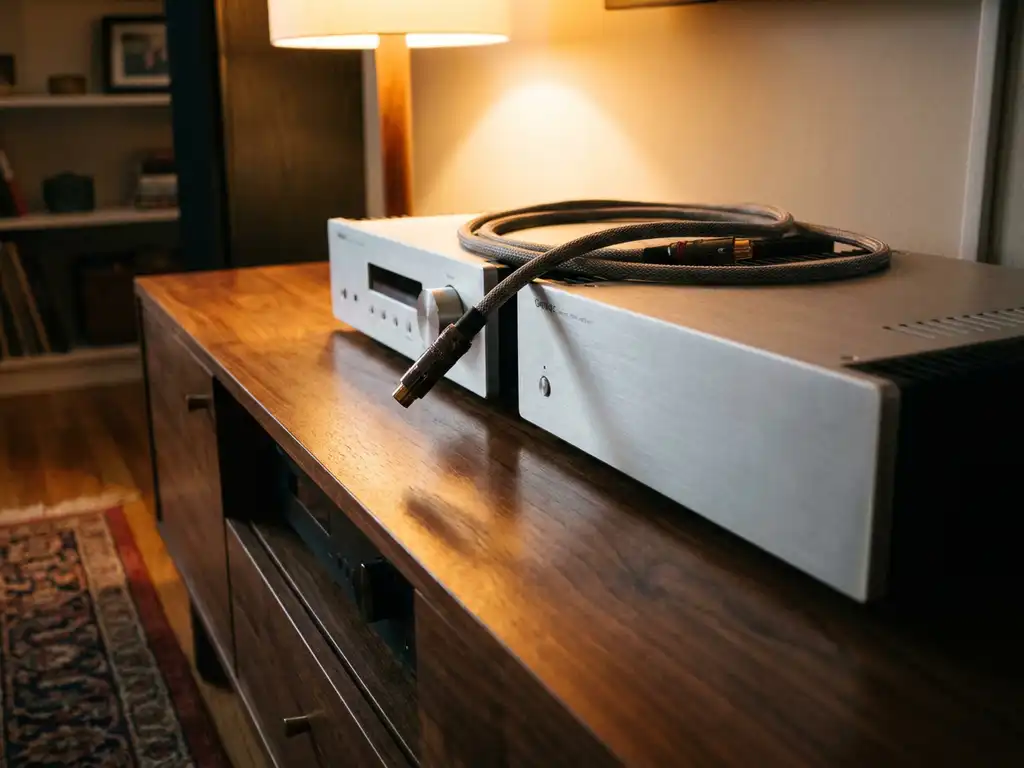
If you have ever upgraded one component in your hi-fi system and felt disappointed by the result, component matching is almost certainly the reason. A system is only as good as the relationship between its parts, and understanding how those parts interact is one of the most valuable skills any audiophile can develop. Whether you are building a system from scratch or refining an existing setup, getting the matching right is what separates a good-sounding system from a truly great one.
What is component matching in a hi-fi system?
Component matching in a hi-fi system is the practice of selecting audio components — such as amplifiers, preamplifiers, DACs, and speakers — that work together harmoniously in terms of electrical compatibility, tonal character, and overall system synergy. Rather than evaluating each component in isolation, matching treats the system as a unified chain where every link influences the final sound.
A hi-fi system is, at its core, a signal chain. A digital source sends a signal to a DAC, which passes it to a preamplifier, which feeds a power amplifier, which drives the speakers. At every stage, the outgoing signal is shaped by the component handling it. If any two components in that chain are poorly suited to each other electrically or sonically, the mismatch introduces coloration, compression, or distortion that accumulates by the time the sound reaches your ears.
Component matching also extends beyond pure electronics. The acoustic properties of your listening room, the quality of your cables, and even the physical placement of your speakers all interact with the components you choose. In high-end audio, matching is a holistic discipline.
Why does component matching affect sound quality?
Component matching affects sound quality because audio components do not operate in isolation. Each component has electrical characteristics — output impedance, input impedance, gain, sensitivity, and power delivery — that must be compatible with the next component in the chain. When these characteristics are misaligned, the system cannot perform to its potential, regardless of the individual quality of each piece.
Consider the relationship between a power amplifier and a pair of speakers. An amplifier with high output impedance driving a low-impedance speaker load will struggle to control the speaker’s movement accurately. The result is a loose, poorly defined bass response and a sense that the music lacks grip and authority. Conversely, an underpowered amplifier driving a demanding speaker will clip at higher volumes, introducing harsh distortion.
Tonal compatibility matters just as much as electrical compatibility. Two components may measure perfectly together yet still produce a sound that is overly bright, excessively warm, or lacking in midrange presence. The best-matched systems balance these tonal tendencies so that the final presentation is natural, detailed, and emotionally engaging rather than technically correct but lifeless.
What are the key factors to consider when matching audio components?
The key factors to consider when matching audio components are impedance compatibility, gain structure, sensitivity matching, tonal balance, and the overall design philosophy shared between components. Each factor plays a distinct role in determining whether two components will work well together or undermine each other’s strengths.
- Impedance compatibility: The output impedance of one component should be significantly lower than the input impedance of the next. A ratio of at least 1:10 is a widely accepted starting point for clean signal transfer.
- Gain structure: The gain levels across your signal chain should be balanced so that you are operating each component within its optimal range, avoiding the noise floor at low volumes and distortion at high ones.
- Sensitivity matching: Speaker sensitivity, measured in decibels per watt at one metre, determines how much amplifier power you actually need. A highly sensitive speaker paired with a high-powered amplifier can make volume control difficult and introduce noise.
- Tonal balance: Each component has a sonic character. Pairing components with complementary tonal profiles prevents the system from becoming too bright, too warm, or too analytical.
- Design philosophy: Components built around similar engineering values tend to share a coherent sonic language. Mixing components from wildly different design schools can produce unpredictable results.
Beyond these technical factors, consider the long-term upgrade path. A well-matched system built around a strong foundation allows you to upgrade individual components without disrupting the overall balance.
What’s the difference between matching by specs and matching by ear?
Matching by specs means verifying that components are electrically compatible using published measurements such as impedance, gain, and power output. Matching by ear means evaluating how components actually sound together in a real listening environment. Both approaches are necessary, and neither is sufficient on its own.
Specs-based matching is the essential first step. It eliminates combinations that are fundamentally incompatible before you even listen. If an amplifier cannot drive a particular speaker’s impedance curve, no amount of careful listening will fix the problem. Electrical compatibility is non-negotiable.
However, specs tell you only what a component measures, not how it sounds. Two amplifiers with identical specifications can sound noticeably different in practice. This is where listening becomes irreplaceable. The ear is extraordinarily sensitive to qualities that measurements do not fully capture: the sense of three-dimensional space in a recording, the natural decay of a piano note, the texture of a bowed string. These qualities emerge from the interaction between components and can only be evaluated through extended listening.
Experienced audiophiles typically use specs to create a shortlist of compatible candidates and then rely on their ears to make the final decision. This combination of analytical and intuitive evaluation is the foundation of serious audio system matching.
How does a mismatched component degrade your listening experience?
A mismatched component degrades your listening experience by introducing specific and often subtle problems that accumulate across the signal chain: rolled-off high frequencies, loose bass, compressed dynamics, a congested midrange, or a sense of fatigue during extended listening. These issues are frequently mistaken for the limitations of the music itself rather than the system.
One of the most common mismatches is between a preamplifier and a power amplifier with incompatible gain structures. The result is often that the volume control becomes uselessly sensitive in the first few degrees of rotation, forcing you to listen at a single fixed level. Dynamic expression is lost, and the system sounds flat and unresponsive.
Speaker and amplifier mismatches can produce a range of problems depending on the direction of the mismatch. An underpowered amplifier produces clipping at moderate volumes, which sounds harsh and strident. An amplifier with insufficient current delivery into a low-impedance load produces a thinning of the bass and a loss of dynamic impact. In both cases, the music loses its sense of physical presence and emotional weight.
Perhaps the most insidious form of mismatch is tonal incompatibility. A bright-sounding amplifier driving a bright-sounding speaker produces a system that is fatiguing to listen to over time. You may not immediately identify the problem as a mismatch, but you will find yourself turning the system off sooner than expected. Great audio system matching eliminates that fatigue and invites you to keep listening.
How do you build a well-matched high-end audio system?
To build a well-matched high-end audio system, start with your speakers as the anchor point of the system, verify electrical compatibility at every stage of the signal chain, listen critically to component combinations before committing, and build incrementally rather than assembling everything at once.
- Start with your speakers: Speakers have the most dramatic influence on the character of a system and are the hardest to compensate for if chosen poorly. Select speakers that suit your room size, your preferred listening levels, and your musical tastes first.
- Choose an amplifier to match: Once you know your speakers‘ sensitivity, impedance curve, and power requirements, you can identify amplifiers that are genuinely suited to driving them. Check both the nominal impedance and the minimum impedance across the frequency range.
- Work back through the chain: Select your preamplifier, DAC, and source components with the full chain in mind. Each component should complement the tonal character of what comes after it.
- Listen before you decide: Wherever possible, audition components together rather than individually. A home audition in your own listening environment is the most reliable test.
- Be patient with burn-in: New components often sound different after extended use as mechanical and electrical parts settle. Allow adequate time before drawing final conclusions about a pairing.
Building a well-matched system is a process, not a single purchase. The most satisfying high-end audio systems are typically assembled thoughtfully over time, with each addition made after careful consideration of how it will interact with everything already in the chain. You can explore the full range of Accustic Arts products to understand how each component is designed to integrate within a coherent system architecture.
How Accustic Arts helps you achieve perfect component matching
At Accustic Arts, we design every component with system-level thinking at the core. Our philosophy of Absolute Sound Fidelity Through Reproduction means that each product we build is engineered not only to perform exceptionally on its own, but to integrate seamlessly with the other components in your system. Here is how we make that possible:
- Unified design philosophy: Our preamplifiers, power amplifiers, DACs, CD players, and integrated amplifiers are all developed around the same engineering values, making them natural partners within a complete system.
- Rigorous component testing: Every product undergoes an individual testing process that can last up to two weeks, ensuring that electrical performance meets the precise tolerances required for reliable, predictable system integration.
- Emotionally engaging midrange reproduction: Our signature sonic character, particularly in the midrange, is designed to complement a wide range of speakers and source components, making matching more forgiving and more rewarding.
- Studio and live sound experience: Our design decisions are informed by decades of work in professional recording studios and live PA environments, giving us a real-world reference for what accurate, natural sound actually means in practice.
- Expert guidance: We are here to help you match components to your specific system, room, and musical preferences.
If you are ready to build or refine a high-end audio system with components that are designed to work together, we would love to hear from you. Get in touch with us to discuss your system goals and find out how Accustic Arts can help you achieve the sound you have always been looking for.
—
Disclaimer: This article was created with the assistance of Artificial Intelligence and has been reviewed by our editorial team.
Ähnliche Artikel
- Wie vergleicht sich ein Vollverstärker mit einer Vor-Endstufen-Kombination?
- Wie verschlechtern Reflexionen im Raum die Klangqualität?
- What is the sweet spot in a listening room and how do you find it?
- Warum ist die Wiedergabe des Mitteltonbereichs wichtig?
- Wie erkennt man Klangverfärbungen bei der Audiowiedergabe?