

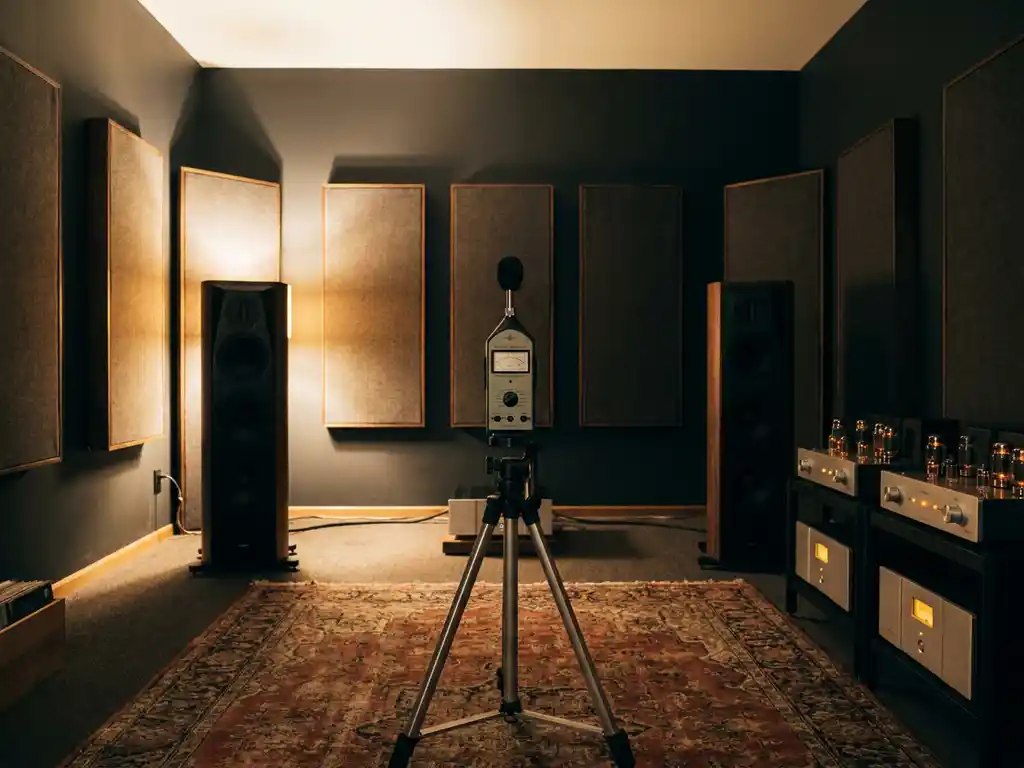
Understanding sound quality measurement in a listening room is one of the most rewarding challenges in high-end audio. Whether you are setting up a dedicated audiophile listening room for the first time or refining a system you have lived with for years, knowing how to assess what you are actually hearing, and why, transforms the experience from guesswork into a genuine craft. This guide walks through the essential questions every serious listener should be asking.
What does sound quality actually mean in a listening room?
Sound quality in a listening room refers to how accurately and emotionally the reproduced audio matches the original recording, taking into account tonal balance, spatial imaging, dynamic range, and the absence of unwanted coloration or distortion introduced by the room itself. It is not simply about volume or equipment cost, but about how faithfully music is delivered to your ears.
A listening room is never acoustically neutral. Every surface, corner, piece of furniture, and architectural feature interacts with sound waves in ways that can enhance or compromise what you hear. Sound fidelity in this context means minimizing those negative interactions while preserving the natural character of the music. The goal is a room where instruments sound like instruments, voices carry emotional weight, and the soundstage feels convincingly three-dimensional.
Audiophiles often distinguish between two layers of sound quality: technical accuracy, which can be measured, and perceived naturalness, which is felt. Both matter, and neither alone tells the full story.
What are the main factors that affect sound quality in a room?
The main factors affecting room acoustics and sound quality are room dimensions, surface materials, speaker placement, listening position, and low-frequency behavior. Each of these variables interacts with the others, meaning a change in one area almost always affects the rest of the acoustic picture.
- Room dimensions and shape: Rectangular rooms create predictable but often problematic standing waves. Irregular shapes can scatter reflections more naturally but introduce their own challenges.
- Reflective and absorptive surfaces: Hard surfaces like glass, concrete, and bare wood reflect high and mid frequencies aggressively. Soft materials like carpets, curtains, and upholstered furniture absorb them.
- Speaker and listening position: Placing speakers too close to walls reinforces bass frequencies unnaturally. The listening position relative to room boundaries determines which resonances are most audible.
- Low-frequency modes (room modes): These are standing waves that cause certain bass frequencies to boom or disappear entirely depending on where you sit in the room.
- Early reflections: Sound bouncing off side walls, the ceiling, and the floor before reaching the listener can blur imaging and reduce clarity.
Understanding these factors is the foundation of any serious audiophile listening room setup. Treating them systematically, rather than randomly adding equipment or panels, leads to far better outcomes.
How do you measure the acoustics of a listening room?
You measure listening room acoustics using a calibrated measurement microphone, free or affordable acoustic measurement software such as REW (Room EQ Wizard), and a laptop or audio interface. The microphone captures how your room responds to test signals, and the software generates graphs showing frequency response, decay times, and reflection patterns.
The most important measurements to take include:
- Frequency response: Shows which frequencies are boosted or cut by the room at your listening position. A flat or gently rolling response is generally desirable.
- Waterfall or spectrogram plots: Reveal how long different frequencies linger in the room after a sound stops. Long decay at bass frequencies indicates problematic room modes.
- RT60 (reverberation time): Measures how long it takes for sound to decay by 60 dB. For a home listening room, shorter RT60 values in the mid and high frequencies generally improve clarity.
- Impulse response: Captures the timing and level of reflections, helping identify which surfaces are causing the most significant acoustic problems.
Take measurements at multiple positions, not just your primary listening seat. This gives a more complete picture of how the room behaves across its volume. Exploring high-end audio components designed with low output impedance and precise channel matching can also reduce the influence of room interactions on the final sound.
What’s the difference between objective measurements and subjective listening?
Objective measurements capture what is physically happening in the room using data, graphs, and numbers. Subjective listening reflects how a human being perceives and emotionally responds to the sound. Both are essential tools, and neither replaces the other in a serious audio measurement workflow.
Measurements are invaluable for diagnosing problems that ears alone can miss. A severe dip at 80 Hz caused by a room mode may not be immediately obvious to a listener, but it will appear clearly on a frequency response graph. Similarly, a long decay time at 200 Hz can make bass sound muddy without the listener being able to articulate exactly why.
However, measurements have real limits. They cannot capture the emotional character of a system, the sense of air around instruments, or the way a recording makes a room feel alive. Two rooms with nearly identical measurement profiles can sound quite different in practice. This is why experienced audiophiles use measurements as a diagnostic starting point and then refine their setup through careful, focused listening sessions.
The most effective approach treats measurements and listening as partners. Use data to identify and fix obvious problems, then trust your ears to guide the final adjustments.
How can you improve sound quality based on measurement results?
You can improve sound quality based on measurement results by addressing the specific problems the data reveals, in order of their impact. Start with the most severe issues, typically low-frequency room modes and early reflections, before moving to finer adjustments.
Addressing room modes
Bass traps placed in room corners are the most effective treatment for low-frequency buildup. Thick, dense absorptive panels in corners absorb energy at the frequencies where room modes are strongest. Adjusting speaker and listener positions can also shift which modes are most audible.
Controlling early reflections
Absorption or diffusion panels placed at the first reflection points on side walls, the ceiling, and the rear wall reduce the smearing of the stereo image. The goal is not to eliminate all reflections but to manage their timing and level so they support rather than undermine the direct sound.
Using room correction carefully
Room correction software and DSP tools can address frequency response irregularities that physical treatment cannot fully resolve. They are most effective in the bass region and should be applied with restraint in the midrange and treble, where the ear is most sensitive to phase artifacts introduced by aggressive equalization.
What mistakes do audiophiles make when measuring their listening room?
The most common mistakes audiophiles make when measuring their listening room are measuring at only one position, over-treating the room acoustically, and applying room correction without first addressing physical acoustic problems. These errors can lead to solutions that make the room sound worse rather than better.
- Single-position measurements: One measurement captures only one perspective. Taking an average of several positions gives a far more representative picture of the room’s overall behavior.
- Over-damping: Adding too much absorption removes the natural liveliness that makes music feel real. A room that is too dead sounds unpleasant and fatiguing to listen in.
- Ignoring the source: Measurement results reflect the combined behavior of the room and the equipment. A poor-quality source or amplifier will distort the data and lead to incorrect conclusions about what needs treatment.
- Chasing a perfectly flat response: A ruler-flat frequency response at the listening position does not always sound best. Some gentle room gain in the bass is natural and often preferred by experienced listeners.
- Skipping the listening step: Treating measurement results as the final word, rather than a guide, leads to technically correct but musically unsatisfying rooms.
The most successful audiophiles approach room measurement as an iterative process, measuring, adjusting, listening, and measuring again until the room and system work together as a unified whole.
How Accustic Arts Supports Your Pursuit of Sound Fidelity
Even the most carefully treated listening room can only reveal what your electronics are capable of delivering. This is where we come in. At Accustic Arts, we design our components from the ground up to minimize the variables that make room measurement and correction so challenging. Here is how our approach supports your listening room goals:
- Precise, low-noise signal paths: Our preamplifiers and D/A converters are engineered to introduce as little coloration as possible, giving your measurement microphone an accurate picture of your room rather than your electronics.
- Emotionally engaging midrange reproduction: Our signature midrange clarity means that once your room acoustics are dialed in, the music speaks with genuine naturalness and emotional depth.
- Rigorous quality testing: Every component we build undergoes up to two weeks of individual testing before it leaves our facility in Lauffen am Neckar, ensuring the performance you measure and hear stays consistent over time.
- A full ecosystem of components: From integrated amplifiers to monoblock power amplifiers and CD players, our complete product range is designed to work cohesively, reducing system-level variables so your room measurements reflect your room, not your gear.
If you are ready to build a listening room that does justice to your music, we would love to help you find the right components for your system. Get in touch with us and let us talk about what Accustic Arts can bring to your listening experience.
—
Disclaimer: This article was created with the assistance of Artificial Intelligence and has been reviewed by our editorial team.
Ähnliche Artikel
- What is acoustic sound quality and why does it matter?
- How do you choose between a monoblock and stereo power amplifier?
- Wie verbessert man die Akustik in einem dedizierten Hörraum?
- Was ist der Sweetspot im Hörraum und wie findet man ihn?
- How does power supply quality affect audio component performance?