

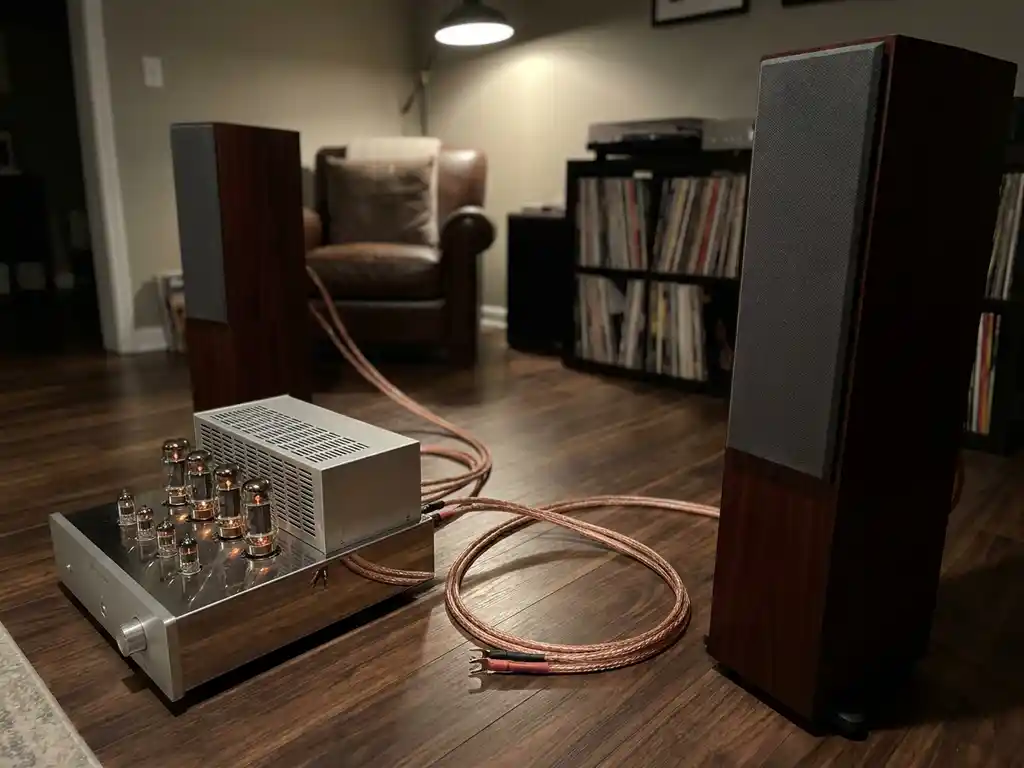
It seems like a simple question: can any amplifier drive any pair of speakers? The short answer is no, and understanding why makes all the difference between a system that merely plays music and one that genuinely moves you. Amplifier speaker compatibility is one of the most fundamental principles in high-end audio, yet it is also one of the most frequently overlooked by newcomers and seasoned enthusiasts alike. Getting the pairing right is not about chasing specifications on paper, it is about unlocking the full emotional potential of your music.
Whether you are building a system from scratch or upgrading individual components, the relationship between your amplifier and your speakers shapes everything you hear. The dynamics, the tonal balance, the sense of space, all of it flows from how well these two components work together. Understanding the core principles of matching amplifiers to speakers gives you the confidence to make informed choices rather than costly mistakes.
Impedance, sensitivity, and power: the matching trio
Three technical characteristics define whether an amplifier and a speaker are genuinely compatible: impedance, sensitivity, and power handling. Each one plays a distinct role, and all three need to be considered together rather than in isolation.
Impedance is measured in ohms and represents the electrical resistance a speaker presents to the amplifier. Most home speakers carry a nominal impedance rating of 4, 6, or 8 ohms, and this figure tells the amplifier how hard it needs to work. A lower speaker ohm rating demands more current from the amplifier. An amplifier rated for 8-ohm loads may struggle or even overheat when driving a 4-ohm speaker, while a well-designed amplifier will handle the full range comfortably. Always check that your amplifier is stable at your speaker’s rated impedance.
Sensitivity describes how efficiently a speaker converts electrical power into sound, expressed as decibels at one watt measured at one metre. A speaker with a sensitivity of 90 dB will play noticeably louder than one rated at 85 dB using the same amplifier wattage. High-sensitivity speakers pair well with lower-powered amplifiers, while power-hungry, low-sensitivity designs demand considerably more headroom. Finally, amplifier wattage and speakers must be matched so that the amplifier can drive the speakers to satisfying listening levels without clipping, but also without delivering so much power that a moment of excess damages the speaker’s drivers.
What happens when the pairing goes wrong
A mismatched pairing rarely announces itself dramatically at first. More often, the consequences are subtle but persistent, a system that sounds strained at volume, lacks low-end authority, or simply never quite comes alive in the way it should.
When an amplifier is underpowered relative to the speakers it drives, it can be pushed into clipping, a state where the output signal distorts because the amplifier has run out of headroom. Ironically, clipping is a leading cause of tweeter damage, because the distorted signal carries far more high-frequency energy than a clean signal would. Overpowering a speaker is equally problematic: exceeding a speaker’s power handling can destroy the voice coil. Beyond the risk of hardware damage, an incompatible hi-fi amplifier pairing simply fails to extract what the speakers are capable of, leaving detail, dynamics, and emotional engagement on the table.
Impedance mismatches carry their own consequences. An amplifier forced to drive a load it was not designed for may run hot, trigger protection circuits, or deliver compressed, lifeless dynamics, even at moderate volumes. The music loses its sense of ease and flow, which is precisely the quality that separates a great system from a merely functional one.
How amplifier class and design affect speaker compatibility
Beyond raw specifications, the design philosophy and operating class of an amplifier have a real influence on how it interacts with a given speaker. This is where the engineering behind an amplifier becomes as important as its rated output.
Class A, AB, and D: different approaches to power
Class A amplifiers operate with their output devices conducting at all times, producing exceptionally low distortion and a characteristically smooth, natural sound. They tend to run warm and are less efficient, but many audiophiles regard their sonic character as uniquely engaging. Class AB designs offer a practical balance between efficiency and sonic performance and remain the most widely used topology in high-end audio. Class D amplifiers, sometimes called digital amplifiers, are highly efficient and capable of very high output, making them well suited to driving difficult, low-impedance speaker loads.
Output impedance and damping factor
An amplifier’s output impedance and its resulting damping factor also shape the relationship with the speaker. A high damping factor gives the amplifier greater control over the speaker’s woofer cone, tightening bass response and improving transient accuracy. Tube amplifiers, by contrast, typically have a higher output impedance and a lower damping factor, which can produce a warmer, more rounded bass character, a quality that pairs beautifully with certain speaker designs but may not suit others. Knowing the design philosophy of your amplifier helps predict how it will behave with your specific speakers.
Practical steps for matching amplifiers to speakers
Approaching the matching process methodically saves time, money, and frustration. A few concrete steps make the process far more reliable than guesswork.
- Start with impedance: Confirm that your amplifier is rated as stable at your speaker’s nominal impedance. If the speaker dips below its nominal rating in certain frequency ranges, as many do, ensure the amplifier can handle that minimum impedance without stress.
- Calculate power needs from sensitivity: Use your speaker’s sensitivity rating to estimate how much amplifier power you actually need for your room size and preferred listening levels. A sensitive speaker in a small room may need far less power than you assume.
- Consider the amplifier’s character: Read reviews and manufacturer documentation to understand whether the amplifier’s sonic character, its warmth, detail retrieval, and dynamic presentation, complements the character of your speakers.
- Listen before committing: Specifications tell part of the story. Wherever possible, audition the combination in person or seek out credible listening impressions from trusted sources in the audiophile community.
- Think about the full signal chain: The source component and any preamplifier in the chain also influence how the amplifier and speakers perform together. A well-matched system considers every link.
At Accustic Arts, our approach to amplifier design has always been informed by real-world experience in recording studios and professional live sound environments. That practical foundation shapes how we engineer every component to perform across a wide range of speaker loads without compromise.
Why the right pairing unlocks the full musical experience
All of the technical reasoning above serves a single, deeply human purpose: hearing music the way it was meant to be heard. When an amplifier and a pair of speakers are genuinely well matched, the system stops being a collection of components and becomes something greater, a transparent window into the recording.
The right power amplifier and speaker combination delivers dynamics that feel natural and effortless, a midrange that carries the emotional weight of a vocal or instrument with startling realism, and a low end that is controlled and present without ever becoming heavy-handed. The music breathes. Subtle details that were previously buried become audible. The listening experience shifts from passive to genuinely immersive.
This is the difference that careful amplifier and speaker matching makes in practice, not a marginal improvement in measured performance, but a qualitative leap in how music connects with the listener. Investing the time to understand compatibility before purchasing is one of the most rewarding steps any audiophile can take. The system you build on that foundation will repay the effort every time you sit down to listen.