

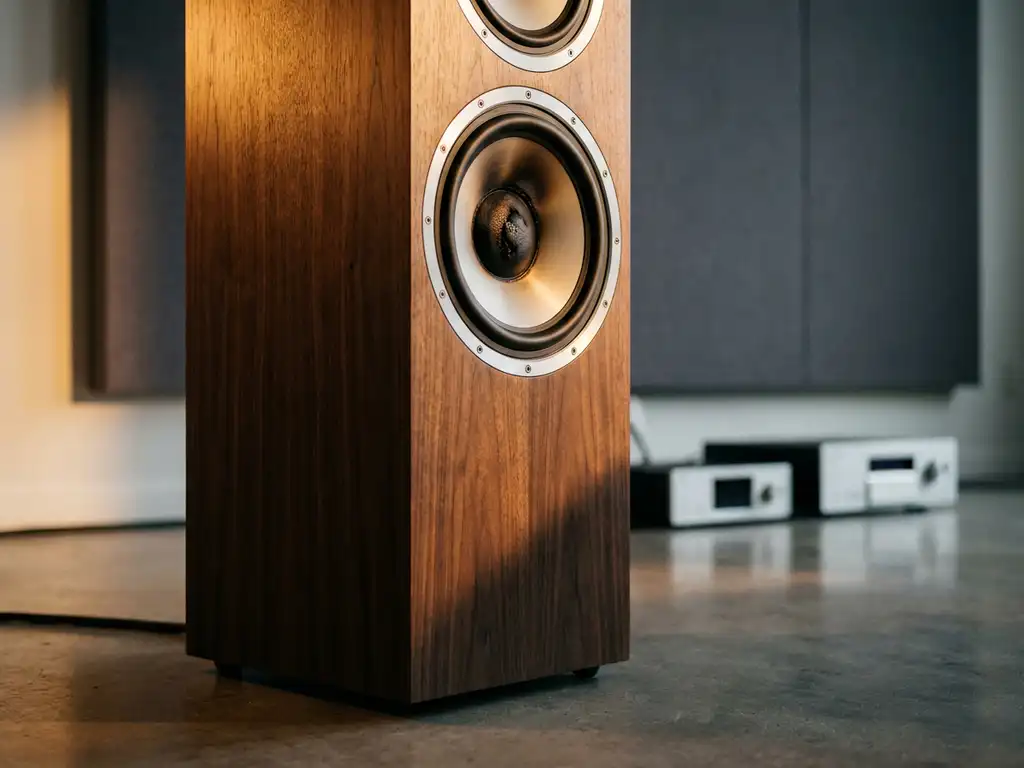
Yes, both too much and too little power can damage your speakers, but the mechanisms are different and often misunderstood. Overpowering a speaker can physically destroy its components, while underpowering is more commonly linked to amplifier clipping, which sends distorted signals that heat and degrade speaker drivers over time. Understanding both risks helps you make smarter decisions about amplifier and speaker pairing.
What actually causes speaker damage from amplifiers?
Speaker damage from amplifiers comes down to two core culprits: excessive power that physically overstresses speaker components, and distorted signals that generate destructive heat within the driver. Both scenarios can cause irreversible harm, but they attack speakers in fundamentally different ways and under different conditions.
A speaker driver is a mechanical and electrical system with defined limits. The voice coil, which sits inside a magnetic gap and converts electrical energy into movement, is the most vulnerable component. When it receives more energy than it can dissipate, it overheats and fails. This can happen through brute force (too many watts delivered cleanly) or through distortion (a clipped signal that contains far more thermal energy than a clean one of the same nominal wattage).
The surround and spider, which control cone movement and keep the voice coil centered, can also be overstressed mechanically when a speaker is pushed beyond its excursion limits. This results in tearing, deformation, or permanent displacement. Understanding which failure mode applies to your setup is the first step in protecting your equipment.
Can too much power blow a speaker?
Yes, too much power can blow a speaker. When an amplifier delivers more wattage than a speaker’s power handling rating allows, the voice coil absorbs more energy than it can dissipate as heat. This causes the coil to overheat, deform, or burn out entirely, resulting in a blown speaker. Overpowering speakers with a clean, undistorted signal is a real risk when amplifier wattage significantly exceeds the speaker’s maximum rating.
That said, occasional peaks above a speaker’s rated power are often survivable, especially with music signals that are dynamic rather than sustained. The greater danger is continuous high-volume playback where the speaker is held at or beyond its thermal limits with no recovery time. A speaker rated at 100 watts can typically handle short transient peaks above that figure, but sustained output at 150 watts will eventually cause failure.
The physical signs of overpowering are usually dramatic: a burned smell, distorted or absent output, or complete silence from a driver that previously worked. Mechanical damage from overexcursion, such as a torn surround, is also possible when bass frequencies are played at extreme volumes through a speaker not designed to handle them.
Does underpowering speakers actually damage them?
Underpowering speakers does not directly damage them, but it creates conditions where damage becomes likely. The real danger is clipping distortion. When a low-powered amplifier is pushed to its limits to achieve higher volume, it clips its output signal, producing a distorted waveform that contains high levels of high-frequency energy. This energy is particularly destructive to tweeters, which are not designed to handle it.
The misconception that underpowering is inherently safe comes from confusing wattage with distortion. A small amplifier running cleanly at its rated output is fine. The problem starts when listeners turn the volume up past the point where the amplifier can reproduce the signal cleanly, which is exactly what happens when an amplifier is underpowered for the speakers it drives. The result is a clipped signal that, despite measuring at a lower wattage, carries far more thermal stress than a clean signal from a more powerful amplifier.
Tweeters are the most frequent casualties of clipping distortion from underpowered amplifiers. The high-frequency content in a clipped signal can burn out a tweeter voice coil even at moderate listening volumes, which is why many audio engineers argue that a more powerful amplifier, used conservatively, is safer than a weak one pushed hard.
What is the right amplifier-to-speaker power ratio?
A general guideline is to match your amplifier’s continuous power output to between 75% and 150% of your speaker’s continuous power handling rating. This range gives you enough headroom for dynamic peaks without risking sustained overpower. The goal is an amplifier that can play at your desired listening level cleanly, without approaching its clipping threshold.
Rather than focusing rigidly on wattage numbers, consider how the system will actually be used:
- Headroom matters more than raw wattage. An amplifier with more power than you strictly need will never be pushed to clipping at normal listening volumes, which protects both the amplifier and the speakers.
- Speaker sensitivity affects the equation. A high-sensitivity speaker (90 dB or above) requires far less power to reach a given volume than a low-sensitivity design. A 50-watt amplifier may be more than sufficient for a 92 dB speaker in a medium-sized room.
- Room size and listening habits matter. A large room or a preference for high-volume listening demands more amplifier headroom than a small, near-field setup.
- Impedance compatibility is equally important. An amplifier should be rated to drive the impedance of your speakers. Mismatches can stress the amplifier and degrade performance.
The safest approach is to choose an amplifier that handles your speakers‘ rated power comfortably, leaving enough reserve that you never need to push it to its limits during normal listening.
What are the warning signs that your speakers are being damaged?
The warning signs that your speakers are being damaged by power issues include audible distortion at moderate volumes, a burning or acrid smell from the driver, reduced output from one or more drivers, rattling or buzzing sounds that were not previously present, and a noticeable loss of high-frequency detail. These symptoms indicate that something is wrong and the system should be turned off immediately.
Distortion is the earliest and most actionable warning. If your system sounds harsh, compressed, or gritty at volumes that previously sounded clean, the amplifier is likely clipping. This is especially common when a low-powered amplifier is driven hard. Clipping distortion often sounds like a harsh edge on transients or a flattening of dynamic peaks, and it should be treated as an immediate warning to reduce volume.
A burning smell is a more serious sign that the voice coil is overheating. At this stage, damage may already be occurring. Rattling or buzzing often points to mechanical damage, such as a loose or torn surround, or a voice coil that has shifted out of alignment. Reduced output from a tweeter in particular is frequently a sign of partial coil burnout from sustained clipping distortion.
How can you protect your speakers from power-related damage?
Protecting your speakers from power-related damage requires matching your components thoughtfully, listening at sensible volumes, and being attentive to what your system is telling you. The most effective protection is a well-matched amplifier that has enough clean power headroom to never approach clipping during normal use.
Practical steps to protect your speakers include:
- Choose an amplifier with adequate headroom. A more powerful amplifier used conservatively is far safer than a weaker one pushed to its limits. Clean power, even in abundance, is less damaging than distorted power at lower wattage.
- Never use volume as a substitute for sensitivity matching. If your system sounds too quiet, the solution is better sensitivity matching or a more powerful amplifier, not simply turning up the volume on an undersized one.
- Set gain levels correctly. If your system includes a preamplifier and power amplifier, balance the gain structure so neither component is overdriven. Excessive gain at the preamp stage forces the power amplifier to clip earlier.
- Use crossovers appropriately. If your speakers include tweeters, ensure that low-frequency signals are filtered before they reach the tweeter. Sending full-range signals to a tweeter, especially at high volumes, accelerates wear and failure.
- Listen for distortion and respond immediately. Reducing volume the moment you hear harshness or compression prevents what might be temporary stress from becoming permanent damage.
- Allow equipment to warm up gradually. Driving cold speakers and amplifiers to high volumes immediately after switching on stresses components. Let the system warm up at moderate levels before pushing it harder.
How Accustic Arts Helps You Get the Power Balance Right
At Accustic Arts, we design amplifiers and electronics with one goal: to deliver clean, accurate power that works in harmony with your speakers, never against them. The damage scenarios described throughout this article, from clipping distortion to thermal overload, are precisely the problems that emerge when amplification is poorly designed or carelessly matched. Our engineering philosophy addresses these risks at the source.
Here is what sets our approach apart:
- Generous power reserves and headroom: Our amplifiers are built to deliver stable, clean output well beyond typical listening demands, so clipping is never a practical concern during real-world use.
- Rigorous quality testing: Every component undergoes individual testing for up to two weeks before it leaves our facility. This ensures that the amplifier wattage and speaker interaction you experience in your listening room matches our design intent precisely.
- Matched system design: Our full product range is developed so that our preamplifiers, power amplifiers, integrated amplifiers, and monoblock designs work as a coherent system, eliminating the guesswork of third-party matching.
- German engineering heritage: Decades of experience in professional recording studios and live venues inform how we think about power delivery and its relationship to real-world speaker loads.
If you want to be certain that your amplifier and speakers are working together correctly, we are happy to help you find the right combination. Get in touch with us and let us guide you toward a setup that protects your speakers and lets your music speak for itself.
Ähnliche Artikel
- What is a tube preamplifier and how does it sound?
- Wie richtet man eine High-End-Audioanlage zum ersten Mal ein?
- Was ist der Unterschied zwischen einem Röhrenverstärker und einem Transistorverstärker?
- Was ist der Unterschied zwischen einem DAC und einem CD-Transport?
- Was ist der Unterschied zwischen Klangtreue und Musikalität im Hi-Fi?