

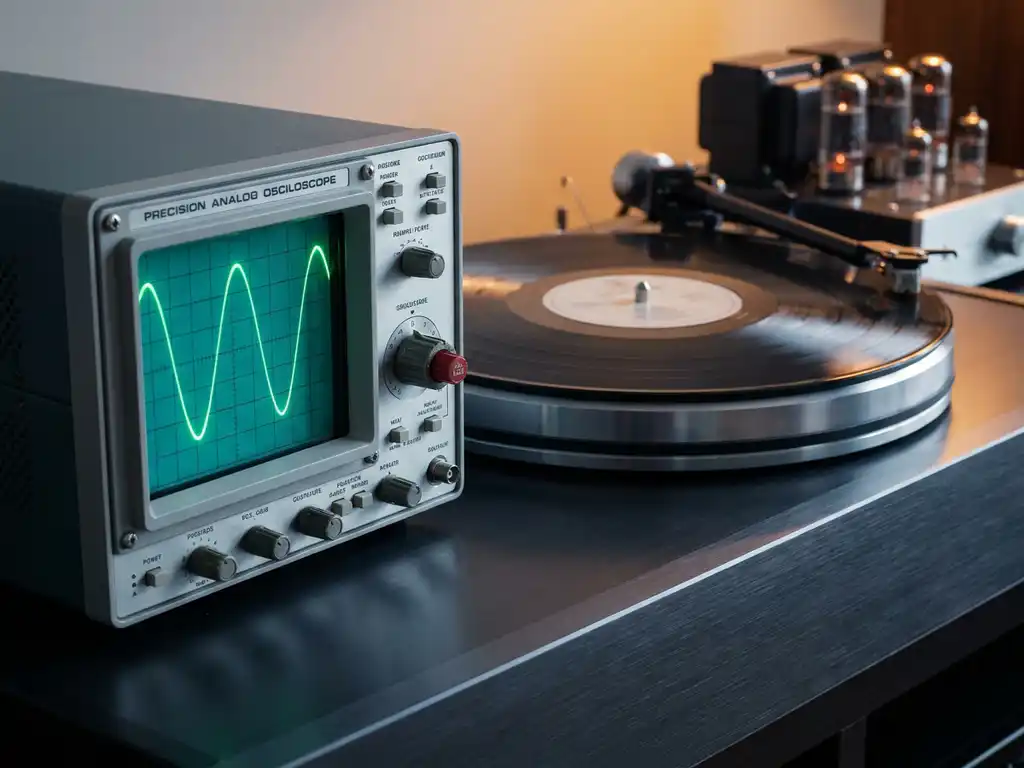
Few debates in the audiophile world generate as much passion as the one between accuracy and musicality. Some listeners swear by systems that reproduce sound with clinical precision, while others chase warmth and emotional engagement that make music feel alive. Understanding what these terms actually mean, and whether they are truly in conflict, can transform the way you approach building a hi-fi system and help you make choices that genuinely serve your listening pleasure.
What do accuracy and musicality mean in hi-fi?
Accuracy in hi-fi refers to how faithfully a system reproduces the original recorded signal, with minimal coloration, distortion, or deviation from what was captured in the studio. Musicality describes a system’s ability to convey the emotional and expressive qualities of music in a way that feels engaging and natural to the listener. Both terms describe real qualities, but they measure different things.
An accurate system aims to be transparent, acting as a neutral window onto the recording. It will reveal every detail the microphone captured, from the breath of a vocalist to the decay of a piano note in a large hall. The goal is fidelity to the source, which is why accuracy in audio is closely associated with studio monitoring and reference-grade playback.
Musicality, on the other hand, is a more subjective quality. A musical hi-fi system tends to present sound in a way that draws the listener in emotionally, making it easy to follow a melody, feel the rhythm, and connect with the performance. Critics of purely analytical systems sometimes argue that relentless accuracy can feel fatiguing, exposing every flaw in a recording rather than letting the music breathe.
Why does the accuracy vs. musicality debate matter in hi-fi?
The accuracy vs. musicality debate matters in hi-fi because it directly shapes which components you choose, how you tune your system, and ultimately how satisfying your listening experience will be. Getting this balance wrong can mean spending significant money on equipment that leaves you cold, regardless of its measured performance.
For serious audiophiles, the stakes are high. High-end audio equipment represents a meaningful investment, and the difference between a system that measures well and one that moves you emotionally is not trivial. The debate also reflects a genuine tension in how audio engineers, reviewers, and manufacturers approach sound quality. Some prioritize objective measurements, while others trust the subjective experience of trained listeners as the final arbiter.
Understanding where you stand on this spectrum helps you interpret reviews, audition equipment more effectively, and communicate clearly with dealers and fellow enthusiasts. It also helps you avoid the trap of chasing specifications at the expense of enjoyment, or conversely, settling for a system that flatters recordings but hides important sonic information.
What’s the difference between an accurate and a musical hi-fi system?
The key difference between an accurate and a musical hi-fi system lies in their priorities. An accurate system aims to reproduce the recording without adding or subtracting anything, while a musical system prioritizes the emotional and expressive impact of the listening experience, sometimes at the cost of strict neutrality.
In practice, these differences show up in specific, audible ways:
- Tonal balance: Accurate systems tend toward a flat frequency response, while musical systems may have a slightly warmer midrange or a gentler treble that reduces listening fatigue.
- Detail retrieval: Accurate systems surface micro-details and spatial cues with precision; musical systems may prioritize the coherence of the overall presentation over granular resolution.
- Dynamics: Both types handle dynamics, but musical systems often present them in a way that feels more dramatic and involving, even if measurements are comparable.
- Timbre: A musical system often renders the tone of instruments, particularly strings and voice, with a richness that feels closer to a live performance.
Neither approach is inherently superior. The best choice depends on your listening habits, the music you love, and what you want from a hi-fi sound quality perspective.
Can a hi-fi system be both accurate and musical?
Yes, a hi-fi system can be both accurate and musical. In fact, the most accomplished high-end audio components achieve exactly this: they reproduce the signal with exceptional fidelity while simultaneously conveying the emotional truth of the music. The false choice between the two reflects a misunderstanding of what genuine accuracy actually sounds like.
When a system is truly accurate, it does not strip music of its warmth or emotional charge. Those qualities exist in the recording itself. A system that sounds cold or analytical is often not more accurate, it is simply revealing colorations or limitations elsewhere in the chain, whether in the source, the amplification, or the room. Truly accurate sound reproduction preserves everything that was captured, including the emotion.
This is why the finest audiophile sound systems are not described as clinical or sterile by the people who love them. They are described as revealing, honest, and deeply engaging. The warmth and presence that listeners associate with musicality is not something added by a forgiving component; it is something that a genuinely transparent system allows through without obstruction.
Achieving this balance requires precision engineering at every stage, from the power supply to the output stage, and uncompromising component selection. It is the reason that experienced listeners often describe the best high-end audio components as both revealing and emotionally satisfying at the same time.
How do you choose between accuracy and musicality when buying hi-fi?
When choosing between accuracy and musicality in hi-fi, start by identifying what matters most to you as a listener. If you primarily want to analyze recordings and hear everything the engineer intended, lean toward accuracy. If you want to be moved by music during long listening sessions, prioritize musicality. In reality, most listeners want both, which means auditioning is essential.
Here are the most practical steps to guide your decision:
- Audition with your own music. Bring recordings you know intimately to any listening session. Familiar material reveals far more about a system’s character than demonstration tracks chosen to flatter the equipment.
- Listen for fatigue. A system that sounds impressive for ten minutes but tiring after an hour is not serving you well. Musical sound systems should sustain your attention and engagement over time.
- Pay attention to the midrange. The midrange is where voices and most instruments live. A system that renders this region naturally and expressively tends to feel both accurate and musical.
- Consider your source material. If you listen mainly to well-produced recordings, accuracy rewards you with detail. If your collection includes older or more variable recordings, a slightly warmer presentation can be more forgiving.
- Trust your emotional response. If a system makes you want to keep listening and reach for more records, that is meaningful data. Audiophile sound is ultimately about the experience, not the specification sheet.
Reading reviews from trusted publications and speaking with experienced dealers also helps, but nothing replaces the experience of listening yourself in a controlled environment.
How Accustic Arts Bridges Accuracy and Musicality
At Accustic Arts, we believe the debate between accuracy and musicality is a false one. Our entire design philosophy, captured in the phrase „Absolute Sound Fidelity Through Reproduction,“ is built on the conviction that true accuracy and genuine emotional engagement are not opposites. They are the same goal, approached with honesty and precision.
Here is what sets our approach apart:
- Uncompromising component selection: We use only high-grade, precision components across every product line, ensuring that nothing in the signal path degrades the musical information captured in the original recording.
- Rigorous testing: Every component undergoes an individual product test that can last up to two weeks before it leaves our facility. This ensures that what reaches you performs exactly as intended, without compromise.
- Real-world reference: Our engineering is informed by experience in professional recording studios and live PA environments, giving us a reference for what music actually sounds like, not just what it measures like.
- Emotionally engaging midrange: Our signature achievement is midrange reproduction that audiophiles and music professionals consistently describe as natural, detailed, and deeply involving.
- Complete system thinking: From preamplifiers and CD players to D/A converters, monoblock amplifiers, and tube hybrid components, we design every piece to work as part of a coherent, musically satisfying whole.
Whether you are new to high-end audio or a seasoned enthusiast refining a reference system, we invite you to explore our range and hear for yourself what happens when accuracy and musicality are treated as a single, unified goal. Get in touch with us to find your nearest dealer or to learn more about which components are right for your listening environment.
—
Disclaimer: This article was created with the assistance of Artificial Intelligence and has been reviewed by our editorial team.
Ähnliche Artikel
- Why is German engineering trusted in high-end audio manufacturing?
- Was ist absolute Klangtreue und wie wird sie erreicht?
- Warum wird deutsche Ingenieurskunst im High-End-Audio geschätzt?
- What is the audible difference between 16-bit and 24-bit audio?
- What is signal-to-noise ratio and how does it affect audio?