

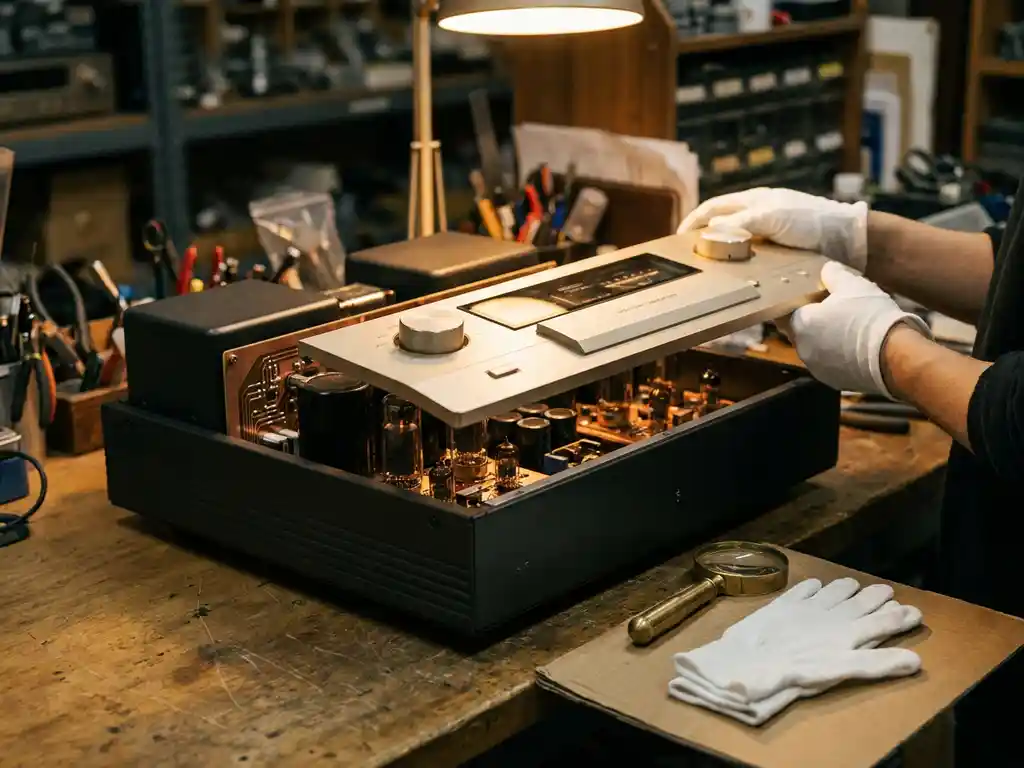
Buying a used high-end amplifier can be safe, but it carries real risks that require careful evaluation before you commit. The condition of pre-owned audio equipment varies enormously depending on how it was used, stored, and serviced, and with high-end components, the stakes are higher because repair costs can be significant. The questions below walk you through exactly what to check, what to ask, and when buying used makes genuine sense.
What are the biggest risks of buying a used high-end amplifier?
The biggest risks when buying a used high-end amplifier are hidden component wear, undisclosed damage, and the absence of a manufacturer warranty. Unlike entry-level gear, audiophile amplifiers contain precision parts, capacitors, output transistors, transformers, and in some cases tubes, that degrade over time and can fail without obvious warning signs.
Here are the most common risks buyers encounter with second-hand amplifiers:
- Worn capacitors: Electrolytic capacitors have a finite lifespan. In an amplifier that has been running for years, they may be nearing the end of their service life, leading to distortion, hum, or sudden failure.
- Thermal stress damage: Amplifiers that ran hot, whether from poor ventilation, high listening volumes, or a mismatched load, can suffer internal damage that is invisible from the outside.
- Undisclosed repairs: A seller may have had informal repairs done using non-original parts, which can affect both performance and long-term reliability.
- No warranty coverage: Most manufacturers do not transfer warranties to second-hand buyers, meaning any repair costs fall entirely on you.
- Counterfeit or grey-market units: In the used audio equipment market, misrepresented products do exist, particularly with sought-after brands where demand exceeds supply.
None of these risks are reasons to avoid the used market entirely, but they are reasons to approach any pre-owned amplifier purchase with structured due diligence rather than enthusiasm alone.
How can you tell if a used amplifier has been well maintained?
A well-maintained used amplifier will show consistent evidence of careful ownership: clean internals, original components, stable operating temperatures during a listening test, and ideally some form of service history. Visual and auditory inspection together give you a reliable picture of the unit’s real condition.
Start with the exterior. Cosmetic wear is normal, but look for signs that go deeper: bent rear panel connectors suggest rough handling, and discoloration around vents can indicate the unit ran hot regularly. Ask to open the unit if possible, or request internal photographs. Inside, look for:
- No signs of corrosion, burnt components, or amateur soldering
- Original capacitors and components, not a patchwork of replacements
- Clean circuit boards free of dust buildup and oxidation
- Intact wiring with no improvised modifications
During a listening test, let the amplifier warm up for at least 20 to 30 minutes before evaluating it. A healthy unit should produce no hum at idle, no channel imbalance at low volumes, and no distortion at moderate listening levels. Intermittent crackling from the volume control or selector switch is a minor issue, but persistent noise from the signal path is a red flag worth taking seriously.
What questions should you ask a seller before buying?
Before purchasing any pre-owned amplifier, ask the seller directly about age, usage patterns, service history, and the reason for selling. The answers, and the seller’s willingness to answer at all, tell you as much as the unit itself.
The most important questions to ask include:
- How old is the unit, and do you have the original purchase receipt? This establishes provenance and helps you assess component age.
- Has it ever been repaired or serviced? If yes, ask who did the work and whether original parts were used.
- What speakers was it paired with, and at what typical volume levels? An amplifier driven hard into difficult loads ages faster.
- Has it ever had any faults, hum, or channel issues, even temporarily? A seller who is honest about minor past issues is generally more trustworthy overall.
- Is the original packaging, remote, and documentation included? Original accessories suggest the owner valued the equipment.
- Why are you selling it? Upgrading is a normal reason. Vague or evasive answers deserve follow-up.
A seller who welcomes detailed questions and provides consistent, specific answers is a strong positive signal. Reluctance to answer, or answers that shift between conversations, should make you cautious regardless of how attractive the price looks.
Are some amplifier types safer to buy used than others?
Solid-state amplifiers are generally safer to buy used than tube-based designs, because their core components are more stable over time and require less routine maintenance. That said, within each category, build quality and design philosophy matter more than the technology alone.
Solid-state amplifiers
Well-built solid-state amplifiers from reputable manufacturers can run for decades with minimal intervention. The main age-related concern is capacitor condition, which is predictable and serviceable. If a quality solid-state amplifier has been used sensibly and stored properly, it can represent genuine value in the used audio equipment market.
Tube and tube-hybrid amplifiers
Tube amplifiers require more ongoing attention. The tubes themselves are consumable components that need periodic replacement, and the cost and availability of specific tube types vary considerably. When buying a used tube or tube-hybrid amplifier, always ask when the tubes were last replaced and factor potential retubing costs into your budget. A well-maintained tube amplifier can still be an excellent used purchase, but the due diligence required is more thorough.
When does buying used make sense, and when doesn’t it?
Buying a used high-end amplifier makes sense when you can verify its condition, confirm its service history, and purchase it at a price that reflects the remaining risk. It is less sensible when the seller cannot provide basic provenance, when the unit shows signs of stress or undisclosed repairs, or when the asking price is only marginally below new.
The used market works well in specific situations:
- You are buying from the original owner who can document the full history of the unit
- The amplifier is from a manufacturer known for long-term build quality and component availability
- You have the opportunity to audition the unit in person over an extended listening session
- The price reflects a meaningful discount that accounts for age, wear, and the absence of warranty
Avoid the used market when:
- The unit has passed through multiple owners and its history is unclear
- The seller cannot or will not allow an in-person audition or inspection
- The model is discontinued and spare parts are no longer available from the manufacturer
- You are being pressured into a quick decision with no return option
The sweet spot for buying a used audiophile amplifier is a relatively recent model from a manufacturer with a strong service infrastructure, one where the unit has a clear ownership history and the price genuinely reflects its condition. Anything that departs significantly from those conditions shifts the risk-reward balance toward buying new.
How Accustic Arts supports your amplifier decision
Whether you are weighing a pre-owned purchase or considering a new reference-grade component, we at Accustic Arts are here to help you make the right choice. Our amplifiers are built to last, engineered in Germany with precision components, and subjected to individual testing periods of up to two weeks before leaving our facility. That commitment to quality means our products hold their performance over time, which is exactly what makes them worth considering both new and on the used market.
Here is what we offer to support your decision:
- Transparent product information: Every product in our range is documented in detail, so you know exactly what you are investing in.
- Long-term build quality: Our use of high-grade components and rigorous testing means our amplifiers are designed to perform at reference level for years.
- Direct access to our team: If you have questions about a specific model, new or pre-owned, our team can provide guidance on what to look for and what to expect.
- A growing international presence: With our 2024 expansion into North America, Accustic Arts products and support are more accessible than ever for audiophiles across the US and Canada.
If you are ready to explore what reference-grade amplification sounds like, get in touch with us and we will help you find the right path forward, whether that is a new component or guidance on evaluating a pre-owned one.